

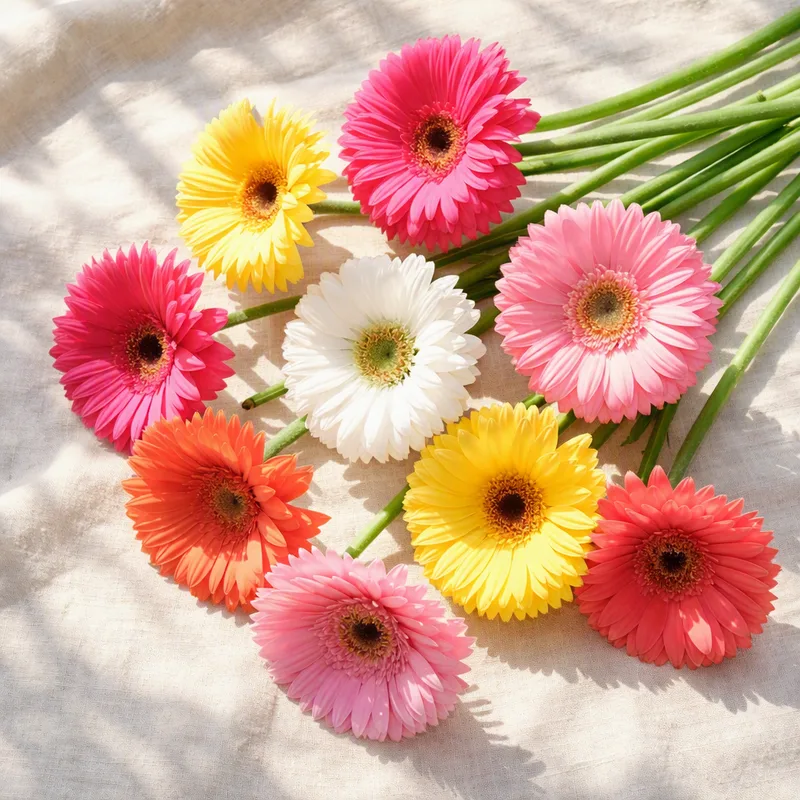
A daisy from the Barberton hills
Every gerbera in a vase descends from plants of South African origin, and the wild species, Gerbera jamesonii, is also called the Barberton daisy, because Robert Jameson found it close to Barberton. Traugott Gerber, a German doctor and botanist, gave the whole genus its name. The garden gerbera is a hybrid, Gerbera × hybrida, bred from that species crossed with Gerbera viridifolia, another native of South Africa, in a Cambridge nursery around 1890.
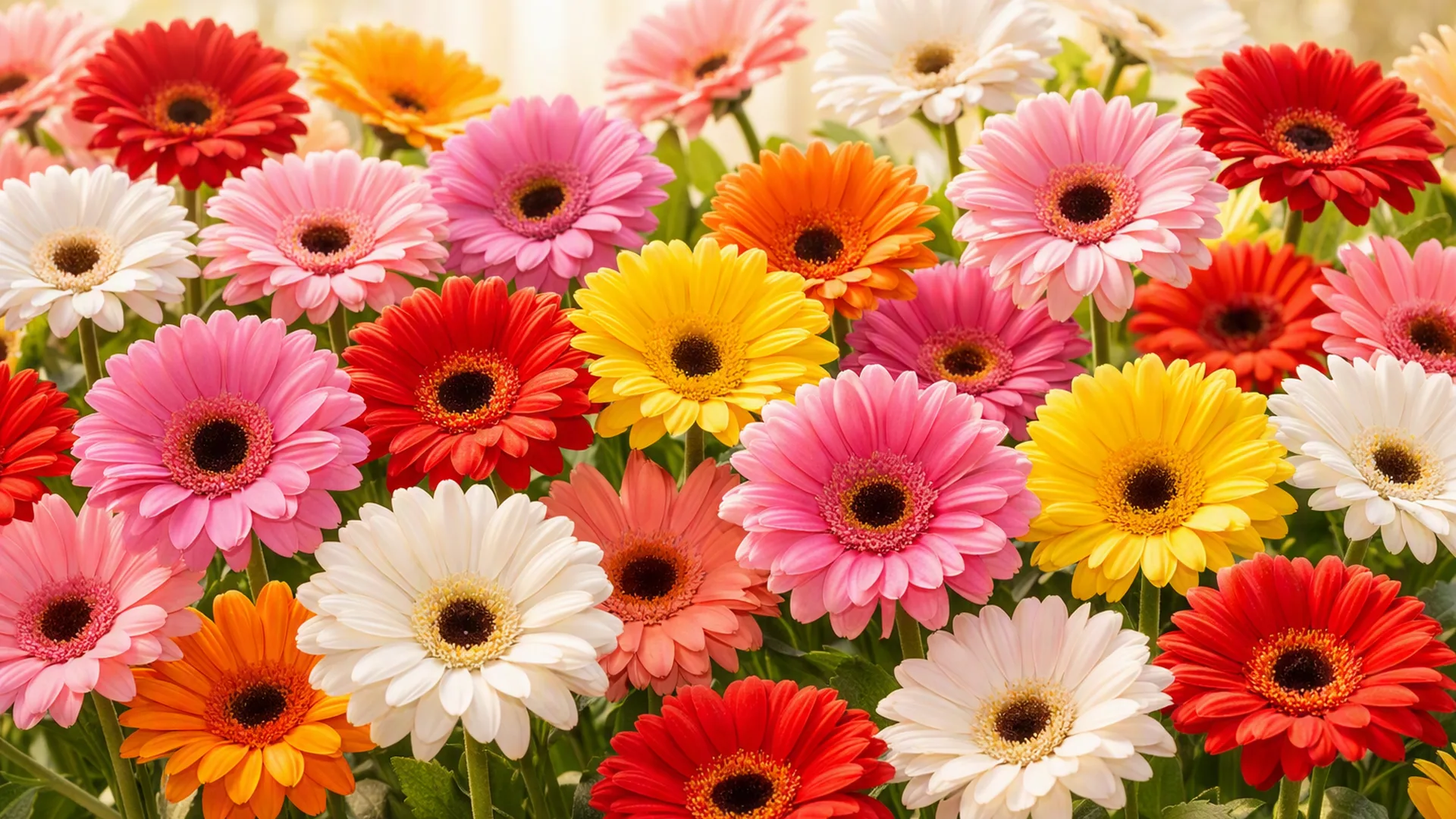
What looks like one big flower is a flowerhead made of many small ones, just like a lawn daisy. The "petals" are ray florets, and the middle of the head is packed with minute tubular flowers. Wild plants carry heads about 4 to 5 cm across, usually orange-red. Modern florist types reach roughly 12 cm, and the mixed palette runs from white and yellow through orange to red and pink. Natural blue never occurs in the genus, so a blue gerbera has been dyed.
Keeping the stems upright
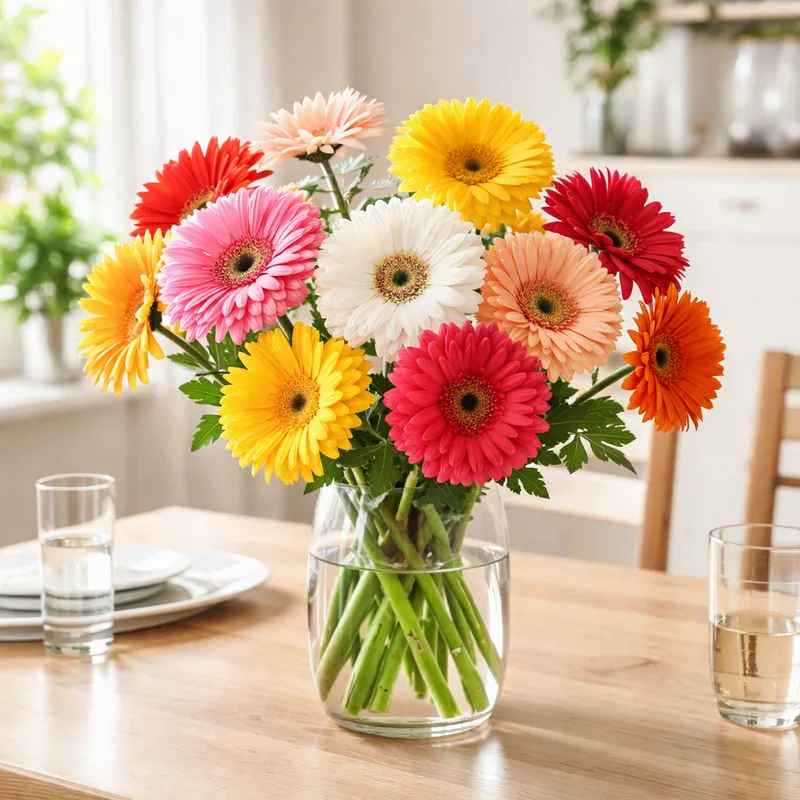
A gerbera that bows its head has usually snapped at the weak point, about 10 to 15 cm below the flowerhead, where water evaporates faster than it can rise. A few habits help:
- Cut the stem at an angle before it goes into water.
- Wash the vase thoroughly and pour in only a little water.
- Choose a cool corner rather than a warm windowsill or a radiator shelf.
A healthy bunch should give you seven to ten days.
Gerberas in an Irish garden
Gerberas are perennials in Africa but they dislike hard frost and cold, soggy ground. In Ireland the usual approach is a pot kept somewhere bright and sheltered over summer, then brought indoors before the first frosts. A spot in full sun with free-draining compost suits them. Wet winters are the real danger to the roots, even where the coast is mild.
Cats, dogs and horses
Gerbera jamesonii is on the ASPCA's non-toxic list for dogs, cats and horses, which makes it an easy cut flower for homes with animals. Even so, a pet that eats plenty of any greenery can end up with a sore stomach, so phone your vet if you are concerned.