Mary's gold
Calendula officinalis is a daisy-family plant probably native to southern Europe, although centuries of cultivation have blurred its origins. English speakers gave it the name marigold and Mary's gold in honour of the Virgin Mary. Do not confuse it with Tagetes, the French and African marigolds, which belong to a different genus. The petals are edible, and cooks once used them in place of saffron.
Orange, yellow and in between
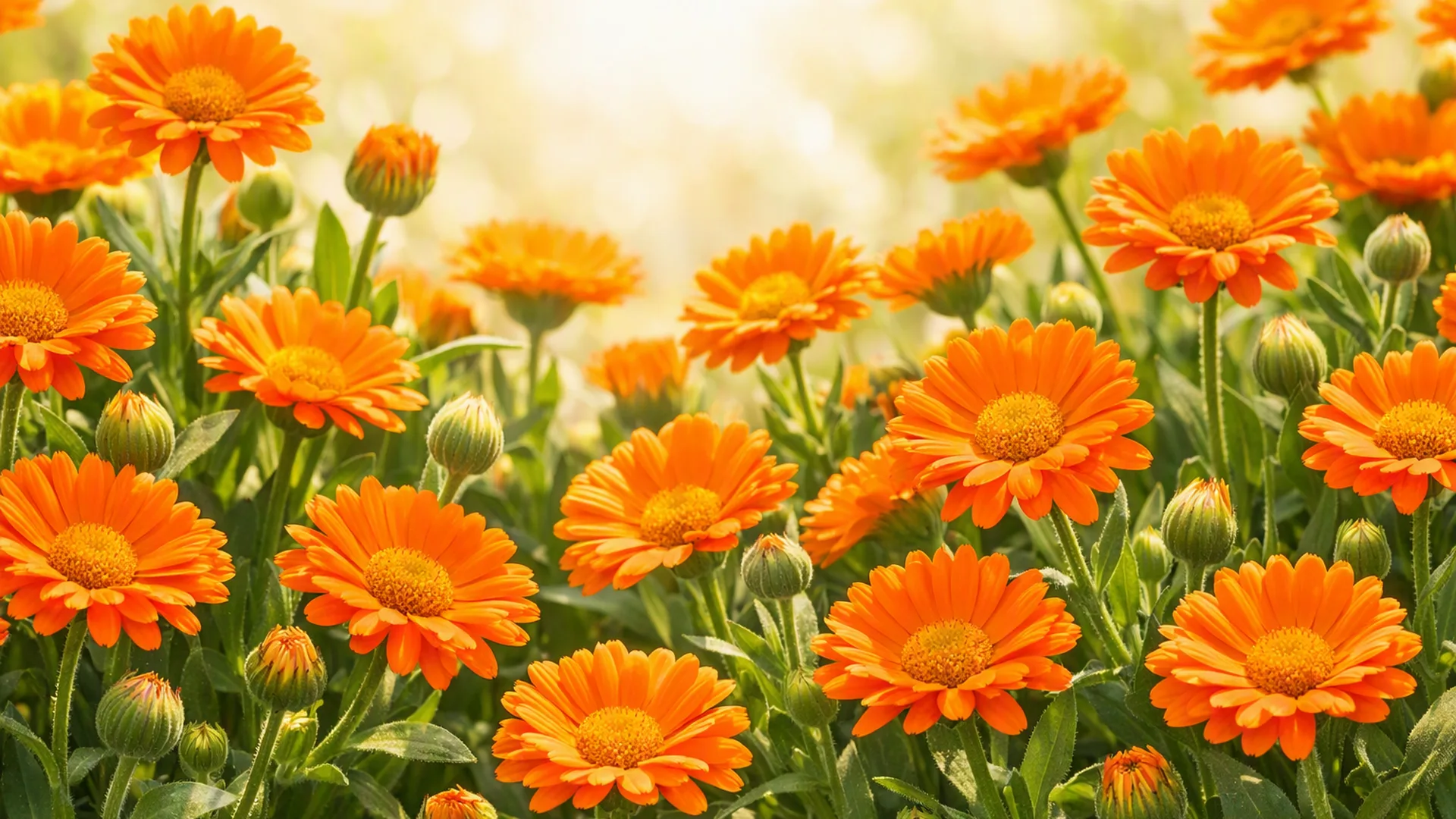
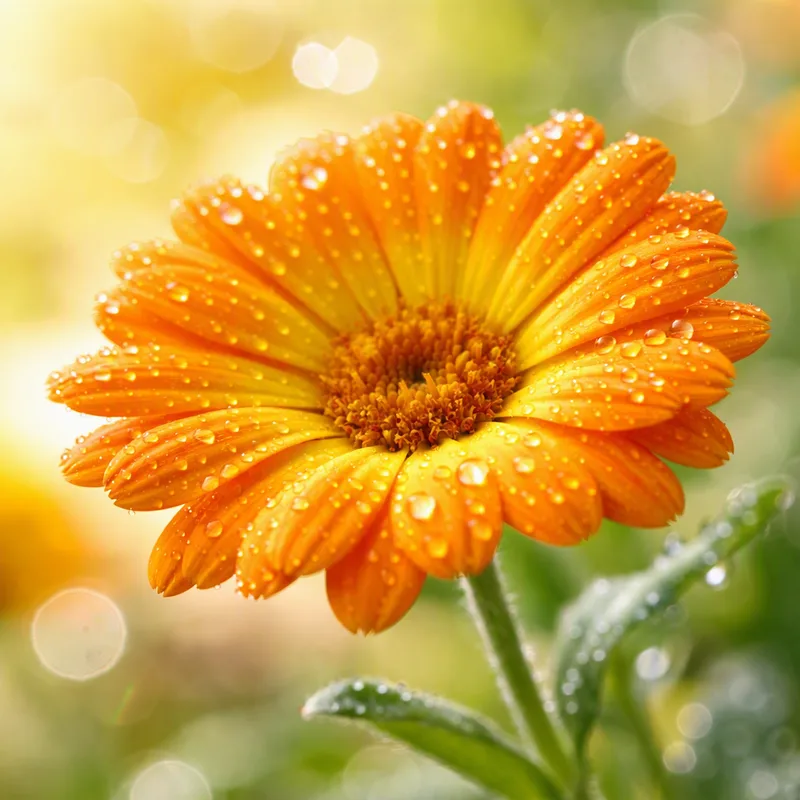
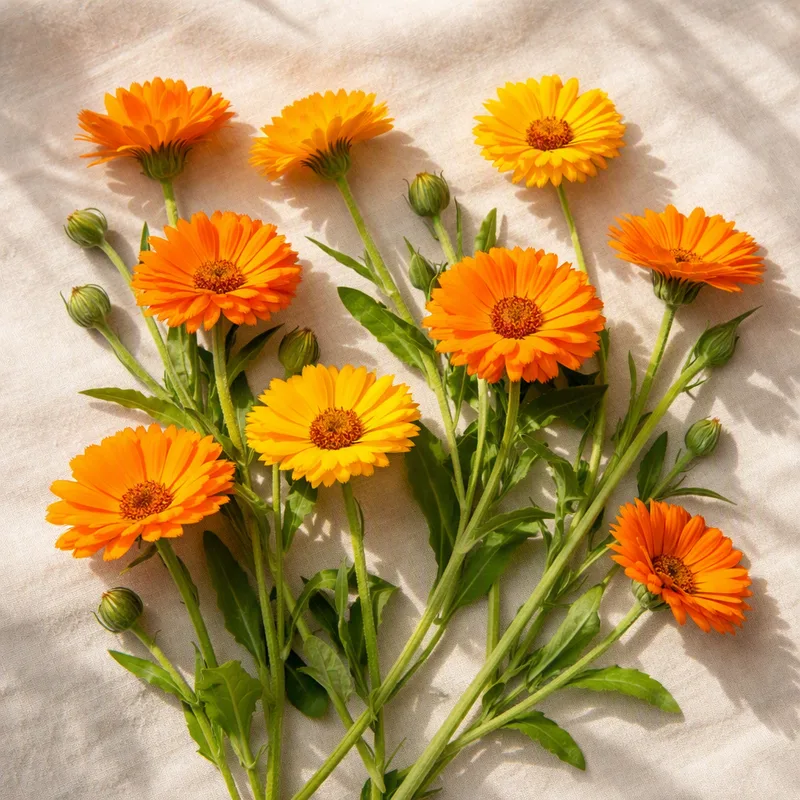
The wild type has a single ring of petals in yellow to orange around a darker centre, and flower heads reach 4 to 7 cm across. Plants stand at roughly 30 to 60 cm, though a few reach 80 cm. Named selections include 'Alpha' in deep orange, 'Sun Glow' in bright yellow and the Fiesta Gitana group, which carries the RHS Award of Garden Merit.
Growing it in Ireland
- Sow seed in April directly where it will flower; seedlings appear quickly.
- In sheltered coastal gardens with little frost, sowing in autumn can bring early colour.
- Choose a sunny spot with soil that drains well, as roots dislike standing water.
- Pinch off spent heads so new buds keep forming.
- Leave a few to set seed and the plant will usually return by itself.
Slugs find young seedlings tempting during damp weather, so protect them early.
Cut flowers and wildlife
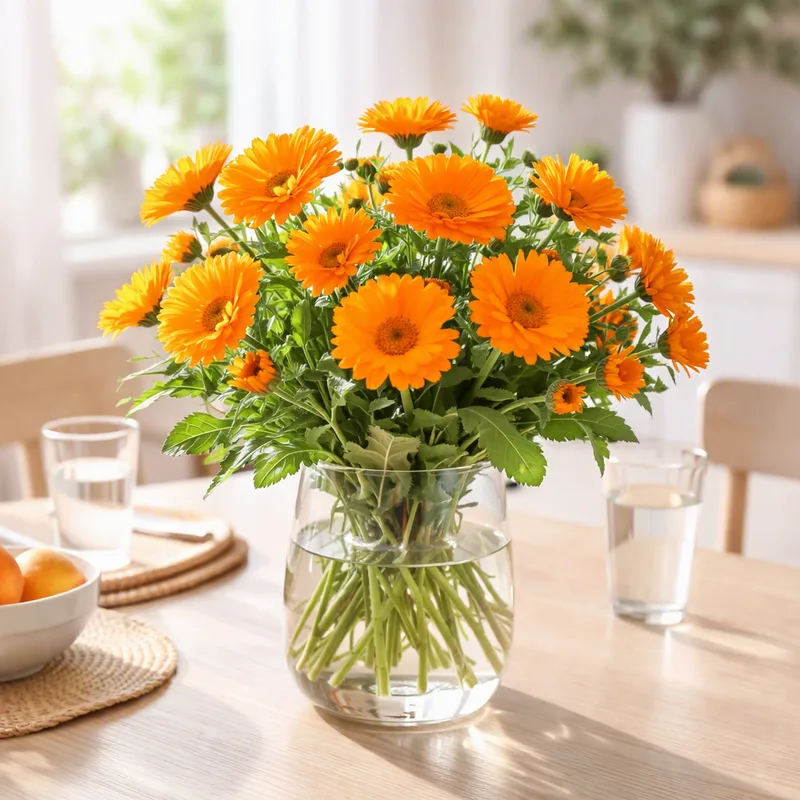
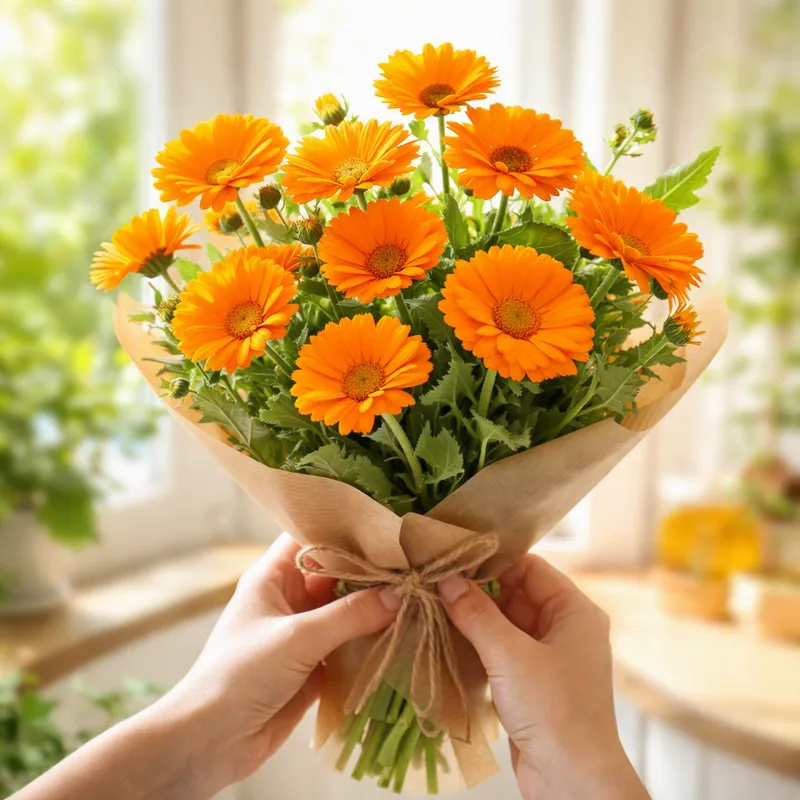
Cut stems when the flower has just opened. Calendula lasts around five to eight days in a vase and has a spicy, resinous scent. In the garden it draws bees and hoverflies.
Is it safe for pets?
The ASPCA lists Calendula officinalis as non-toxic to dogs and cats. Some people with allergies to daisy-family plants may react to it on contact, so wear gloves if you are sensitive.