
The filler that stands alone
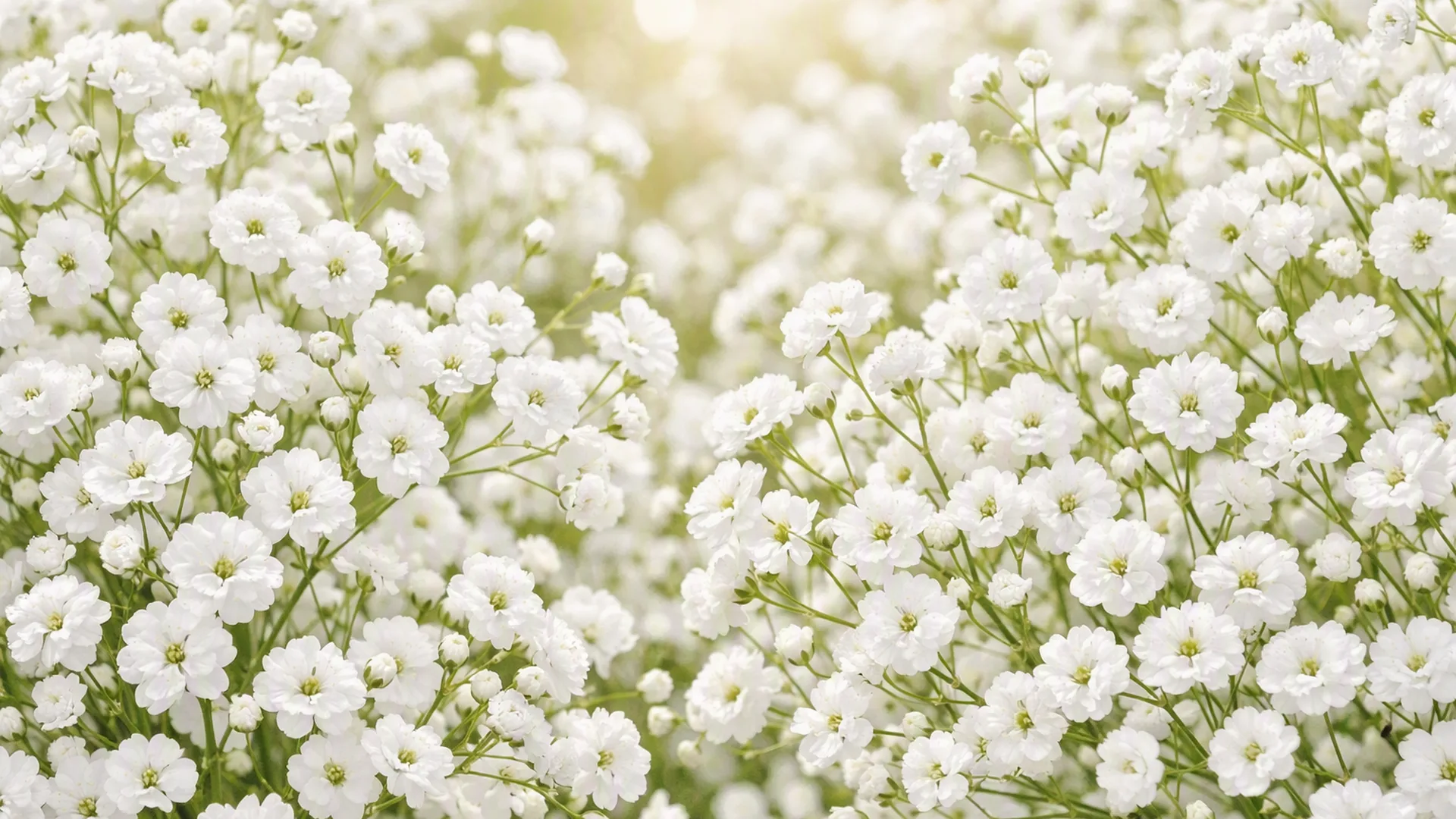
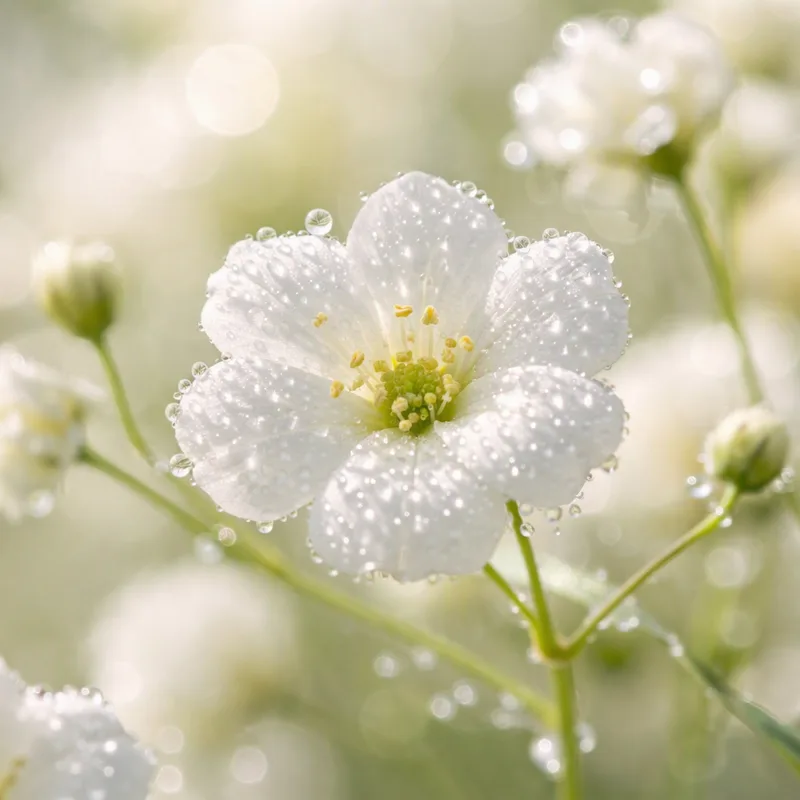
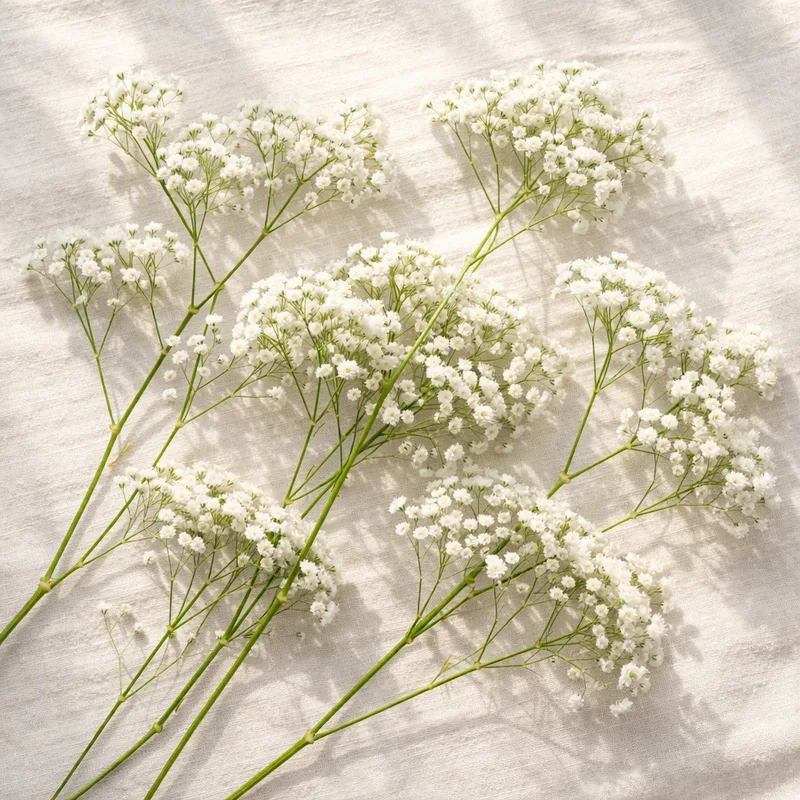
Baby's breath, Gypsophila paniculata, is a perennial of the pink family. It grows wild from central and eastern Europe towards western Siberia, usually on dry, sandy or chalky ground, and the Latin name refers to its liking for lime. A deep taproot anchors the plant, which is why old clumps resent being moved. Stems branch repeatedly and carry hundreds of tiny flowers, making a haze of white. Cut stems are grown commercially on a large scale, and in Peru they make up a major share of the country's flower exports.
Where it grows in Ireland
Baby's breath wants full sun and sharp drainage. Heavy, wet clay in an Irish winter is the main enemy, so lighter, limy soils such as those over limestone suit it best, and elsewhere it helps to plant on a slope or a raised bed and add grit. Plants reach about 60 to 120 cm and flop if they sit in rich soil, so go easy on feed.
Making a bunch last
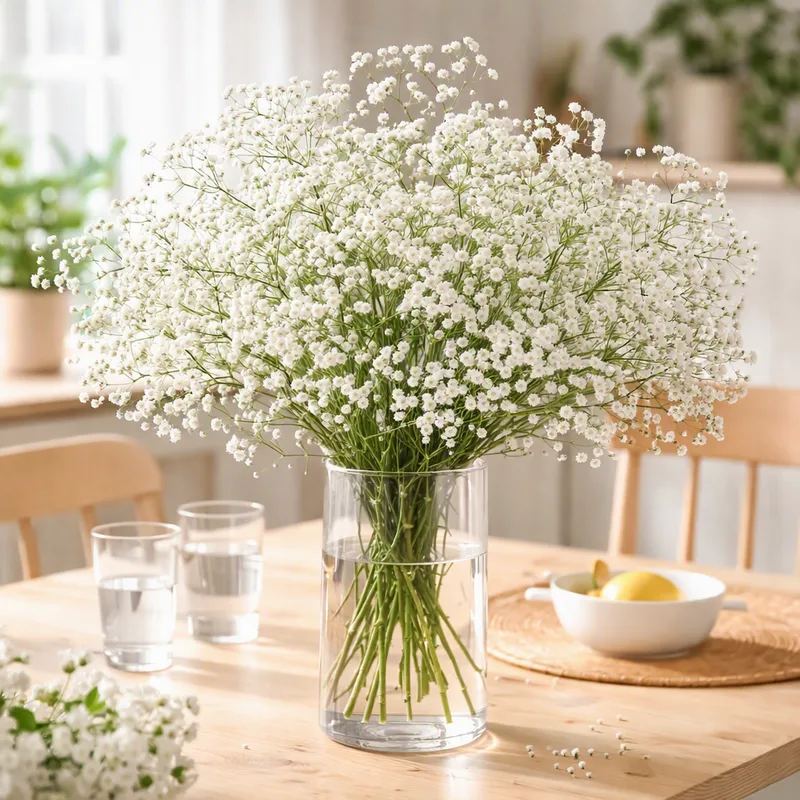
- Cut the stems at an angle and stand them in clean water.
- Change the water often. Old water smells sour and shortens the life of the flowers.
- Expect a week to two weeks in the vase.
- To dry it, hang a small bunch upside down in a dark, airy place for a few days.
Pets and skin
The ASPCA lists baby's breath, which it identifies as Gypsophila elegans, as non-toxic to dogs, cats and horses, though vomiting or diarrhoea may follow if a pet eats it. Wikipedia notes that Gypsophila paniculata can cause contact dermatitis in people, so gloves are sensible if you handle a lot of stems.