

A heart that is really a leaf
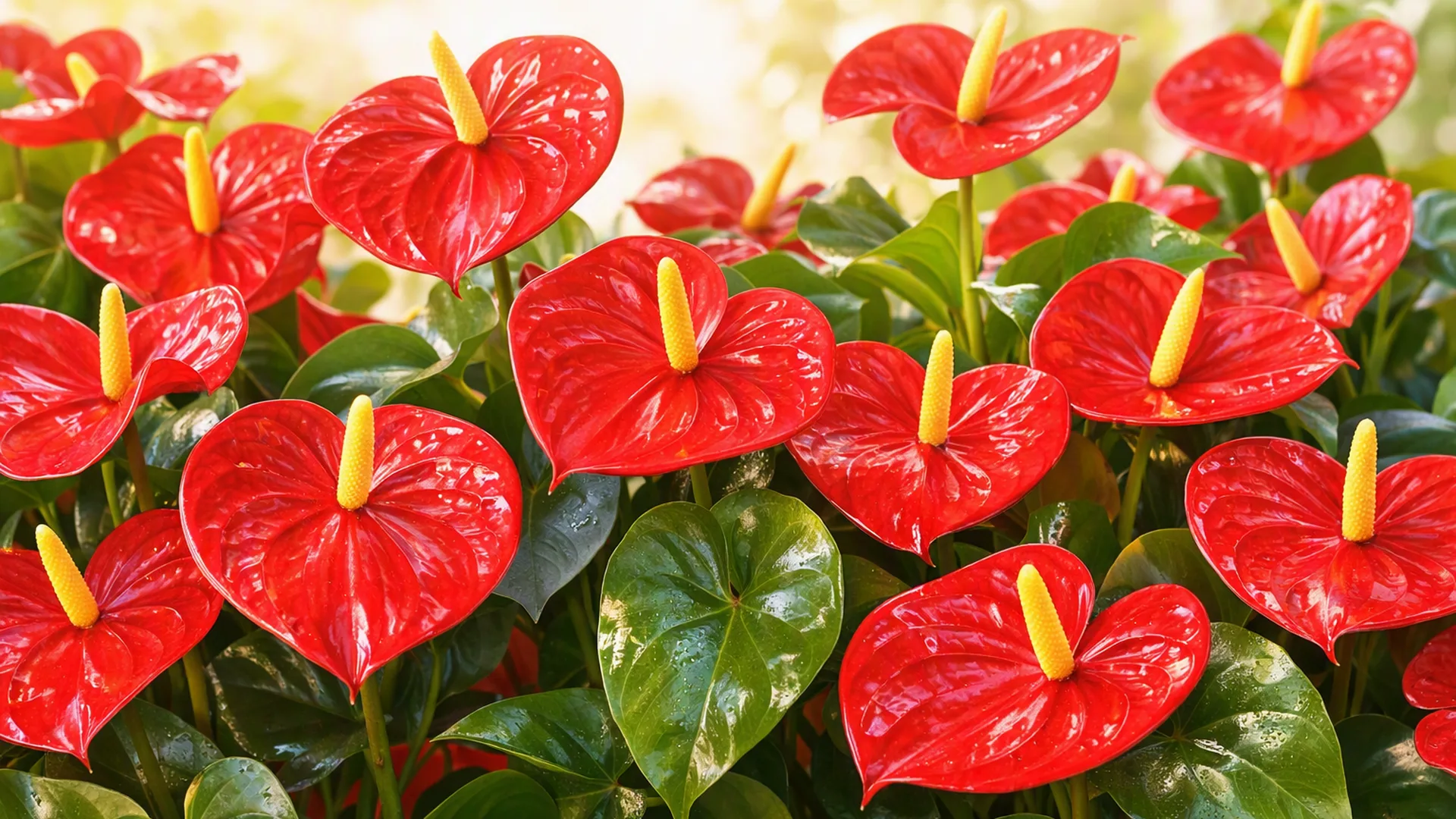
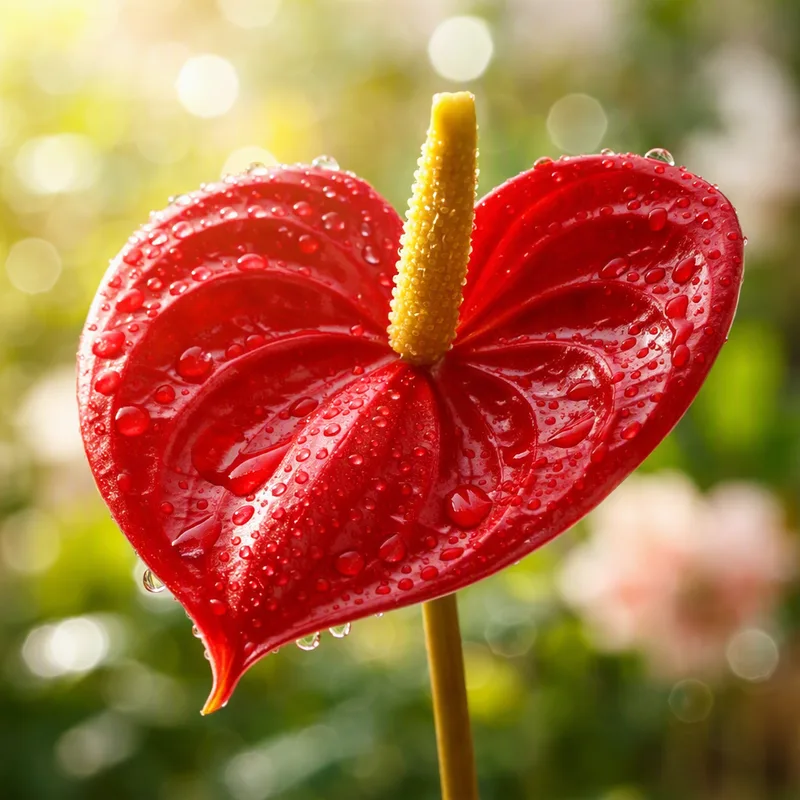
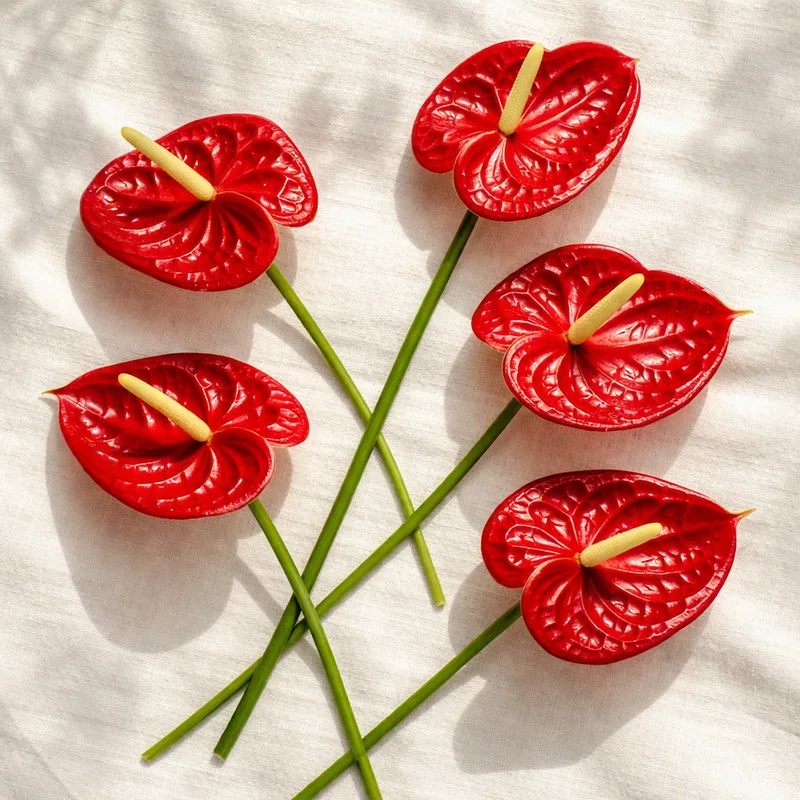
Flamingo flowers of the andraeanum type come from the forests of Colombia and Ecuador, a warm, humid and shady habitat. The shiny, waxy "flower" is a spathe, a modified leaf 8 to 15 cm long, and the true blooms are minute and sit along the central spadix. The wild spathe is red or pink, and breeding has added white, orange, green and purple-toned forms. Anthurium means "tail flower" in Greek, a nod to the spadix. A small relative, Anthurium scherzerianum, has a curled spadix and is often sold under the same common name.
Making it at home in Ireland
In its home forests the temperature barely falls below the low twenties, so this is a plant for a warm room. A bright windowsill without hard midday sun suits it, and it should be kept away from the cold glass and draughts of an Irish winter.
- Keep the room anywhere from 18 up to 27 degrees Celsius.
- Water once the upper layer of compost feels dry to the touch, and never leave it standing in water.
- Use a loose, free-draining mix with bark in it.
- Raise the humidity with a pebble tray or by grouping plants, as central heating dries the air.
- Use rainwater or let tap water stand if you live in a hard-water area.
A healthy plant can bloom nearly all year, and each spathe lasts for weeks. Cut stems keep going for as long as three weeks in water.
Toxic if chewed
The whole plant contains insoluble calcium oxalate crystals. The ASPCA classes flamingo flower as toxic for dogs, cats and horses, and the signs are painful mouth swelling, drooling, vomiting and difficulty swallowing. The sap can irritate human skin and eyes. Wear gloves when repotting or trimming, as the sap can irritate skin. If a person has chewed the plant, ring the National Poisons Information Centre; for animals, contact your vet.