From a Sicilian monk to the Irish allotment
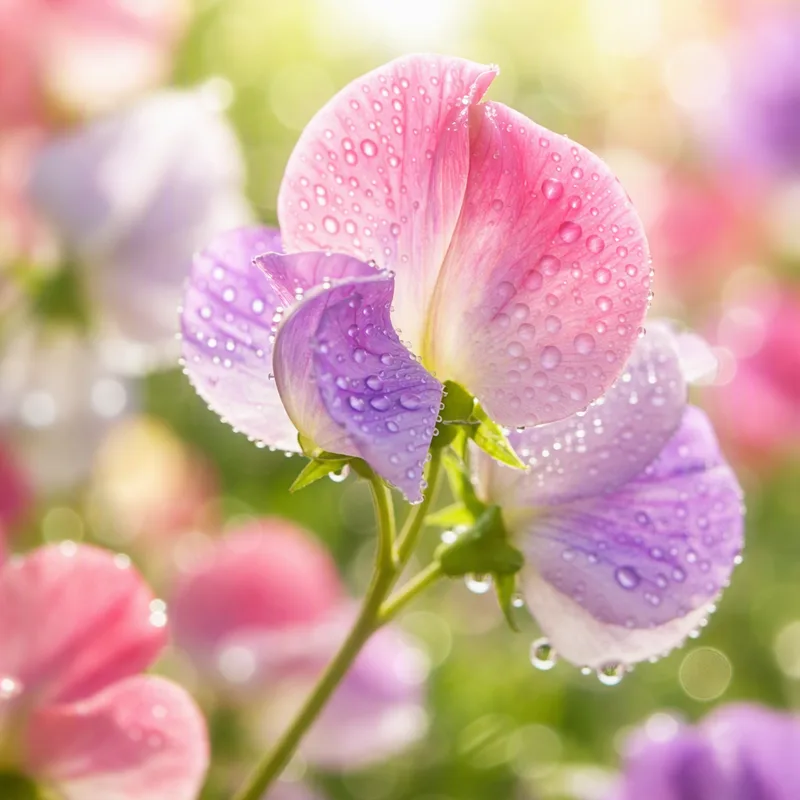
The sweet pea, Lathyrus odoratus, is a native of Sicily, the Italian south and the islands of the Aegean. The friar and plant-hunter Francesco Cupani described it in print in 1696 and sent seed to growers elsewhere in Europe. The wild flowers are small and purple; the big ruffled blooms and the wide colour range came from breeders, above all the Scot Henry Eckford, a nurseryman, in the late nineteenth century. Cultivars are still trialled by the Royal Horticultural Society, and over 50 have an Award of Garden Merit.
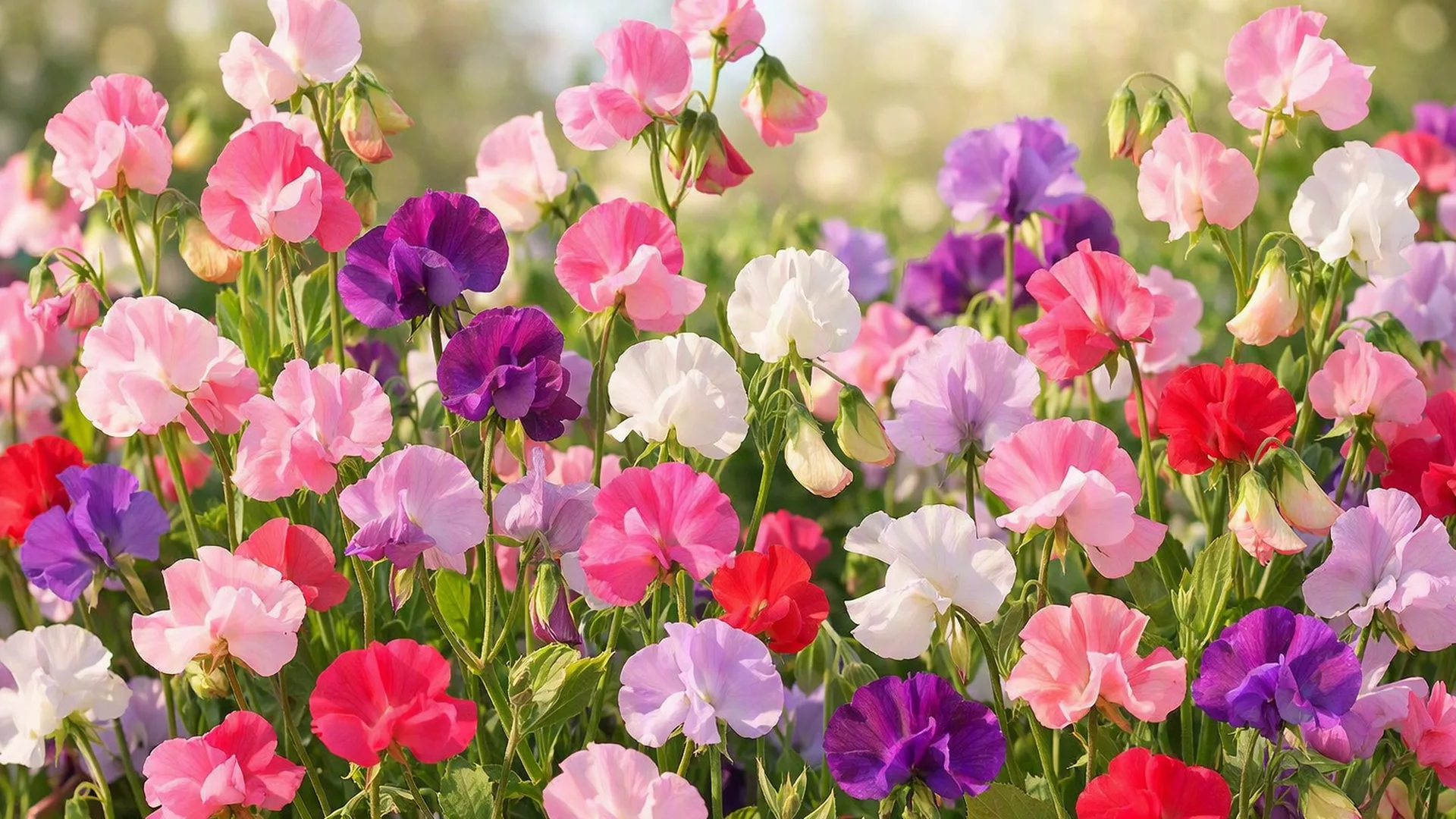
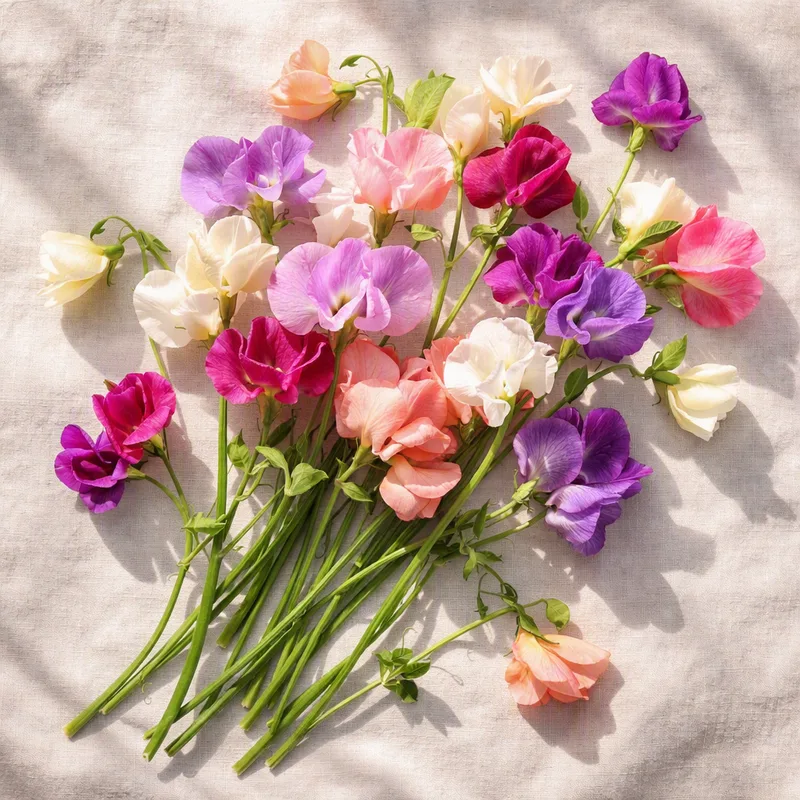
It is an annual climber that reaches 1 to 2 metres when it has something to scramble up, with tendrils that twine around canes, netting or twigs. The scent is strong and sweet, and the classic mixed page here means a blend of the traditional colours.
Growing it in Ireland
- Sow from October under glass in a cold frame, or indoors in late winter; the mild, frost-light coasts of the south and west make autumn sowing easier than inland.
- Plant out in a sunny spot with deep, rich soil and a wigwam of canes.
- Tie in the shoots and pinch out the tips to encourage branching.
- Pick often. Left to set pods, the plant stops flowering.
Damp, muggy weather can bring powdery mildew, so give plants space and air and water at the base.
In the vase
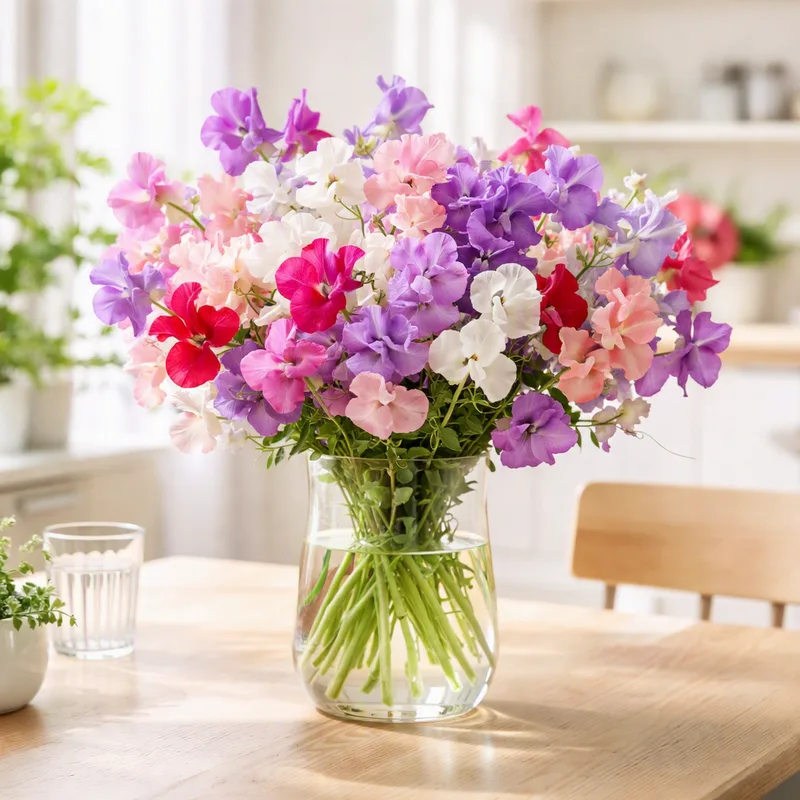
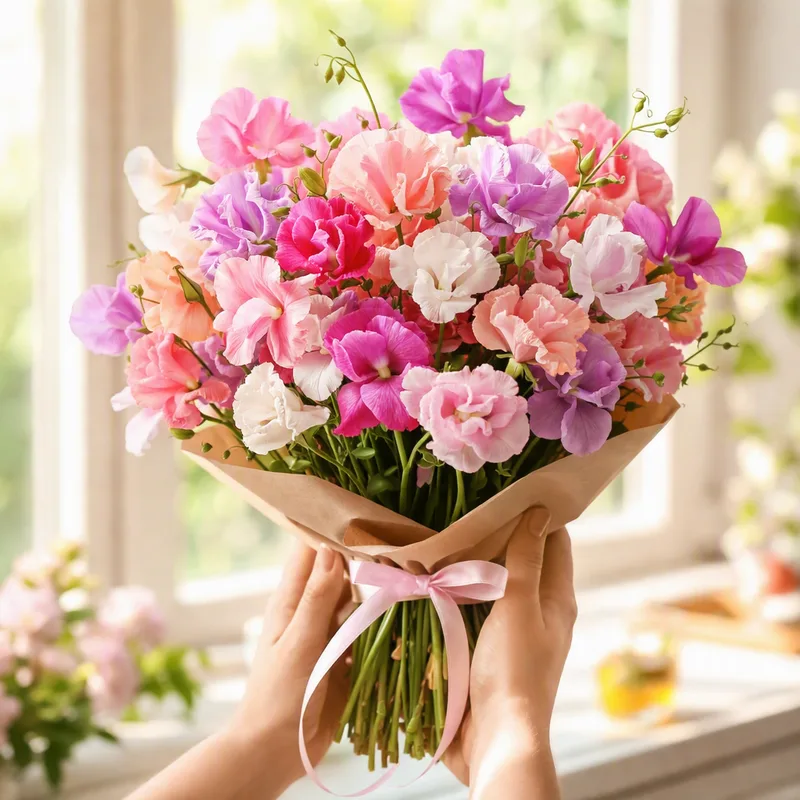
Cut stems last only three to five days but the plant keeps producing if you keep picking, so a posy every few days from June to August is realistic.
Seeds and pods are not food
Despite the pea-like pods, sweet pea seeds are not edible. Genus Lathyrus seeds can cause lathyrism if eaten in quantity. The ASPCA entry called sweet pea refers to Lathyrus latifolius, the everlasting pea, so do not treat it as a clear signal about this species. Keep packets of seed where children and pets cannot get at them.