Soft shades for late in the year
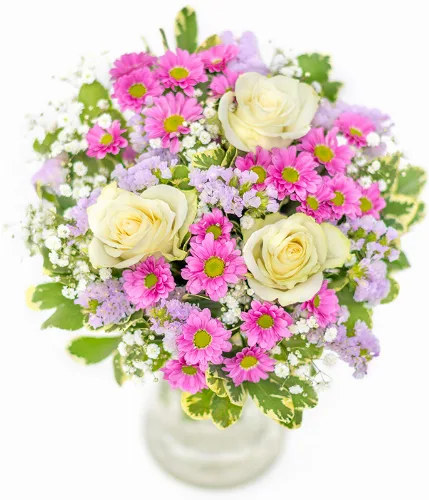
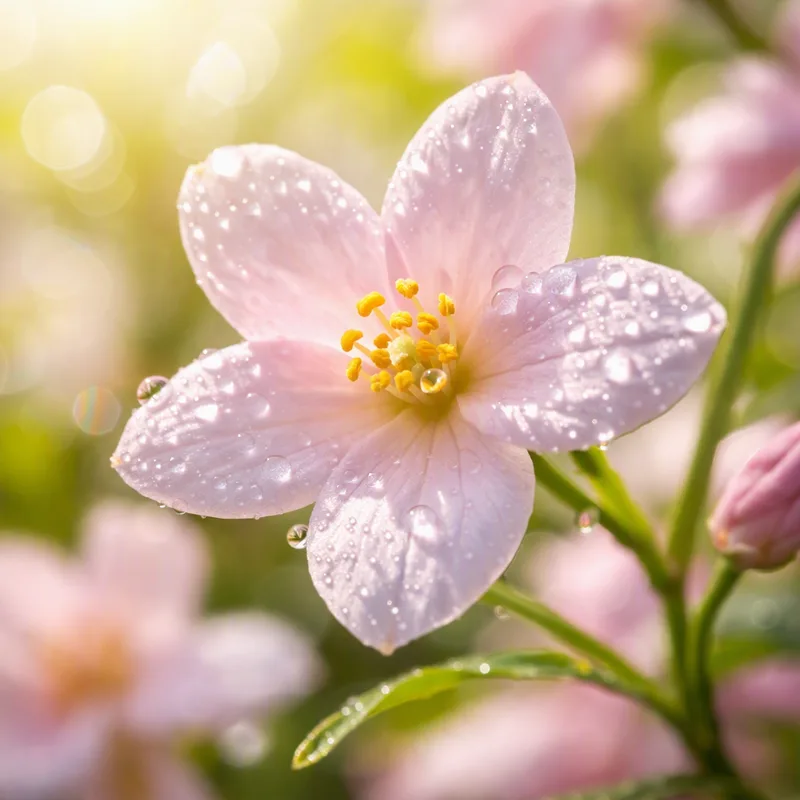
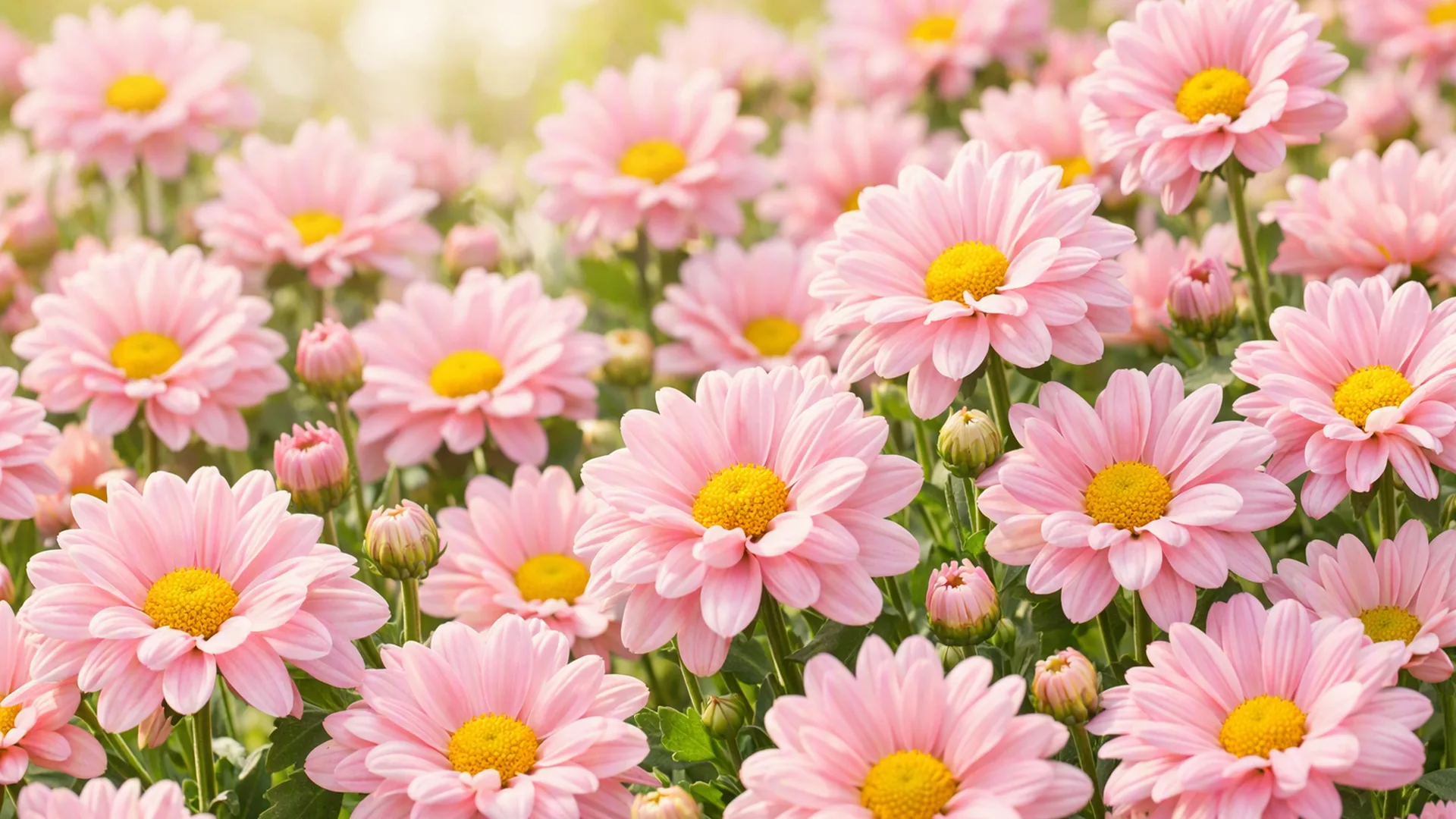
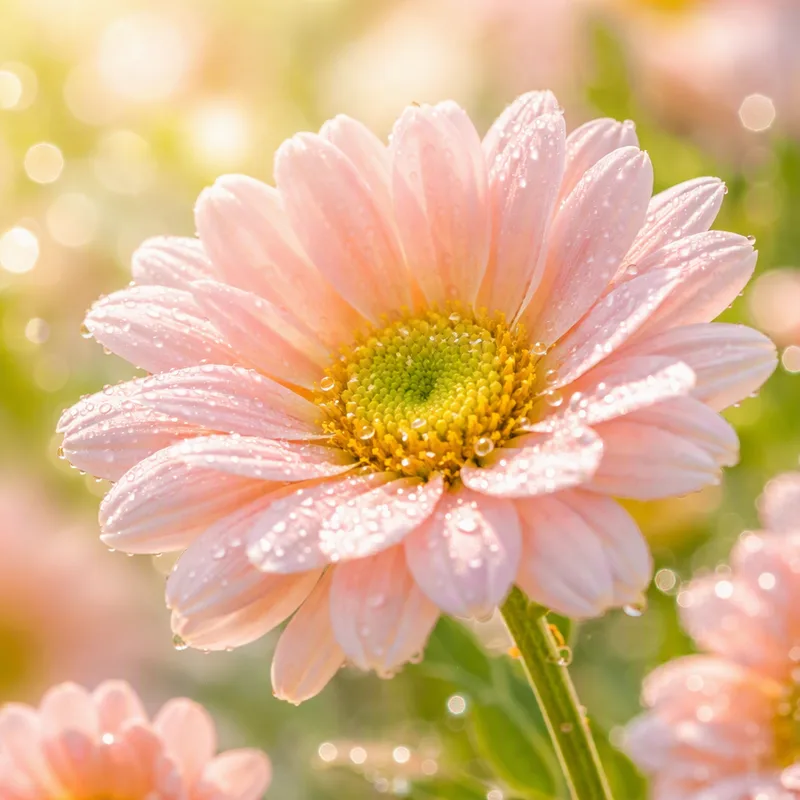
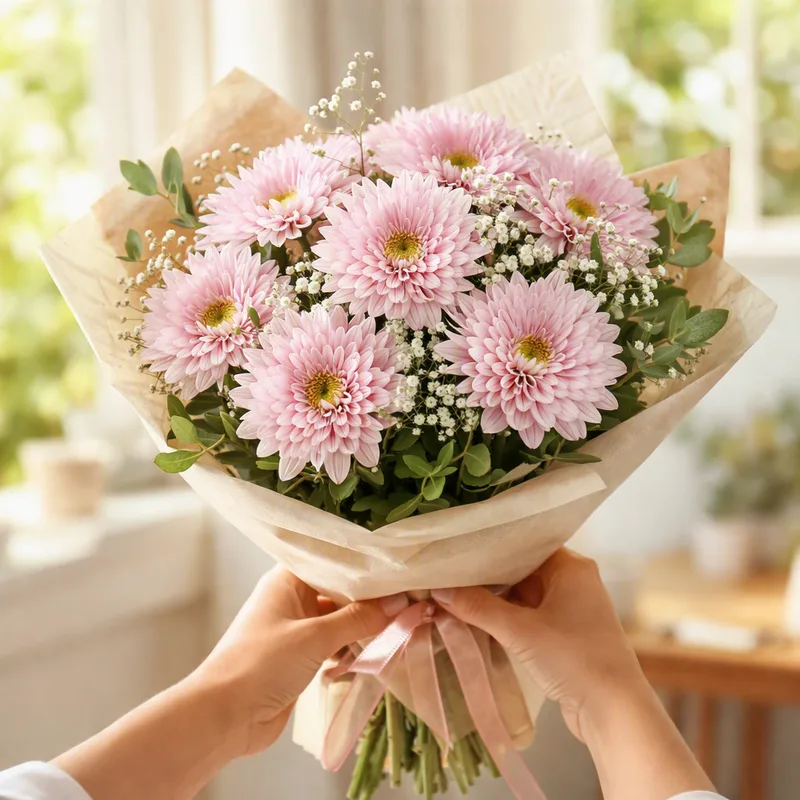
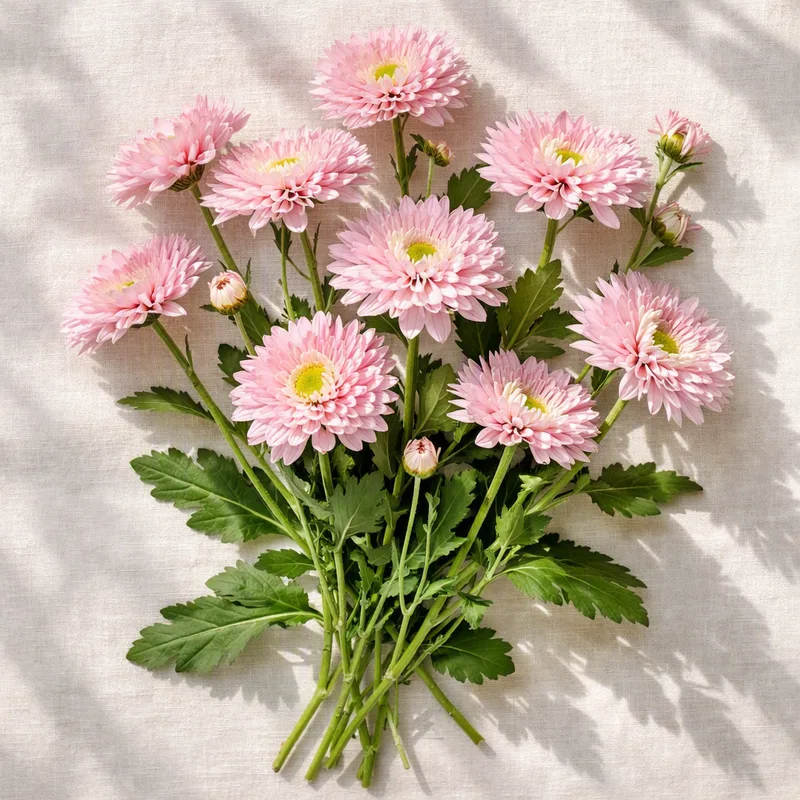
If you want chrysanthemums that do not feel too sombre, pink is the usual choice. The range runs from blush and powder pink through salmon to a vivid cerise. Spray types, with many small heads on a single stem, and full double globes are the most common, though simple daisy-like forms with a yellow centre exist in pink as well.
Look for spray stems where two or three heads are already open and the rest are still in bud. That way the bunch opens gradually instead of all at once.
Bouquet and bowl ideas
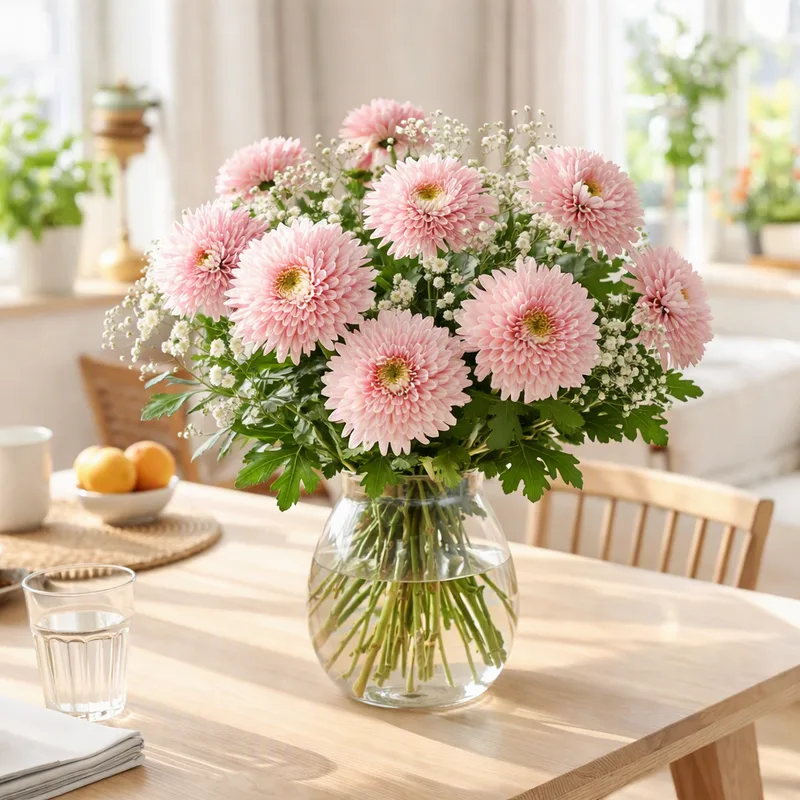
Pink chrysanthemums go well with silver eucalyptus, rosehips and snowberries. For a tone-on-tone bunch, add white or dusky pink alstroemeria or carnations. In a planter they look good with silver-leaved senecio and ivy, and the bowl will stand a fair amount of cold. Mild Irish winters often keep a pot going into December in a sheltered spot, though a wet, cold snap can end it quickly.
Looking after them
- Re-cut the stem ends and keep leaves out of the water.
- Stand the vase cool, away from a fruit bowl, because ripening fruit shortens the life of many cut flowers.
- Put pots in a bright, sheltered place and keep the compost evenly moist.
- Remove faded heads so the buds open one after another.
Pet safety
The ASPCA lists chrysanthemums as toxic to dogs, cats and horses. Signs include vomiting, diarrhoea, drooling and skin irritation. If you think an animal has eaten some, ring your vet and take a photo of the plant.