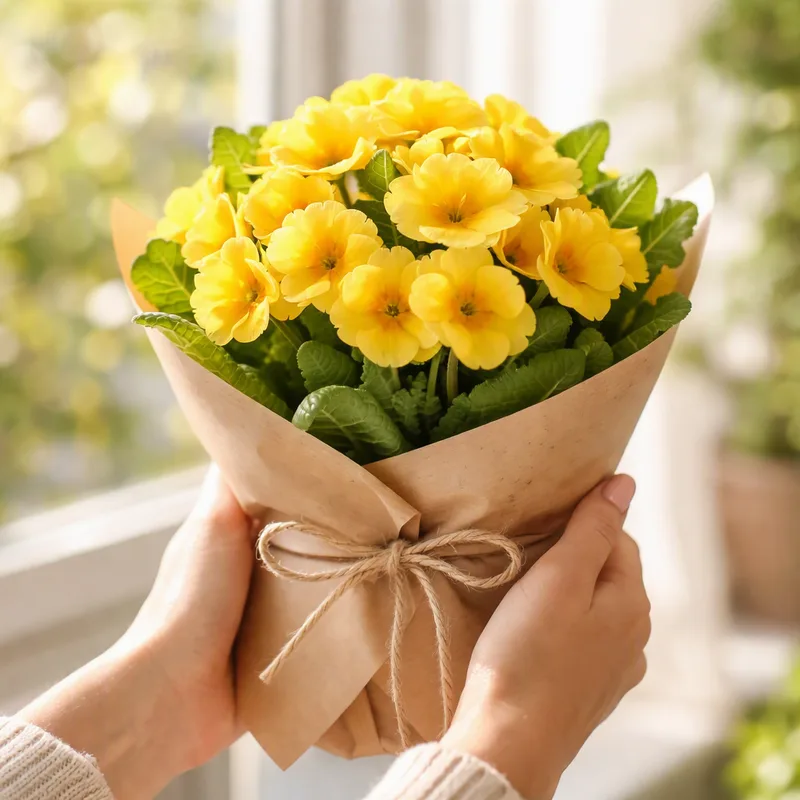

Primrose, first of spring
The Latin name Primula comes from primus, meaning first, and the English word primrose has the same sense. Wild Primula vulgaris grows across Britain and Ireland in hedge banks and woodland edges, flowering from about February to April with pale yellow, lightly scented blooms on short stalks. The leaves form a wrinkled rosette 10 to 30 cm tall.
Wild primrose and shop primula
The brightly coloured pots sold in late winter are mostly garden forms bred from the same species, including crosses known as polyanthus that carry several flowers on one stem. Classic yellow remains the closest to the wild form. Leave wild plants where they are, since plants are easily lost to digging, and choose garden-raised ones for the garden.
Keeping a pot going
- Place it somewhere bright and cool; central heating shortens the flowering.
- Water when the surface feels slightly dry and empty the saucer.
- Pick off faded flowers regularly.
- After flowering, plant it out in partial shade in soil that holds moisture.
Our damp, mild springs suit primulas outdoors, though slugs enjoy the leaves.
Skin and pets
Some Primula species, notably Primula obconica, can cause a contact allergy through a substance called primin. The ASPCA lists common primrose, Primula vulgaris, as toxic to dogs, cats and horses with mild vomiting as the main sign. Contact a vet if your pet eats it.