

A South African edging plant
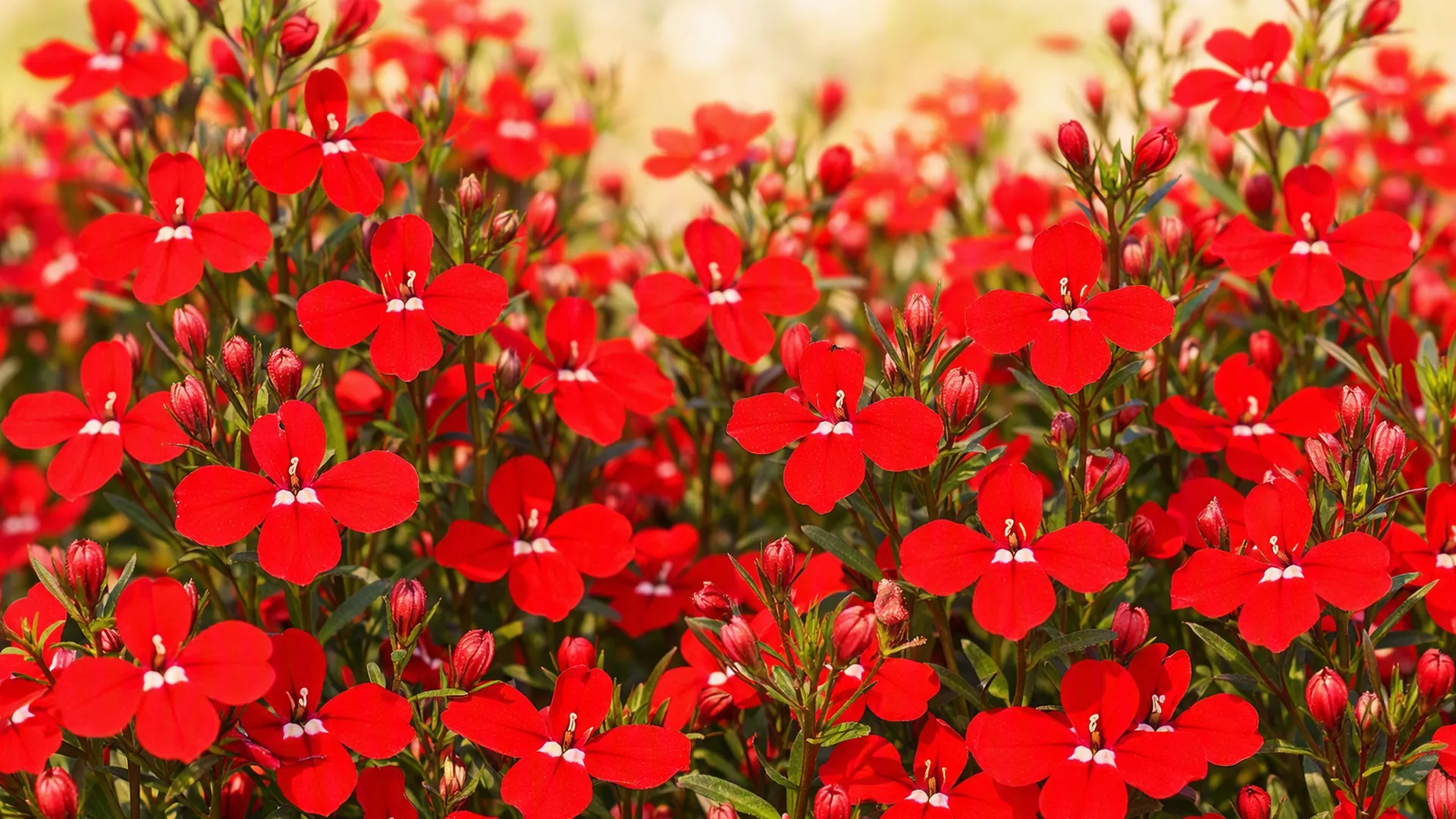
Originally from southern Africa, Lobelia erinus is a low, sprawling perennial that stays 8 to 15 cm high in its homeland. Frost kills it, so Irish gardeners treat it as a tender summer annual, raising seed under glass in early spring or buying young plantlets and setting them out once the nights are safely mild, usually from mid or late May. Wild plants flower in shades of blue and violet, often with a pale eye, each bloom only about as wide as a thumbnail, and most of the colour range we know came from breeders.
The classic is blue. Well-known cultivars include the deep blue 'Crystal Palace', a holder of the Royal Horticultural Society's garden-merit award, and the pale 'Cambridge Blue'. Trailing forms are meant for baskets and window boxes, while compact, bushy types make tidy edging along a path.
Growing it well in Irish weather
- Choose sun or partial shade. In a mild, damp summer lobelia often does better than in a hot one.
- Pots dry quickly in wind, so check small containers daily, especially on the exposed west coast.
- Give a liquid feed fortnightly through the flowering season.
- If it looks tired and straggly in July, cut it back by about half; it often reflowers in late summer.
A plant to keep away from mouths
Lobelias contain alkaloids, including lobeline. The ASPCA lists a related species, the cardinal flower (Lobelia cardinalis), as toxic to dogs, cats and horses, with vomiting and drooling among the signs. Treat edging lobelia the same way: keep it away from pets and children who chew plants, and wash your hands after handling it. If a person has eaten some, contact the National Poisons Information Centre; for animals, call your vet.