
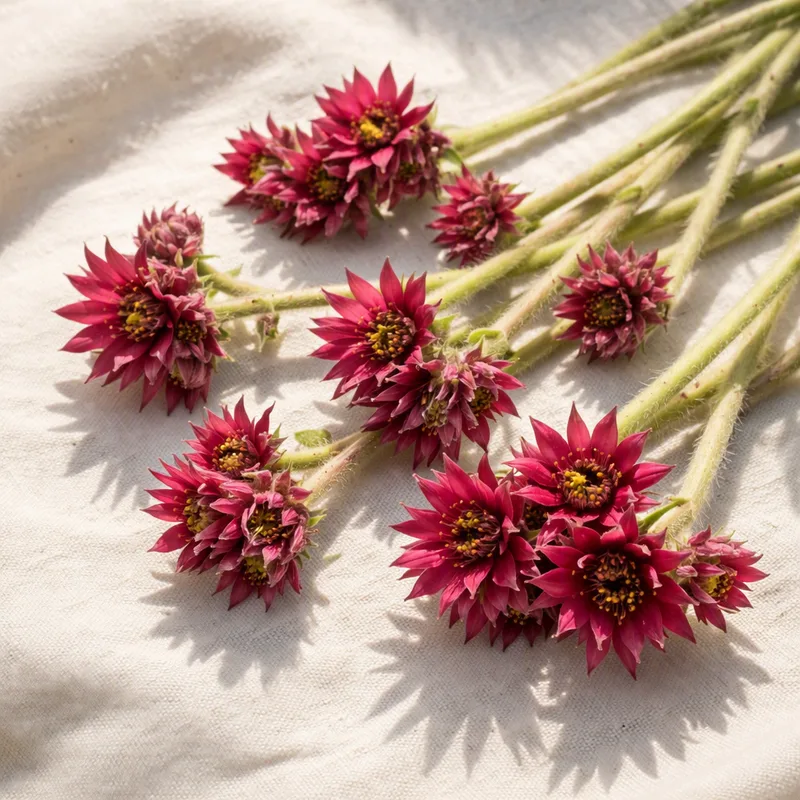
Red in the rosette
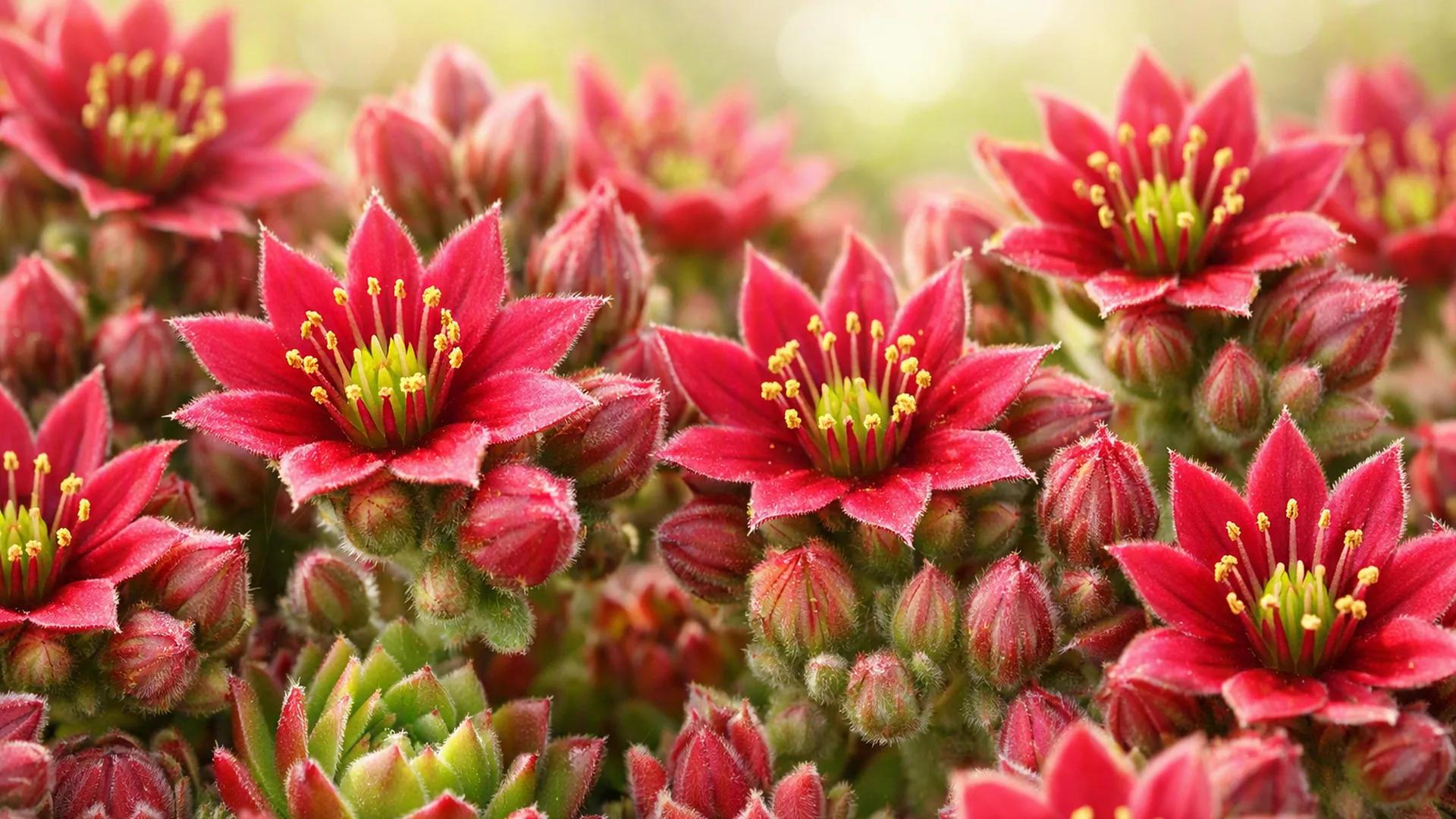
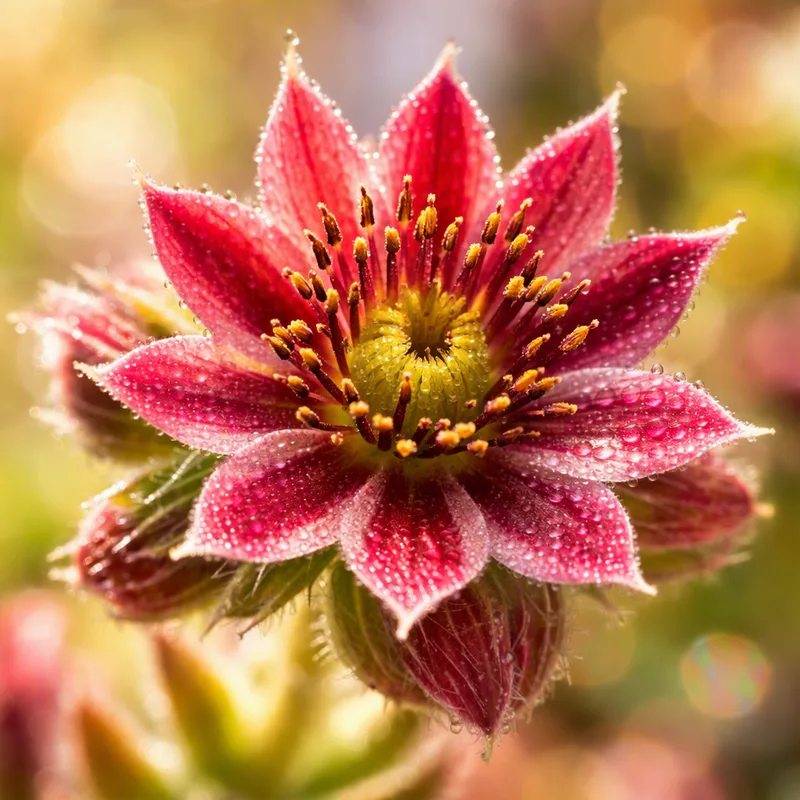
Houseleeks are grown for their foliage. The common houseleek, Sempervivum tectorum, has leaves often suffused with rose-red, and many cultivars take on deeper wine or bronze tones. Colour usually deepens in strong light and cooler seasons, then eases in shade. The flowers, when they come, are reddish or purple stars on a hairy stem in summer.
Using red rosettes
Red looks good beside green houseleeks and silver sedums in a shallow stone trough. On a gravel bed they act like a living mosaic. Their compact height, 5 to 20 cm, suits narrow ledges, and the plants can fill the gaps in a dry stone wall.
Looking after them
- Keep them in full sun for the strongest colour.
- Use sharp grit or horticultural sand mixed with ordinary compost.
- Water only when the mix is dry.
- Remove dead rosettes after flowering and let the offsets fill the space.
July and August bring the flower stems, and the plant looks quite different then.
Ireland's weather
Frost is rarely the issue; standing water is. Raise pots on feet, and use a stone mulch to keep the necks of the rosettes dry. A sheltered spot near the house wall works well.
Pet safety
Houseleek is not known as a dangerous plant, yet stomach upsets are possible if an animal chews it. Ask a vet for advice if you notice anything unusual.