

A weed that became an emblem
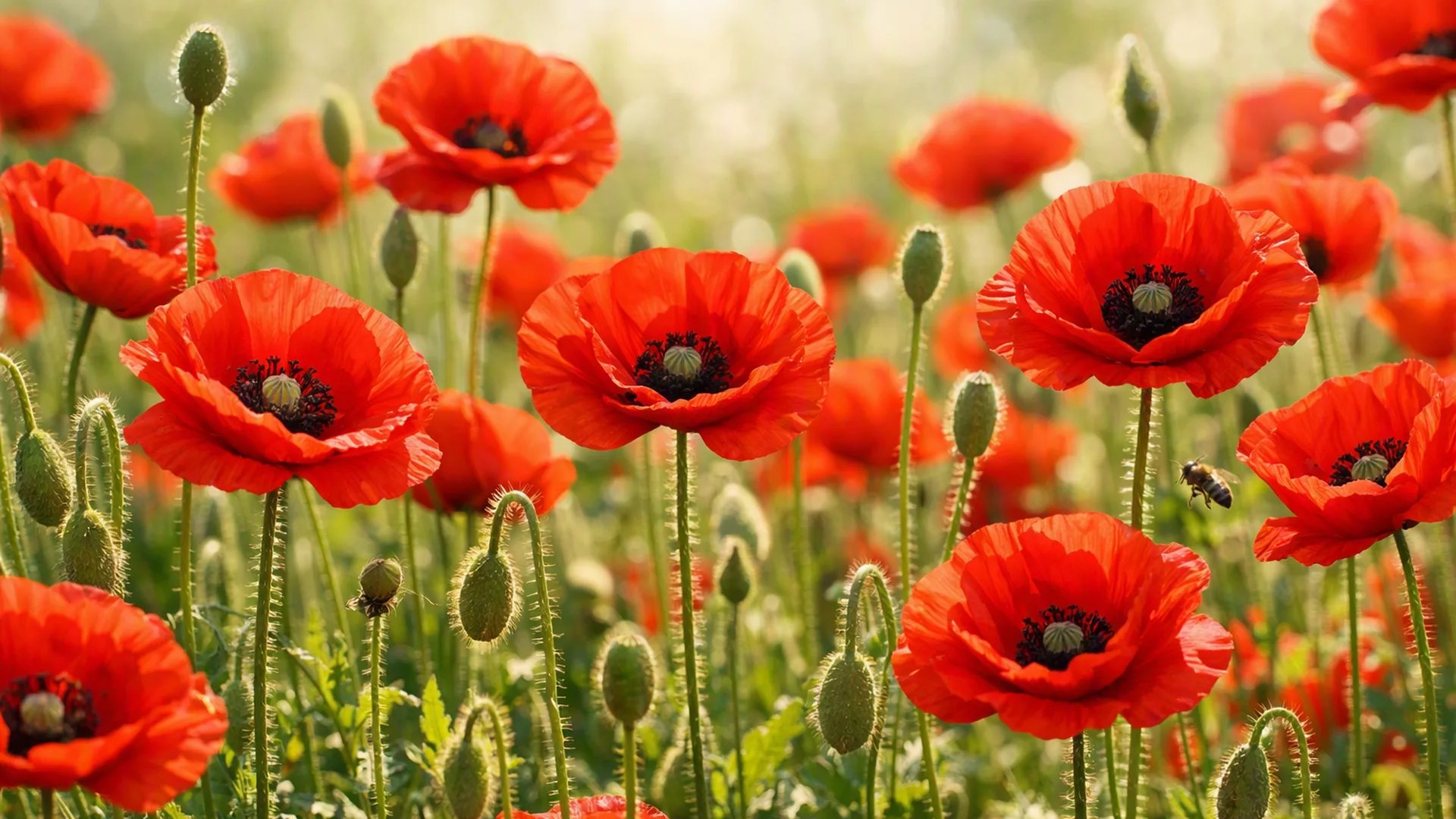
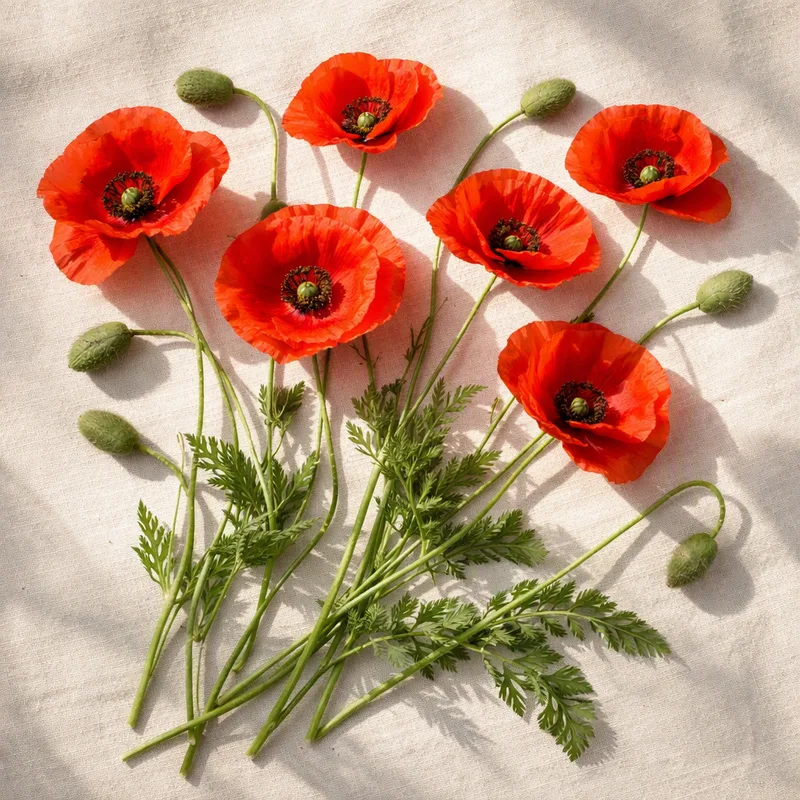
Corn poppy, also called field poppy or Flanders poppy, is an annual native to North Africa and temperate Eurasia. It thrived as a weed of cultivated fields long before modern herbicides, because its seeds lie in the soil for years and germinate when the ground is turned over. That same habit explains the red carpets on the Western Front in the First World War, and why John McCrae's poem 'In Flanders Fields' made the flower an emblem of remembrance across the Commonwealth.
Growing it in Irish soil
Sow seed directly where you want plants: poppies resent root disturbance. Scatter on bare, raked soil in spring or early autumn and press in lightly without burying, because the seed needs light.
- Sun and free-draining soil suit it best.
- Flowers last a day or two each, but a patch flowers for weeks.
- Seed heads are decorative and scatter more seed for next year.
Irish rain can flatten the silky petals, so a sheltered spot helps.
Cutting poppies
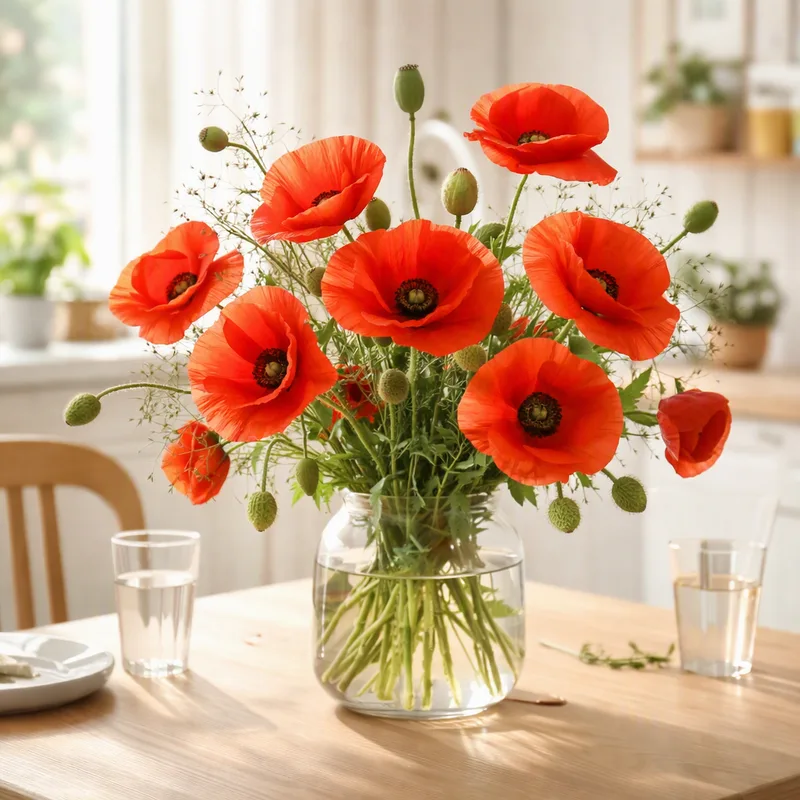
Poppies are fussy as cut flowers. Pick stems when the bud is just opening, and seal the cut end by dipping it briefly in hot water or passing it through a flame. Even so, expect a short life in the vase.
A note on safety
Corn poppy contains rhoeadine, a mild sedative alkaloid. Do not let children or pets eat any part of it, and call your vet or GP if someone has done so.