
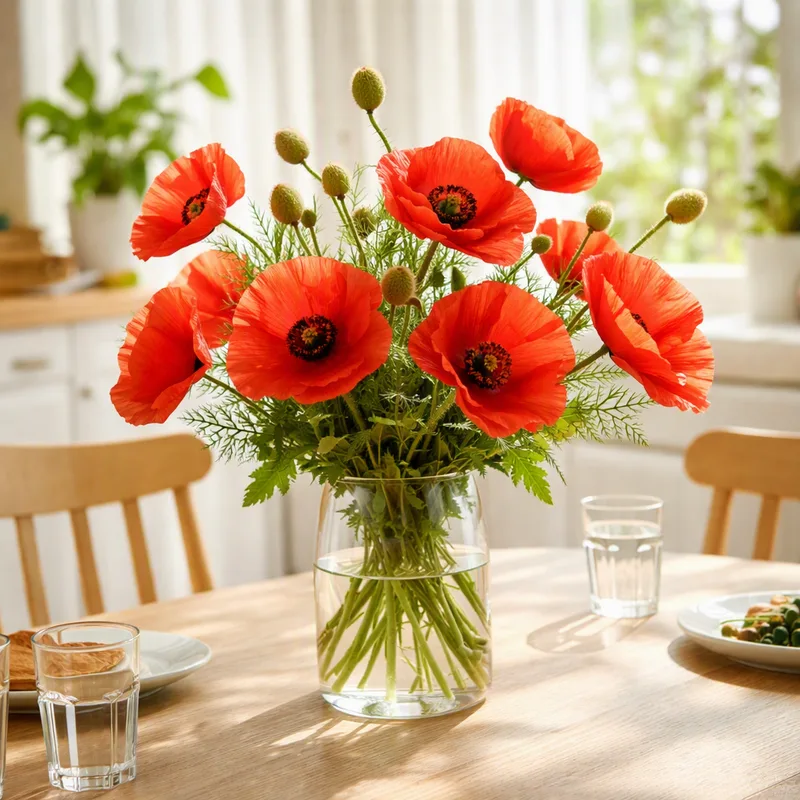

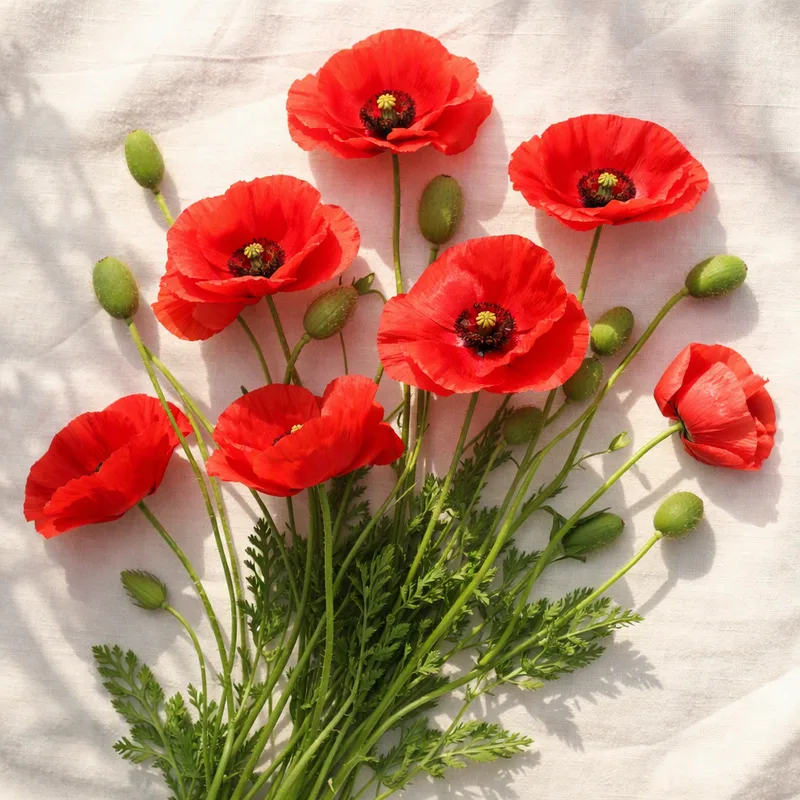
What the red poppy stands for
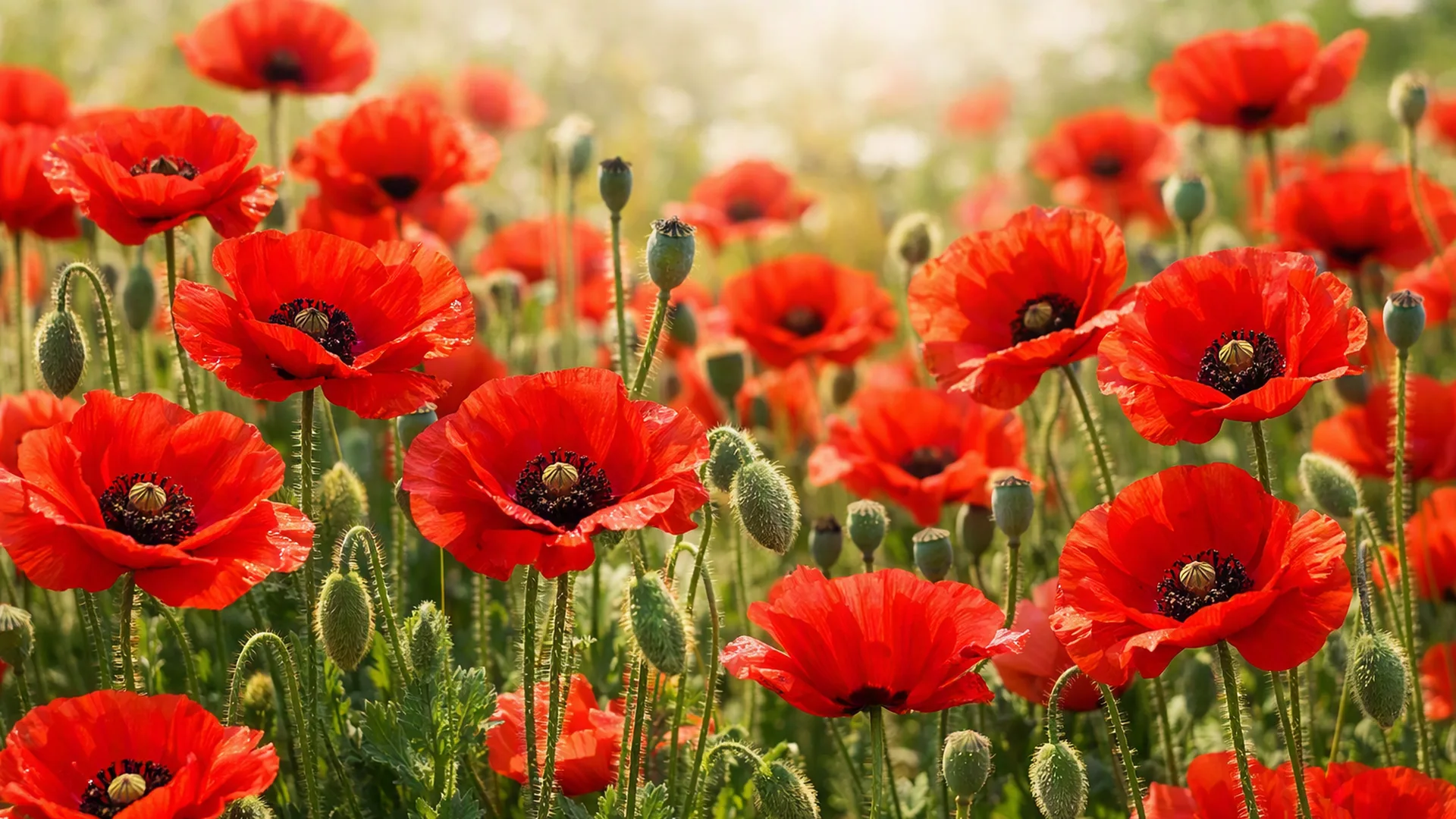
Since the First World War the red corn poppy has been used across the Commonwealth as a sign of remembrance for fallen soldiers. The reason is its habit of springing up on churned ground: poppies bloomed between the trench lines in Flanders, a scene fixed in the poem 'In Flanders Fields' by Lieutenant Colonel John McCrae. In Ireland, remembrance takes several forms, and the red poppy is worn by some people in early November.
Seeing it in the wild
The plant is an annual, flowering from early summer. A single petal falls within a day or two, but the plant keeps making buds. Sheltered field margins, roadside verges and bare ground after building work are the places where you will spot it.
In the garden
Scatter seed on raked soil in spring and leave it uncovered, then thin the seedlings. Poppies hate being moved.
- Sun: full sun, open ground.
- Soil: free-draining; add grit to heavy clay.
- Cut flowers: pick when the bud is cracking, then seal the stem in boiling water for a few seconds.
Spotting it in the countryside
From June onwards red patches appear on the edges of tillage fields, along new road verges and on bare soil where a building site has been cleared. Because the seed bank can survive for many years, a field left fallow may suddenly turn red. In a wildflower meadow mix it is usually the first colour to appear in the first summer, before slower perennials take over.
Keep pets away
The sap of the plant has a mildly sedative alkaloid called rhoeadine. Do not let pets or children eat any part, and ask a vet or doctor for advice if they do.