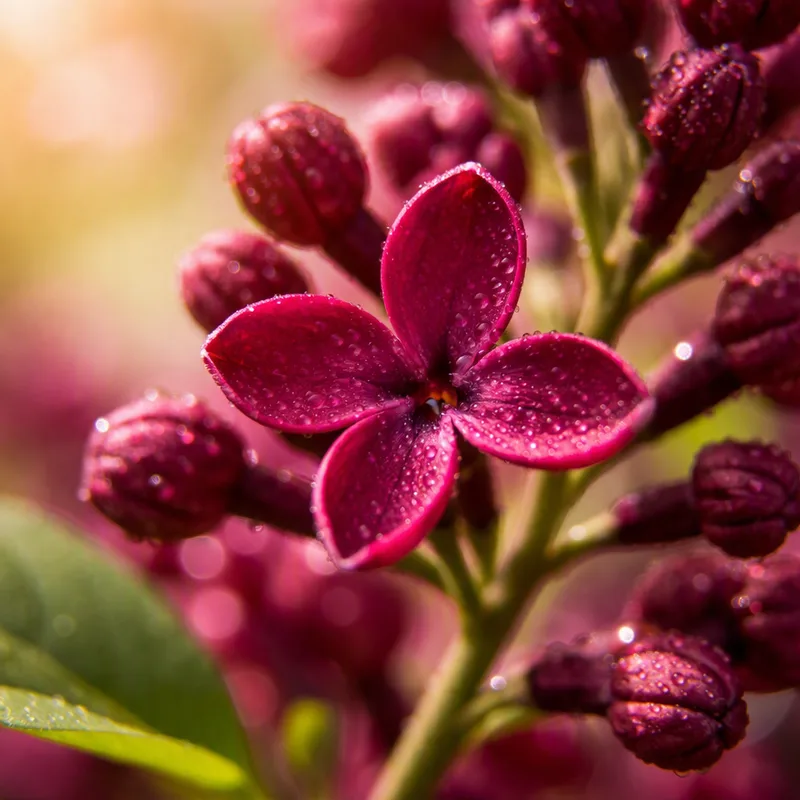



How near can lilac get to red?
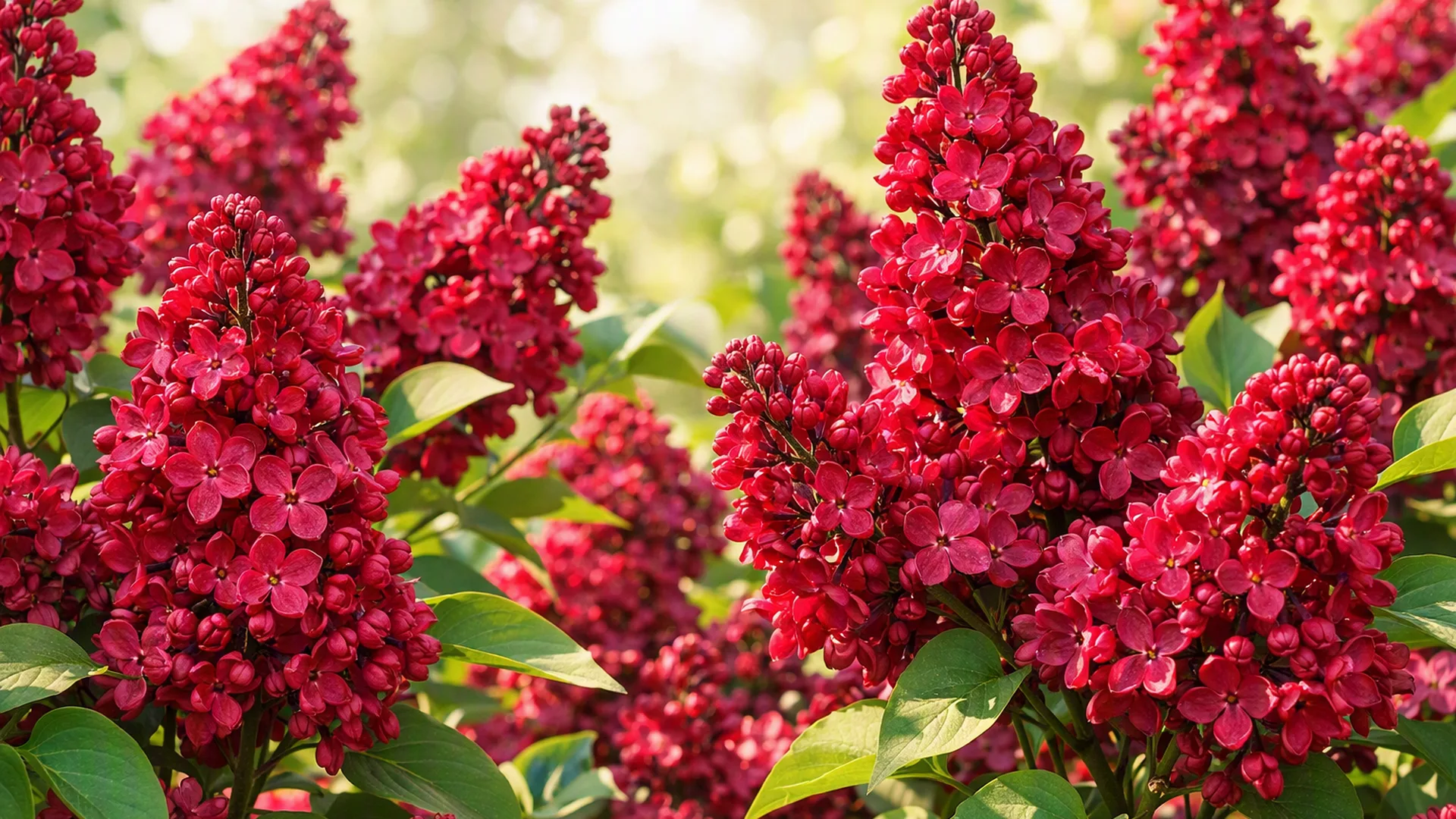
Common lilac does not produce a scarlet or crimson flower. What breeders offer are deep reddish-purple, magenta and wine shades, which look near red in bud and in low light. Wikipedia's cultivar list describes 'Andenken an Ludwig Späth' and 'Mrs Edward Harding' as deep pink-red, while 'Sensation' bears purple flowers edged in white. If the label says "red lilac", this is the range it really covers.
Many of the dark forms descend from Victor Lemoine's nursery in Nancy, where over 150 named lilacs appeared between 1876 and 1927.
Why dark flowers work
Deep colours show best against pale walls and silver or yellow-green foliage. They also pair well with white lilac planted nearby, which brings out the richness of the darker one.
- Plant in full sun; shade dulls the colour and reduces the number of flowers.
- Water new plants through their first dry spell.
- Mulch each spring with garden compost or well-rotted manure.
- Deadhead after the display, taking care not to cut into the new buds just below.
Irish growing conditions
Lilac prefers soil that is neutral or slightly chalky and does not suit very acid, wet ground. In the peaty soils of parts of the west, raising the bed or adding lime helps, and in heavy clay a raised planting hole prevents waterlogging.
Cut stems and animals
Cut branches last a few days in water. The ASPCA does not list Syringa vulgaris as toxic; its Persian lilac entry is a different tree, Melia azedarach.