
Mauve-pink rather than candyfloss
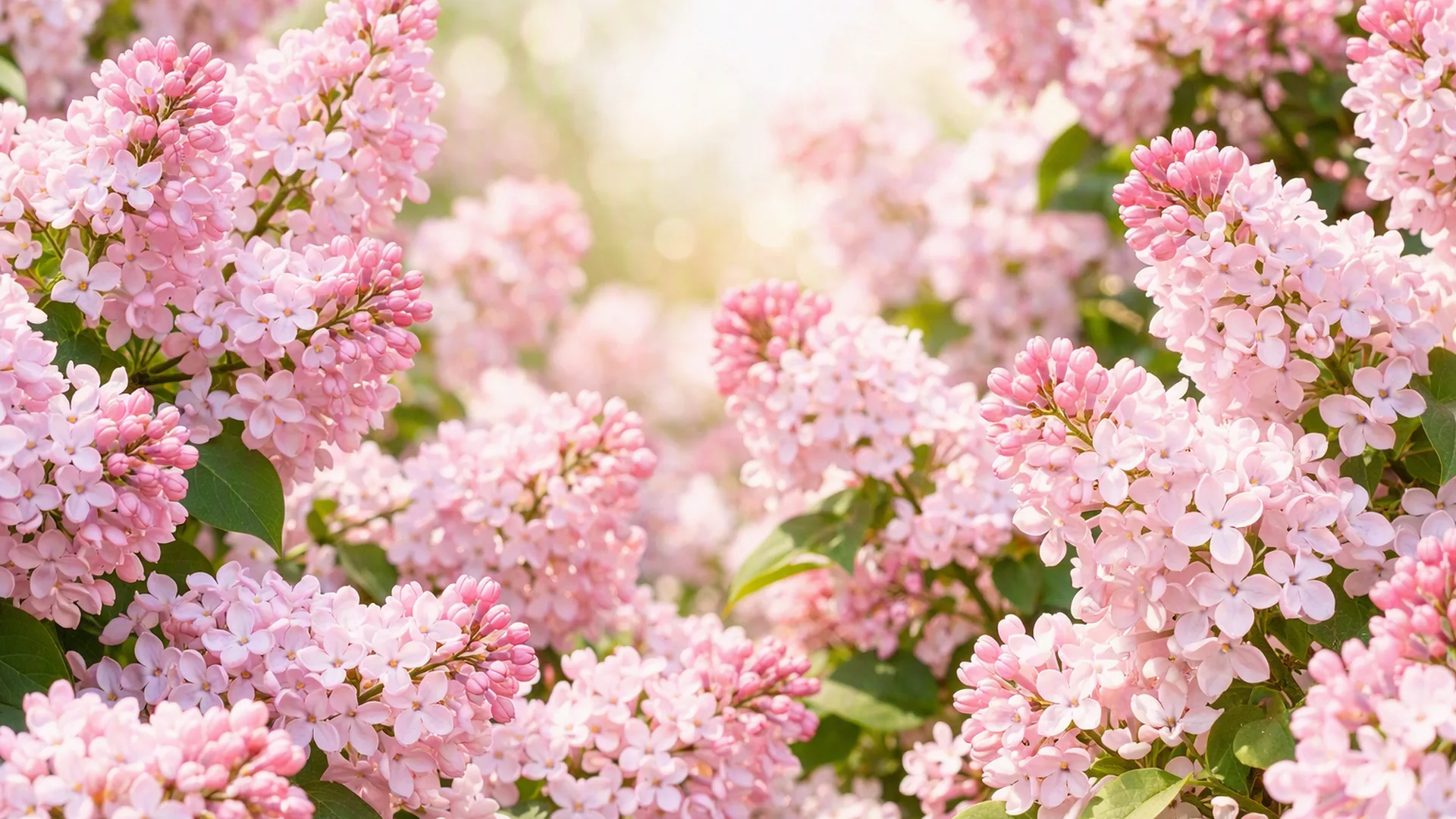
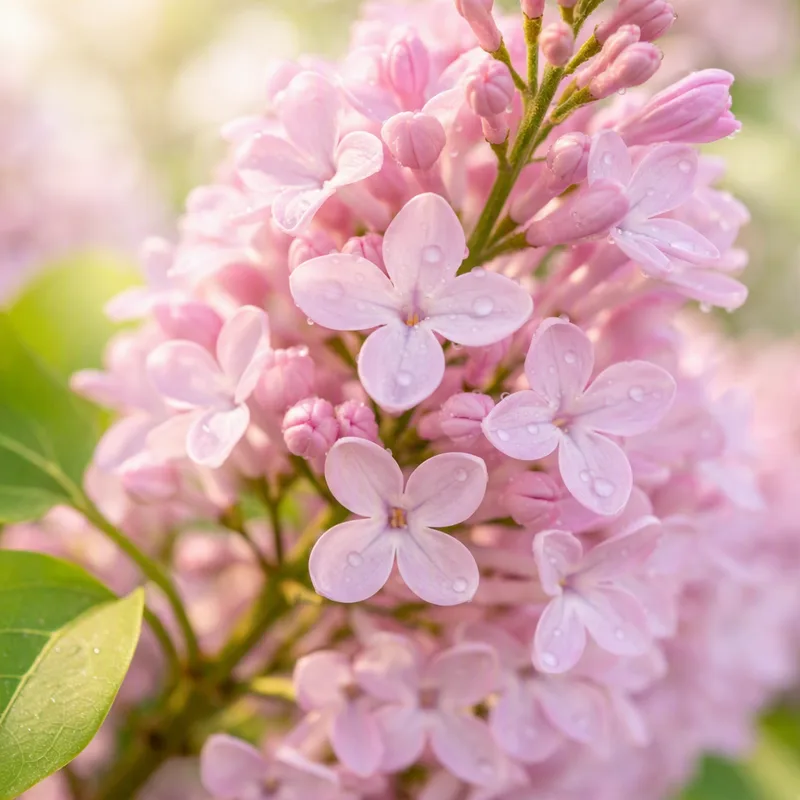
Common lilac's natural colour sits between pink and purple, so a "pink lilac" is usually a mauve-pink or a deep rose. Some cultivars lean clearly to pink, among them 'Andenken an Ludwig Späth' and 'Mrs Edward Harding', which Wikipedia describes as deep pink-red. The paler forms look pink in cool light and lilac in warm light, which is half the charm.
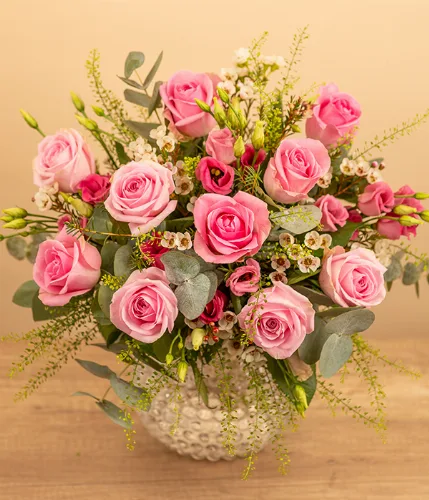
In the language of flowers a pink flower suggests affection, and lilac as a whole is tied to spring and renewal. Pink stems make a pretty gift in May.
Using it in a bouquet
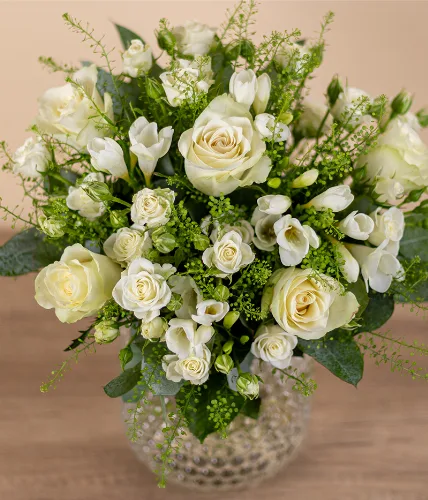
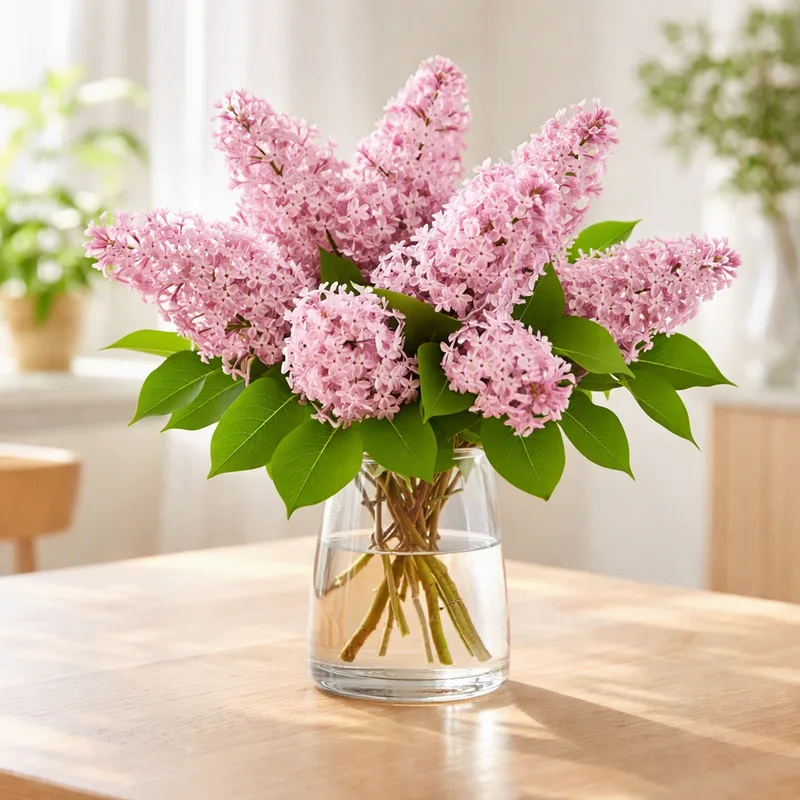
Pink lilac pairs well with white tulips, cream roses, pale foliage and sprigs of fresh mint. A tall glass vase suits the heavy heads. Remove the lower leaves and let the stems drink cold water for a few hours before arranging.
Planting notes
- Pick a site in full sun with good drainage.
- Space shrubs well apart; they reach several metres and sucker.
- Add a handful of lime if your soil is peaty or acidic.
- Prune right after the flowers fade, keeping the shape open.
Lilac is fully hardy in Irish winters. It sometimes flowers heavily only every second year, a habit eased by removing spent heads.
Safe for pets?
Common lilac does not appear on the ASPCA's toxic lists. Do not confuse it with the Persian lilac (Melia azedarach) on its toxic list. As for any plant, chewing a lot of leaves may upset a stomach.