
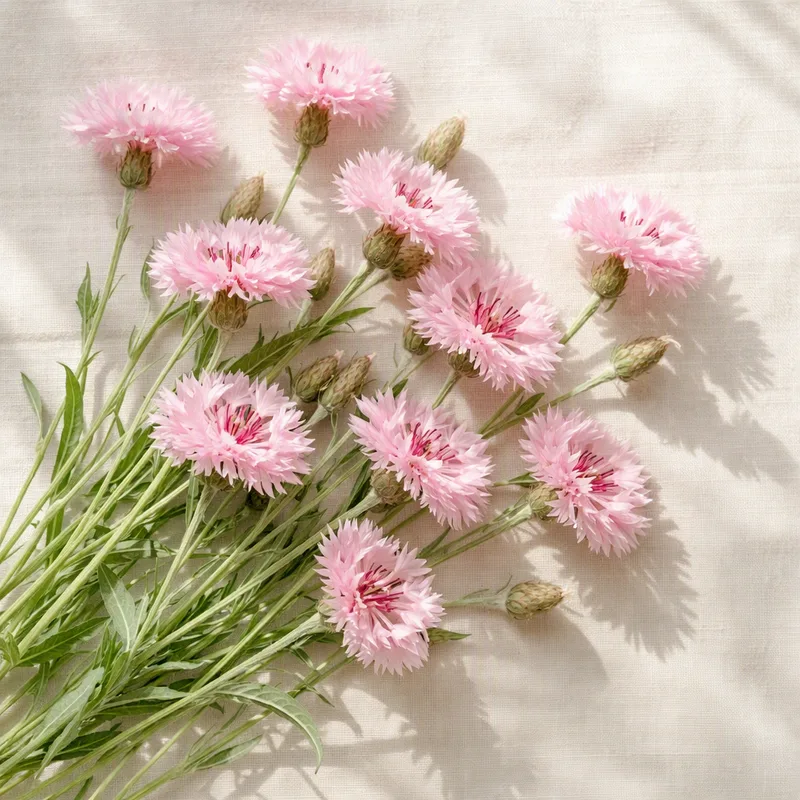
Pink is a garden invention
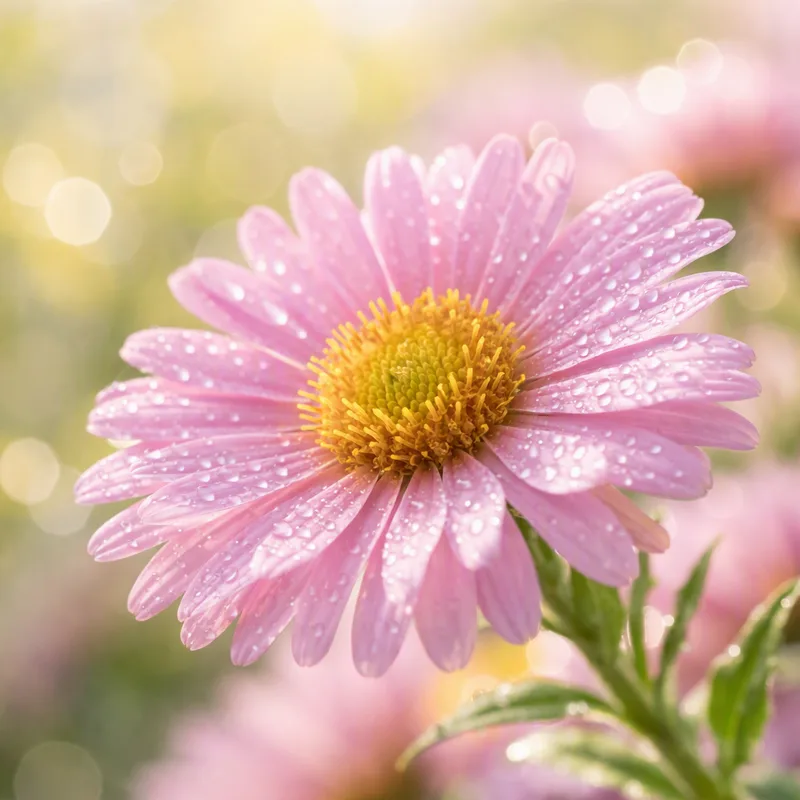
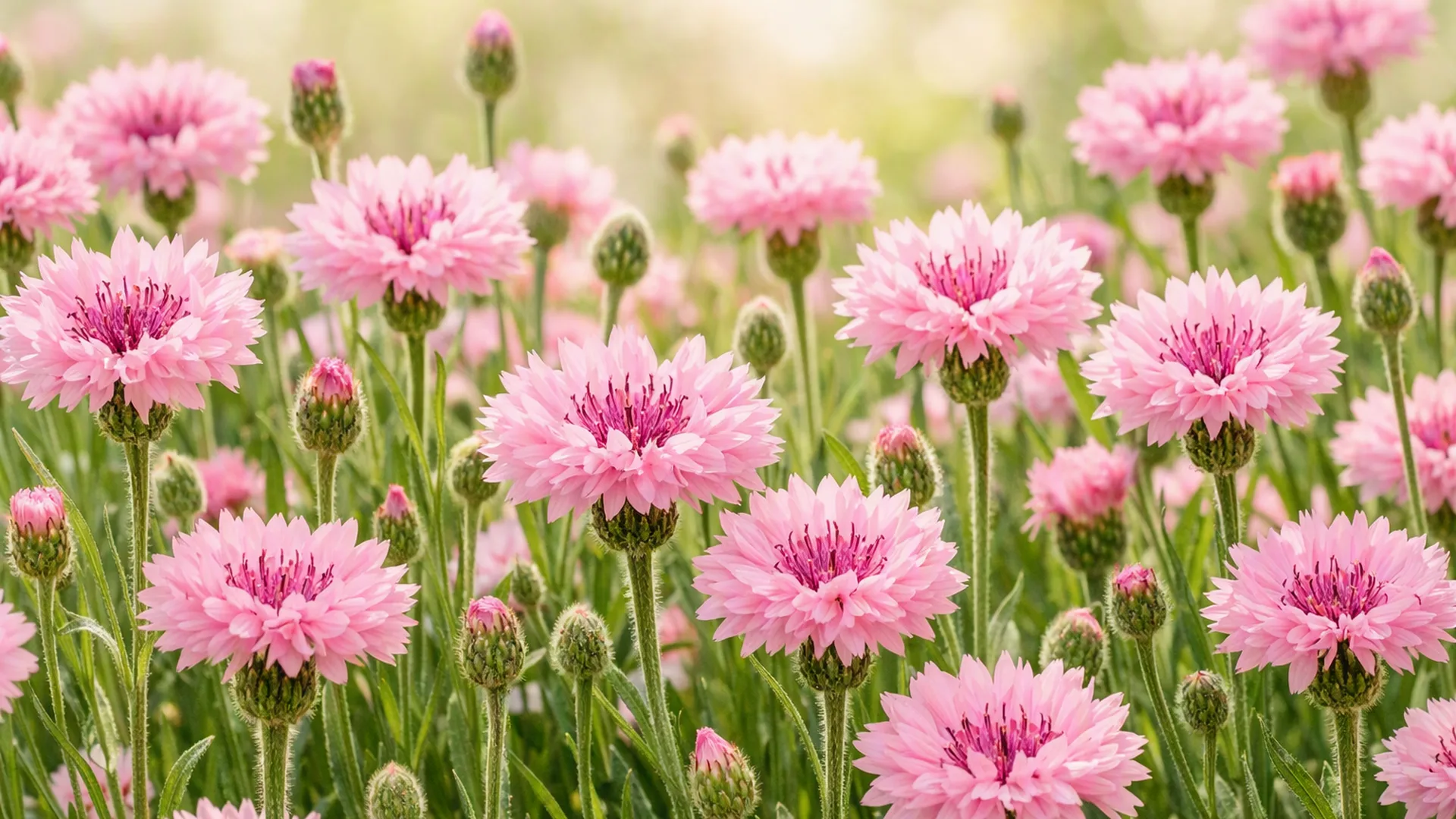
In the wild, cornflowers are an intense blue, as the Greek root kyanos suggests. Breeders have selected pastel pinks and deeper rose shades, together with purple, lavender and white. Seed sold as pink often has a mix of tones, so a packet may produce pale blush and stronger pink plants side by side. Double-flowered selections are common in cut-flower trials.
Designing with pink
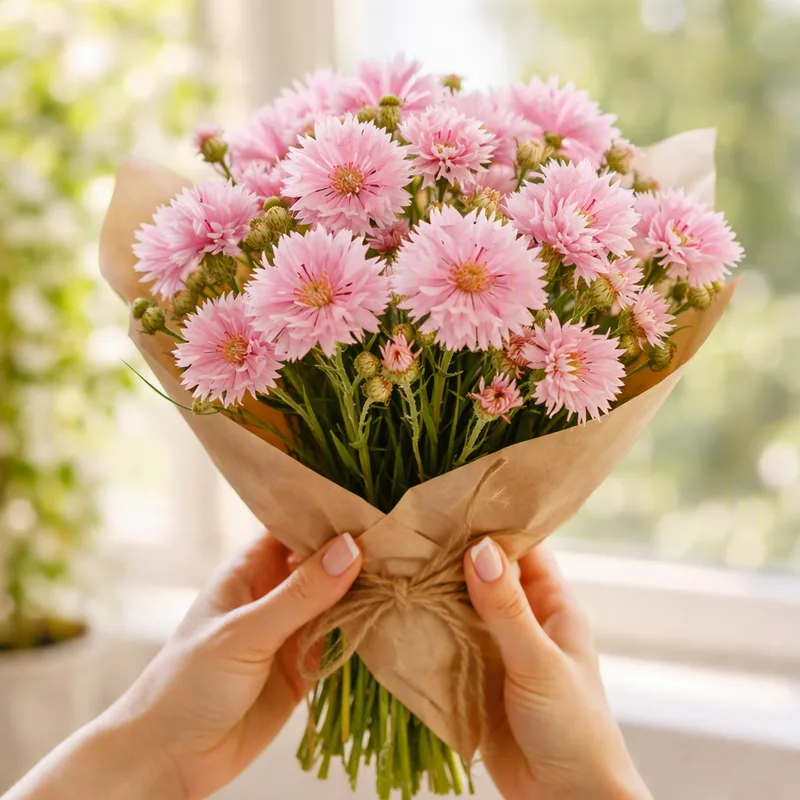
Pink cornflowers look natural beside blue ones, in a meadow-style scheme with grasses, and in a bouquet with white or cream blooms. They go well with pink roses or sweet peas as a filler. If you search for pink cornflower colour, expect a soft, slightly dusty pink rather than a neon one.
Sowing and care
- Sow outdoors in spring in a sunny, free-draining place.
- Thin the seedlings to give each at least 15 cm.
- Skip fertiliser, since poor soil makes sturdier plants.
- Deadhead frequently for a long season from June to September.
Plants grow 40 to 90 cm. In windy gardens along the west coast, a few twigs pushed into the soil give support.
In the vase
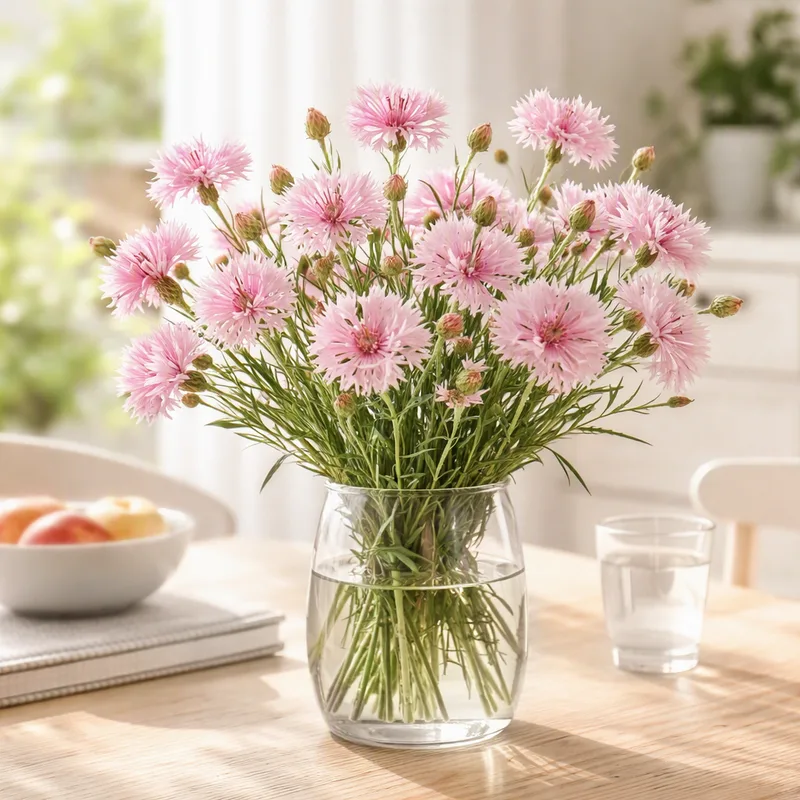
Cut stems when the first flowers have opened. They last about a week if the water is kept clean.
Pets
The ASPCA lists the cornflower as non-toxic to dogs and cats, which makes it an easy choice for households with animals.