

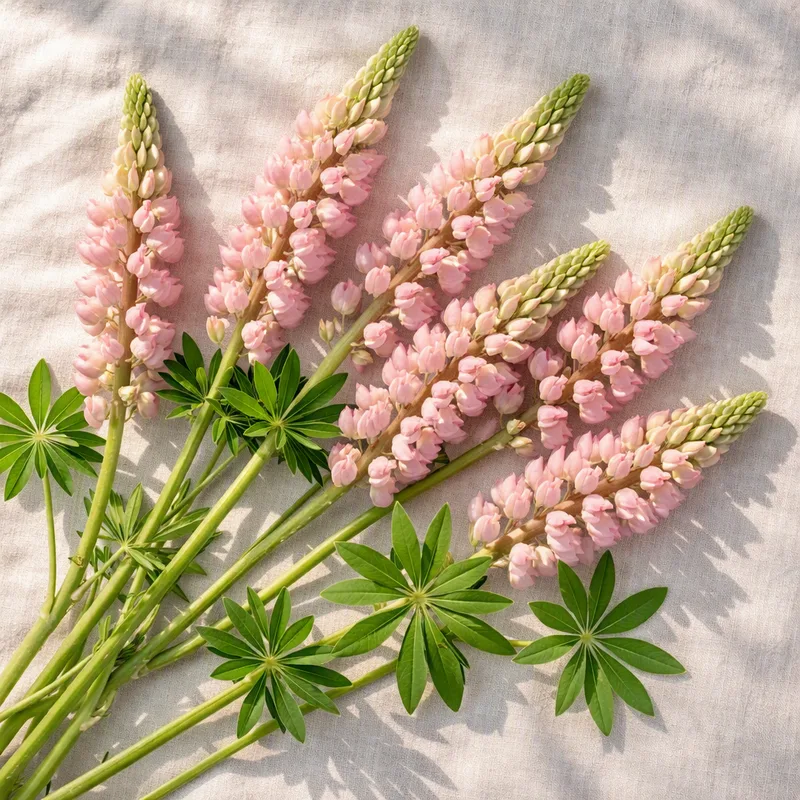
Pink from the breeder's bench
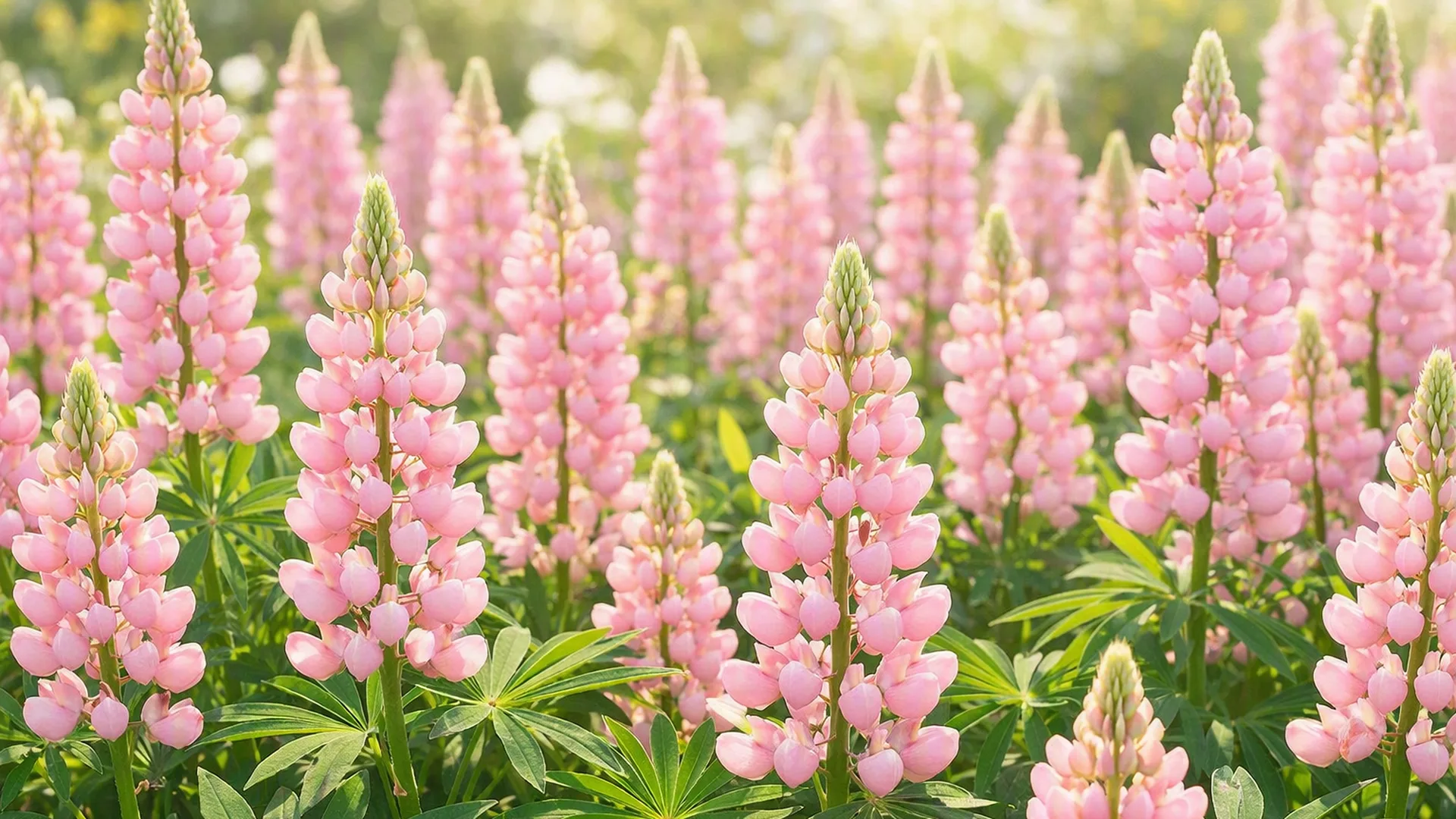
In the wild the plant is mostly blue to violet, and the pinks seen in gardens now came through selection, especially the Russell hybrids bred in England in the early twentieth century. Shades now run from pale and salmon to coral and deep rose, often with a white or paler patch on the upper petals. Compact series exist if you want something lower for a bed edge.
Pink in a mixed border
Pink spires work best among other perennials, and repeating the colour in two or three places makes the planting calmer. Good neighbours include:
- blue and white lupins, for contrast in height
- sage and cranesbills, which cover the ground below the lupin
- peonies and roses that flower in June too
- ornamental grasses, which fill the gaps once the spikes are cut
Lupin leaves often tire after flowering, so set the plant a little behind the front row and let later perennials hide it.
Cutting for the house
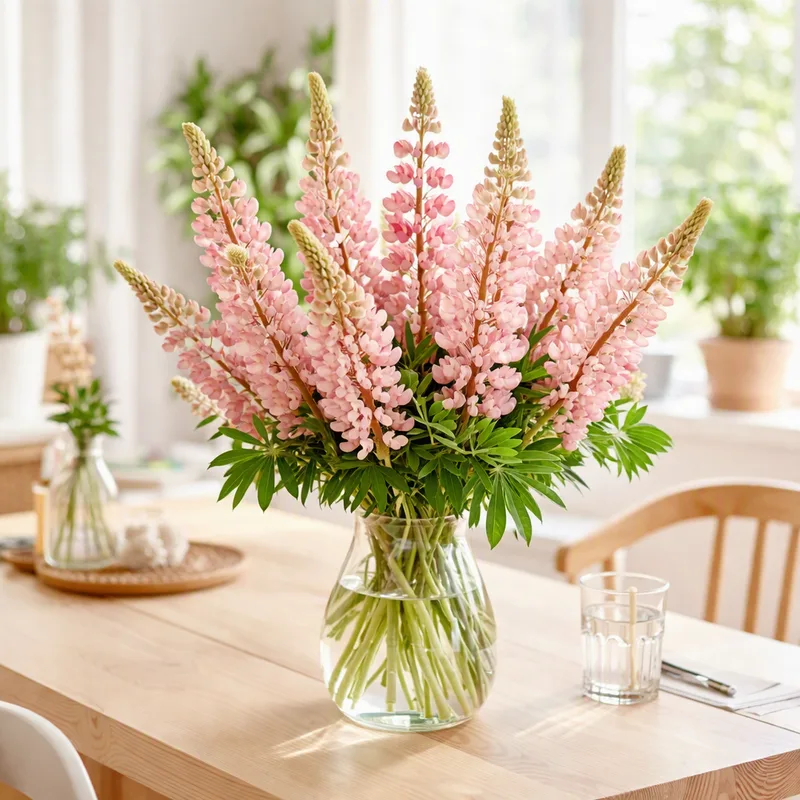
For a bunch, cut the spikes when the lower third is open, strip lower leaves and put them straight into cold water. They last a few days.
Handle with care
Garden lupins hold toxic alkaloids. Newer hybrids are particularly rich in them, and the ripening pods are the part to watch. Phone a vet if a pet has eaten seed, and the National Poisons Information Centre or your doctor if a child has.