

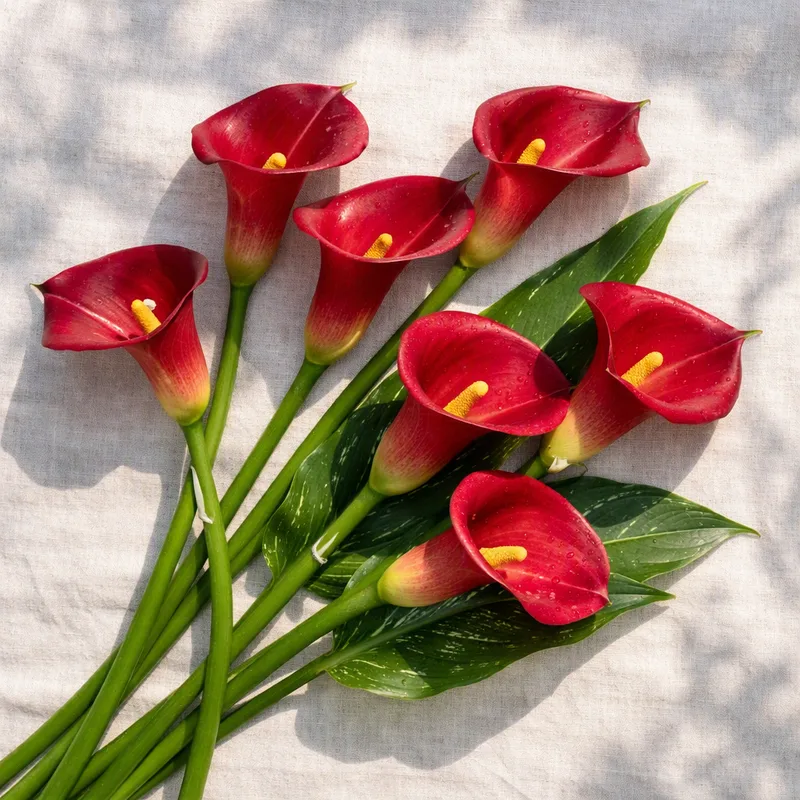
Not the wild species
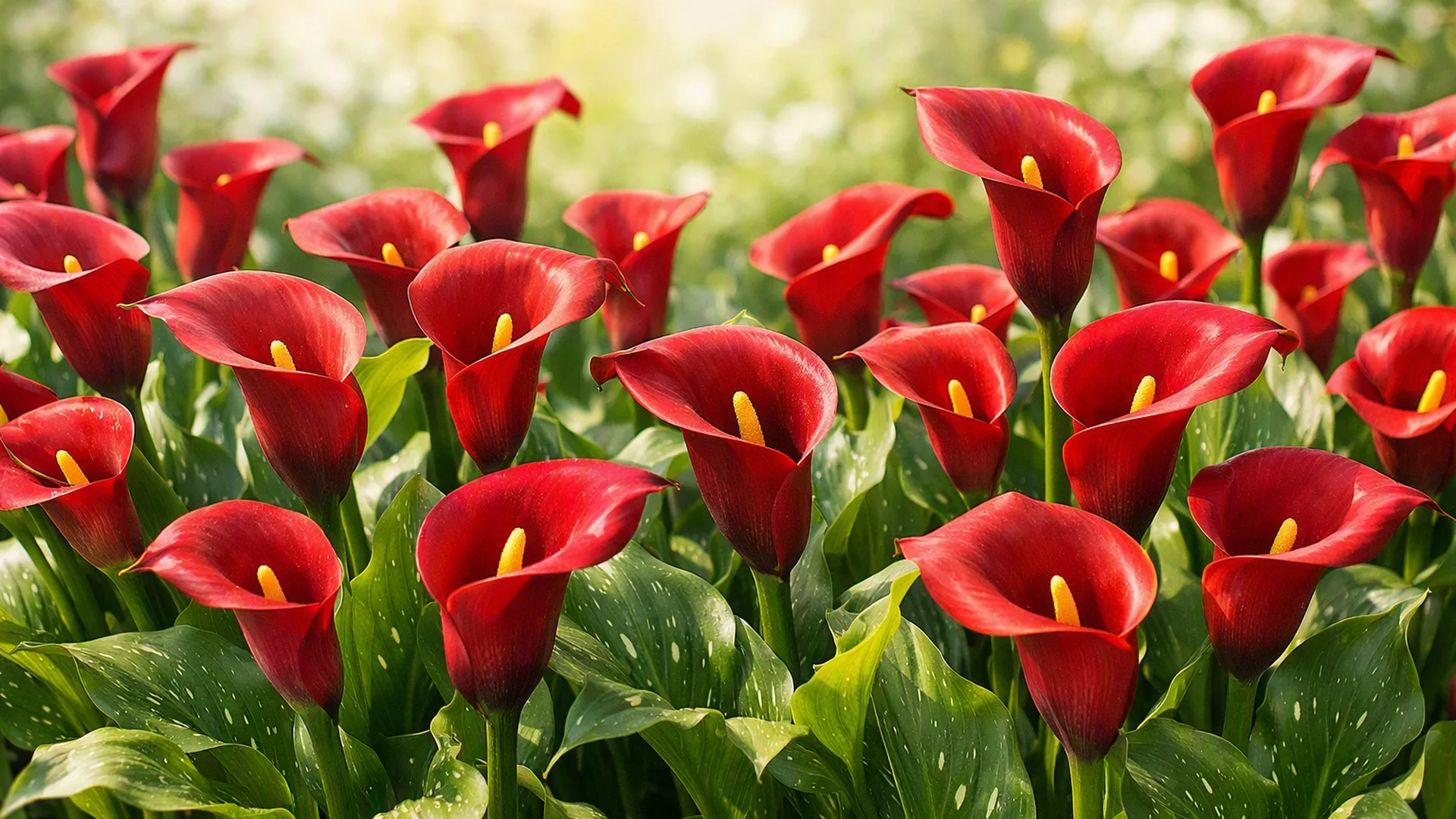
The wild calla, Zantedeschia aethiopica, is white. Across the genus, natural species show white, yellow and pink spathes. Deep reds, oranges and purples come from cultivars and hybrids, bred mainly from the smaller summer-flowering species. There is a red-spadixed cultivar of the white calla called 'Red Desire', but it is described as very rare, so most red callas on sale are hybrid tubers.
How red callas differ
Hybrid callas are generally shorter than the 60 to 100 cm giant white arum lily and grow from tubers rather than the thick rhizome of Zantedeschia aethiopica. The leaves may be spotted with white. The colour sits in a funnel-shaped spathe around a slim spadix, so the effect is glossy and sculptural.
Growing red callas
- Plant tubers in pots in spring, in a bright, frost-free place, and move them out only when the weather warms.
- Water regularly while in growth, and ease off after flowering.
- Lift the tubers or bring the pots inside before the first frost; wet cold soil in an Irish winter is more dangerous than a dry cold spell.
- Feed lightly with a flower fertiliser during the season.
In arrangements
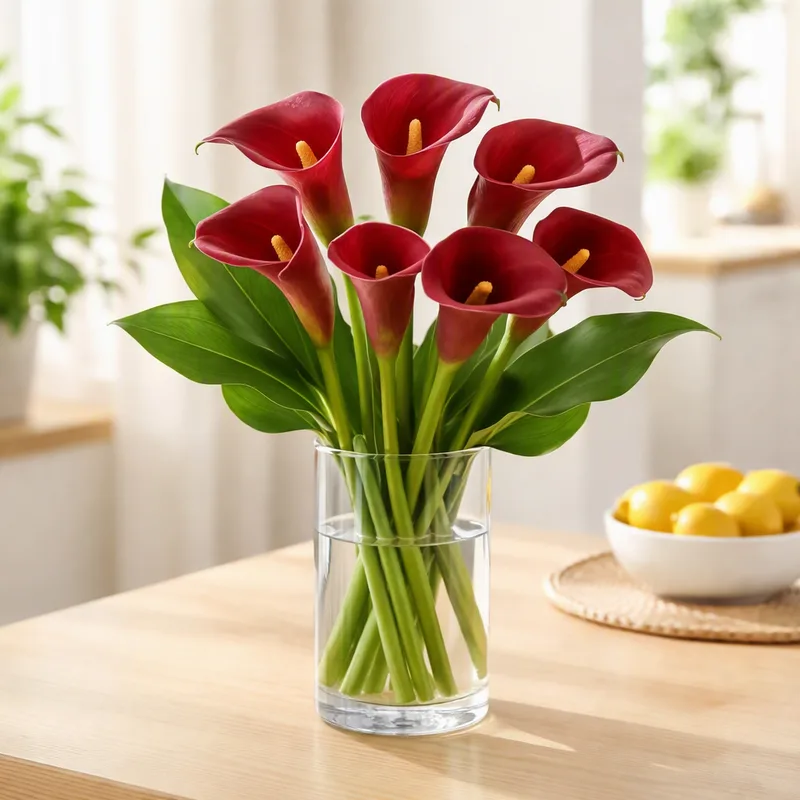
A red calla needs space. One or two stems in a tall, narrow vase look better than a crowded bunch. They suit Christmas tables as well as Valentine's Day, with dark foliage or white ranunculus.
Keep away from pets
The ASPCA lists the calla lily as toxic to dogs and cats because of calcium oxalate. The signs are intense burning in the mouth, drooling, vomiting and difficulty swallowing. Other members of the arum family share this feature, so treat red callas with the same caution, and keep them out of reach of children.