

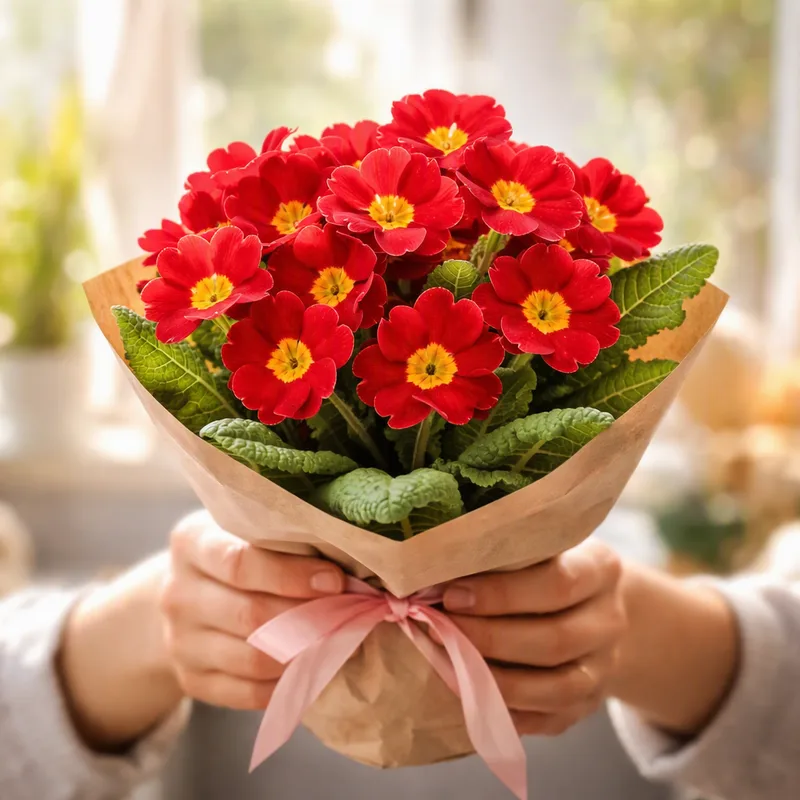

A garden colour
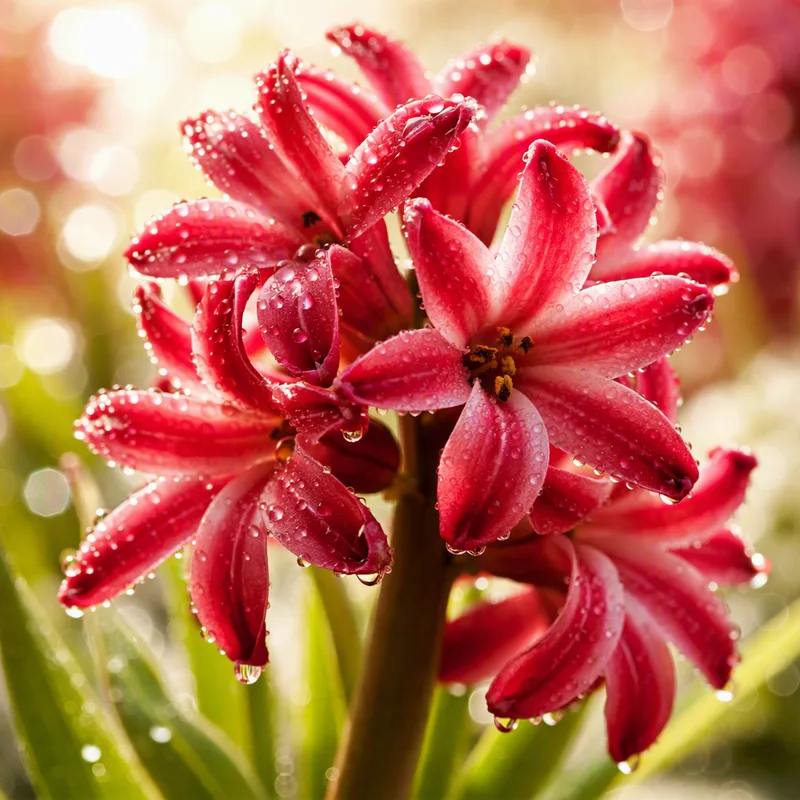
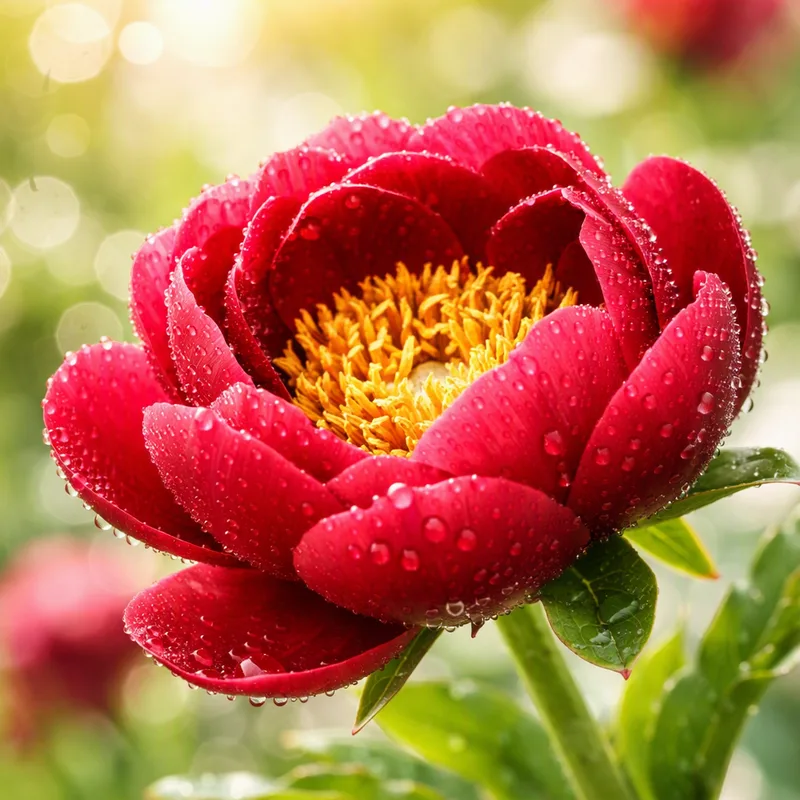
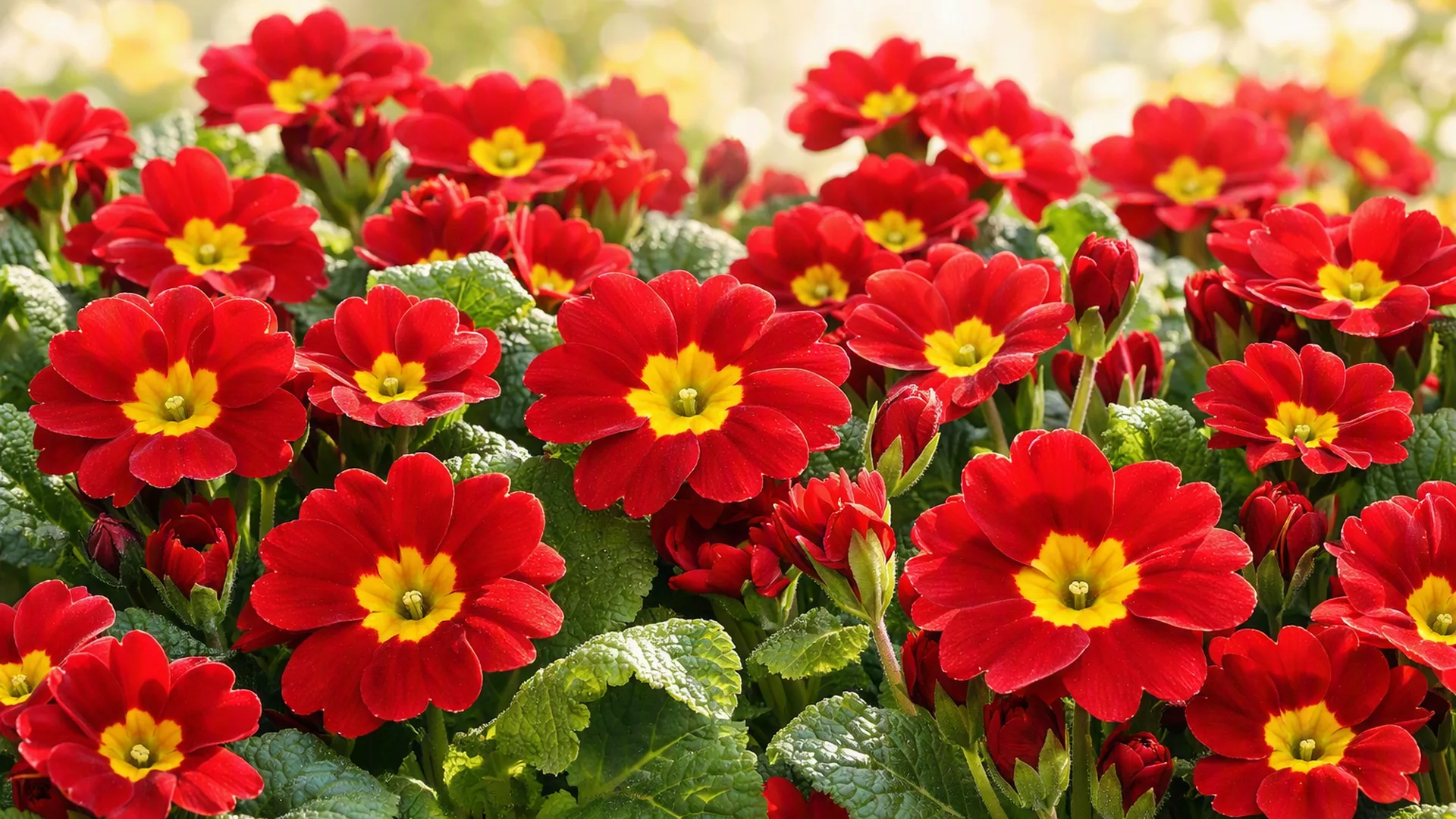
Wild primroses are pale yellow, with red forms mainly occurring where garden plants have escaped. Red is therefore a breeder's colour, available in polyanthus types with several flowers per stem as well as the single-flowered pots. The petals often surround a gold eye, which gives a strong contrast.
Where to use red primulas
Red works well in containers beside a front door, in a window box with ivy, or massed in a low bowl for the kitchen table. Thanks to the compact height of 10 to 25 cm, they fit narrow sills. Because the colour stands out in dull weather, they are a cheerful sight in an Irish February.
Keeping them flowering
- Keep the plant cool and light, not on a radiator shelf.
- Water when the compost surface dries out and avoid wet saucers.
- Pinch faded blooms along with their stalks.
- Move outdoors in March if the weather is mild, and shelter from hard frost.
Slugs and vine weevil are the common pests, so check under the leaves.
After the display
Plant out the clump in partial shade. In time it may bulk up into a larger, longer-lived plant, although fancy red types sometimes revert or fade.
Toxicity and skin
The ASPCA lists common primrose (Primula vulgaris) as toxic to dogs, cats and horses, with mild vomiting as the main symptom. Primula obconica can cause a skin allergy in some people, so wear gloves when handling it.