

Not just one plant
The genus was named by the French botanist Charles Plumier for Michel Bégon, a governor of a French colony in the Caribbean. Wild begonias grow in moist tropical and subtropical climates across the Americas, Africa and Asia. The leaves are famously lopsided, one side larger than the other, and male and female flowers sit separately on the same plant.
Three garden types
- Wax begonias (the semperflorens group) are low, bushy bedding plants that flower from early summer to the first frost.
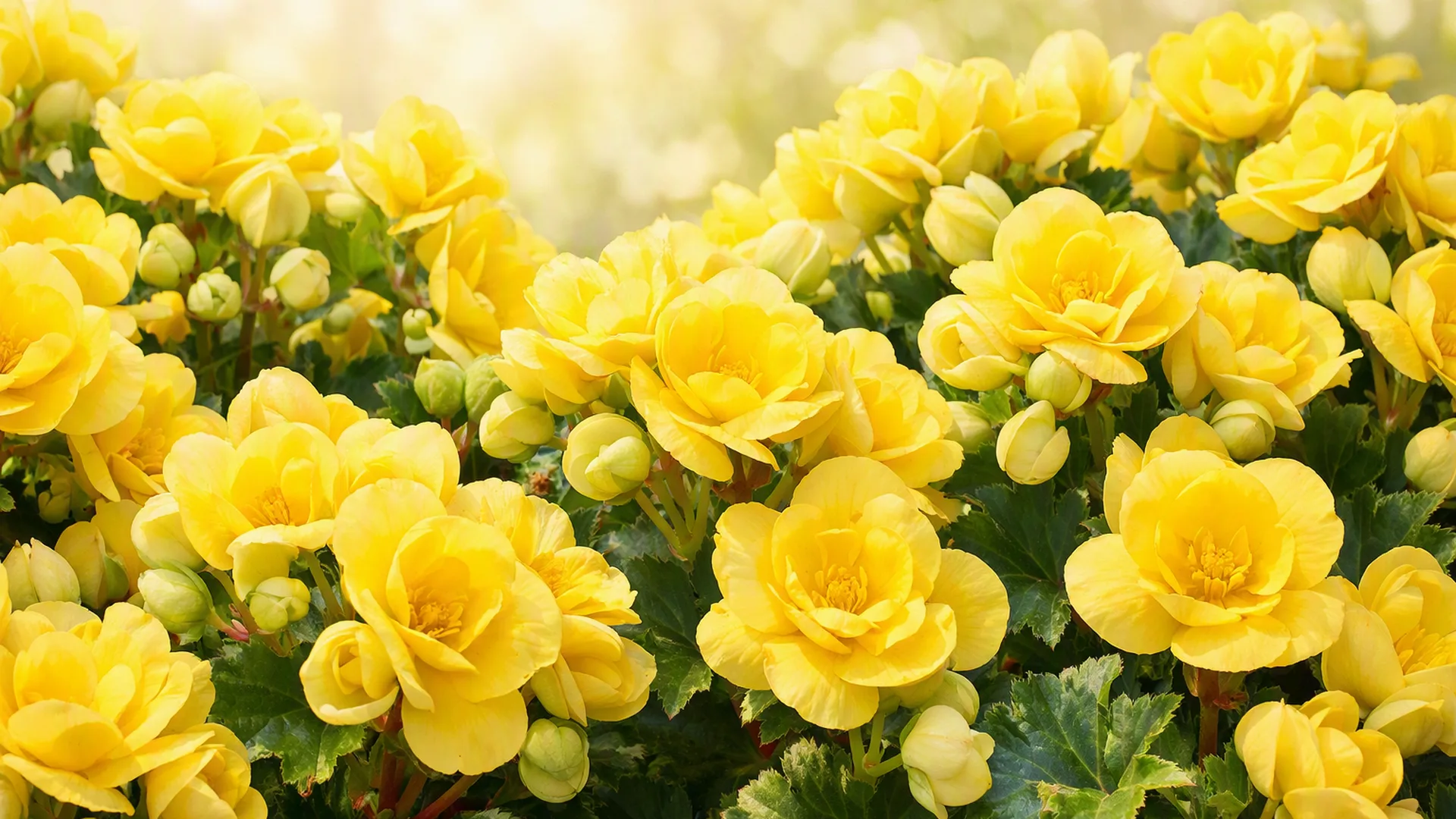
- Tuberous begonias carry large, often double flowers and die back to a tuber that can be stored.
- Rex begonias are grown mostly for their patterned leaves and are houseplants here.
A good fit for a soft climate
Most begonias want bright light but not blazing sun, so a shady Irish porch, a north-facing window box or a spot under trees all work. Water at the roots and not over the foliage, which invites mildew in humid weather, and never let pots sit in water. Plant out only when frost has passed, because the bedding types do not survive a freeze. Tuberous types should be lifted in autumn, dried and stored cool and frost-free.
Keep away from animals
The ASPCA warns that begonias are toxic to dogs, cats and horses. The soluble calcium oxalates are concentrated underground, so tubers are the most dangerous part. Signs include vomiting and salivation in dogs and cats, and kidney failure in grazing animals. Do not leave tubers lying about, and phone a vet if you suspect a nibble.