
Is astilbe safe around cats?
Many people ask this before planting. Astilbe does not appear in the ASPCA's list of toxic plants, so it is generally regarded as a safe choice in a garden that cats visit. As with any plant, an animal that eats a lot may get an upset stomach, and a vet can advise.
Pink varieties to try
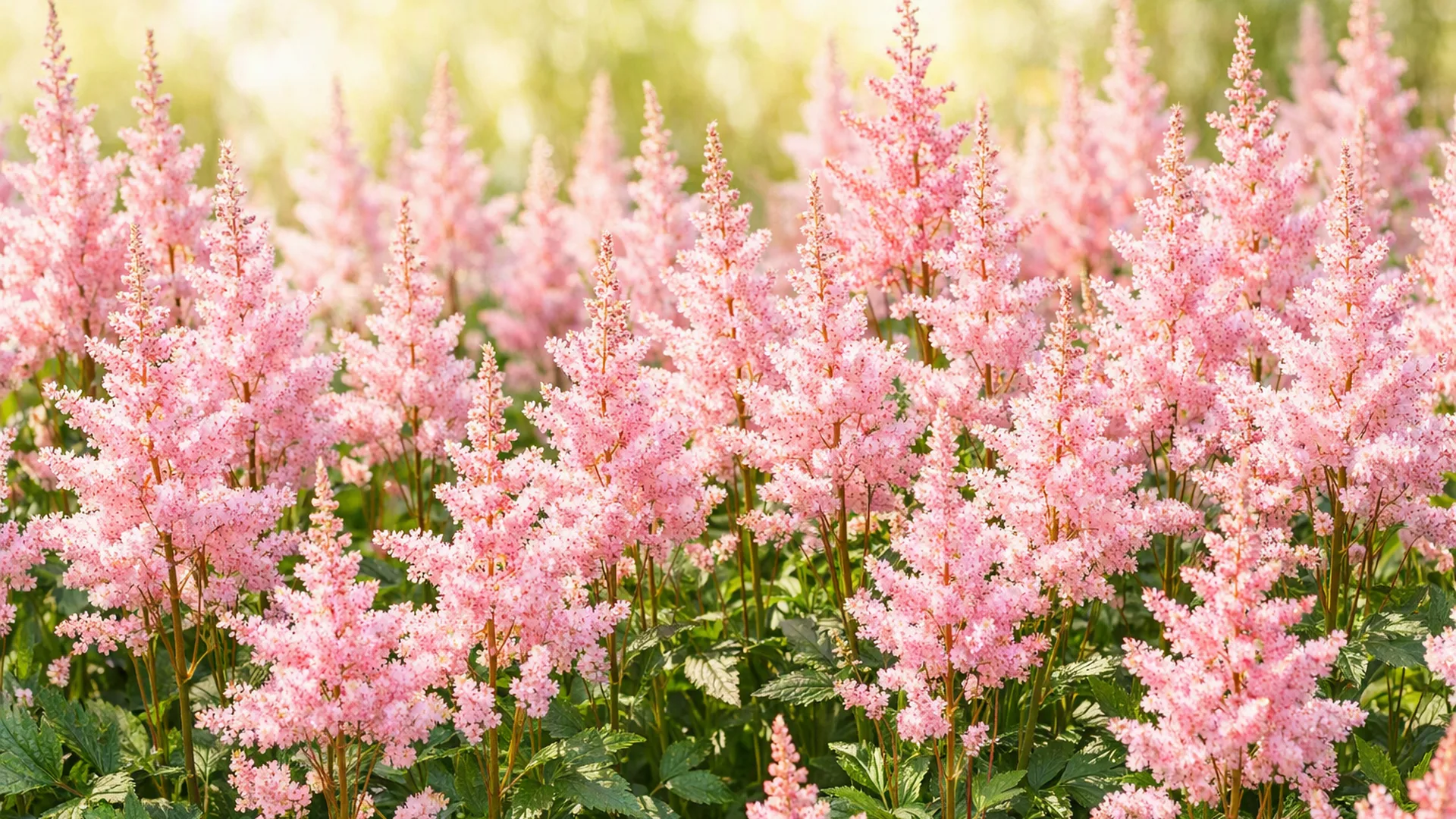
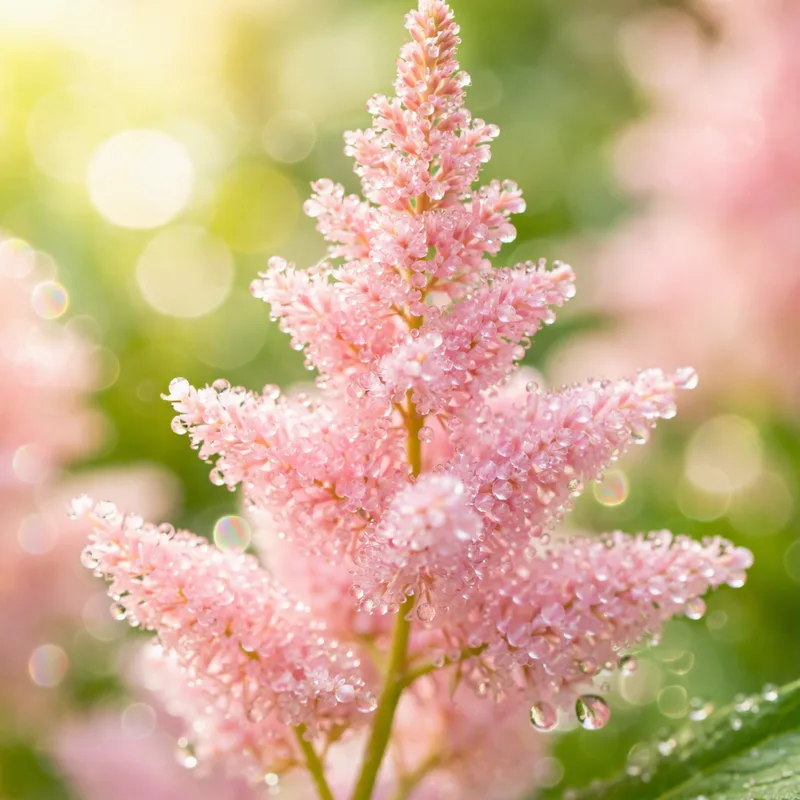
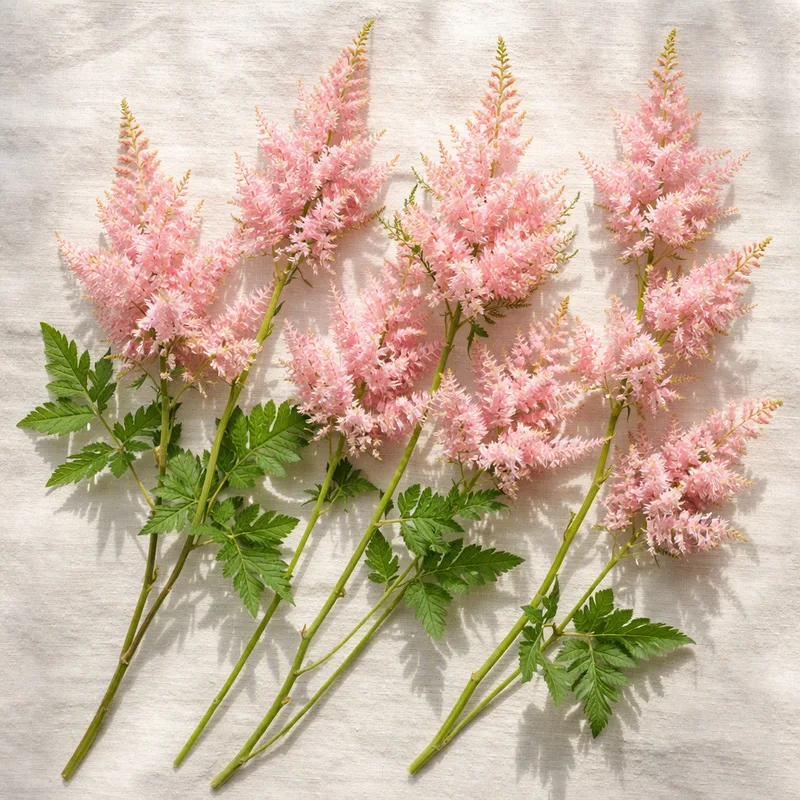
Pink astilbes range from soft pastel through salmon to deep rose. These pink cultivars have the RHS Award of Garden Merit:
- 'Straussenfeder' from the Thunbergii group, with loose, arching plumes
- 'Sprite' from the Simplicifolia group, compact with pale pink plumes
- 'Bronce Elegans', also Simplicifolia, in salmon pink
- 'Rheinland', a pink Japonica hybrid
- 'Perkeo', a small pink one from the Crispa group
Several of those names are German because German breeders, notably Georg Arends, shaped the genus.
A shady-bed perennial
Most pink perennials want sun, so pink astilbe fills a gap in shade. Plant it in moisture-retentive soil, which suits Irish pond edges, clay borders and damp corners, though the RHS also warns that it must not become waterlogged. Mulch yearly, divide the clumps every few years and water well in any dry spell, because drought is the one thing that really harms it.
A pink flower for the vase
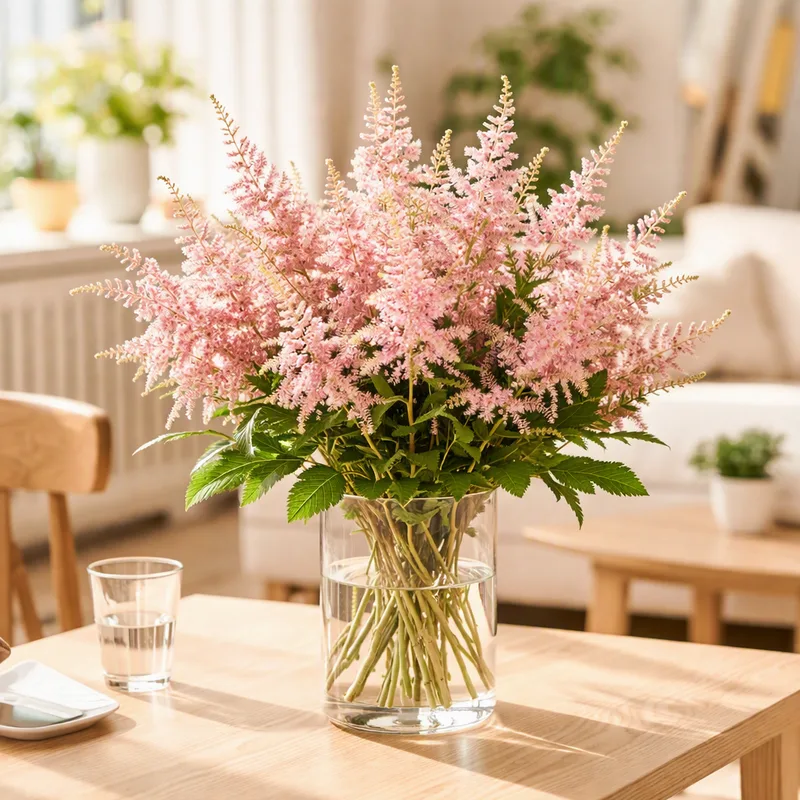
Cut the plumes when they are about three-quarters open and strip any leaves that would sit below the water line. Bunches last roughly five to eight days if the water is kept cool and fresh.