
A flower of verges and meadows
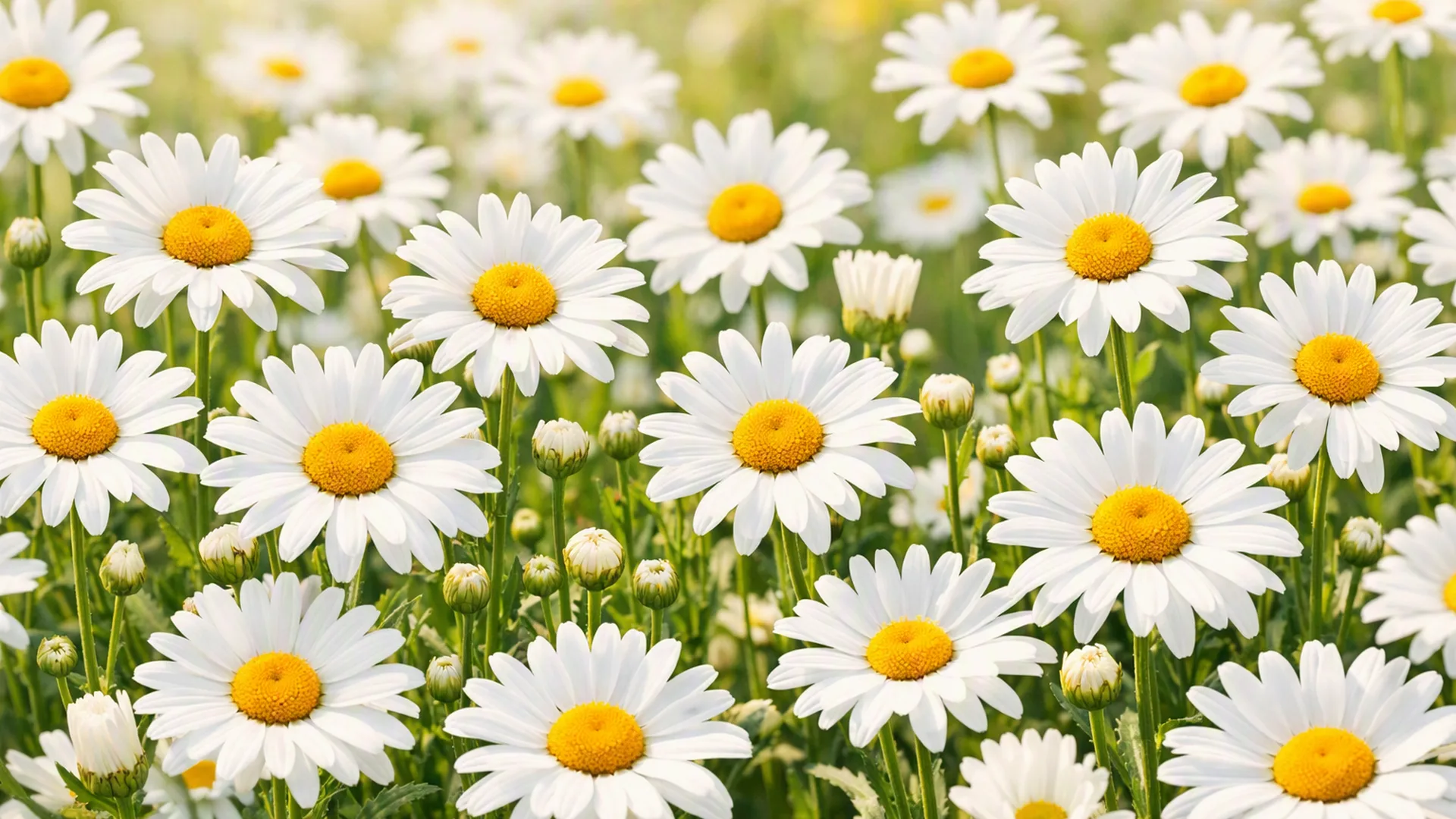
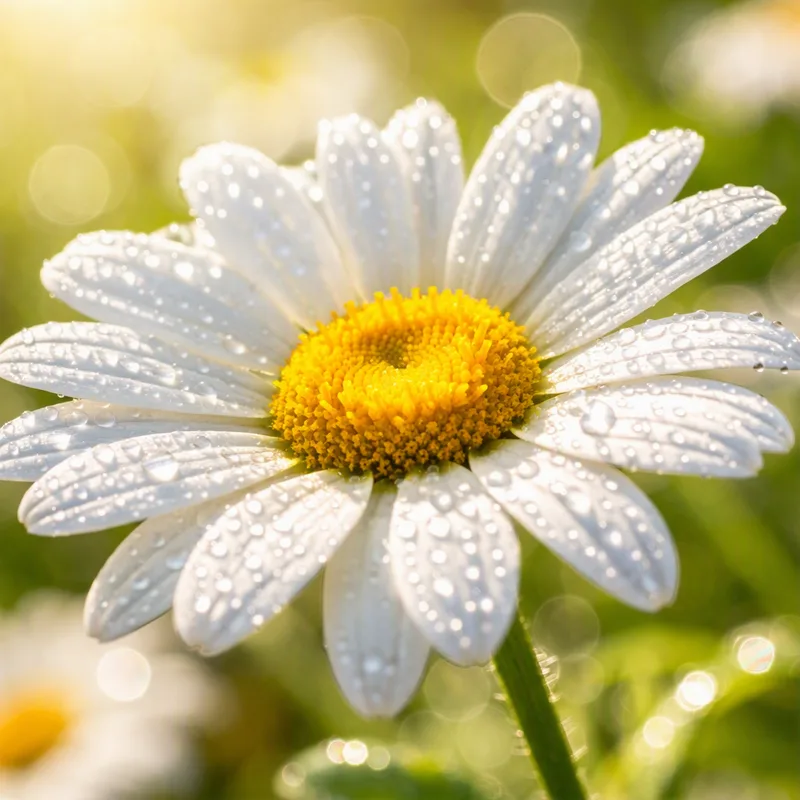
Leucanthemum vulgare grows wild across Ireland and the rest of Europe in grassland, roadsides and rough ground. White petals surround a yellow disc that is about 2.5 to 6 cm across, held on stems that can reach 70 cm in rich ground. It flowers from about June to August. The botanical name is Greek for "white flower".
Telling daisies apart
- Lawn daisy (Bellis perennis) is far smaller and stays at ground level.
- Chamomile has smaller heads and feathery leaves.
- The Shasta daisy (Leucanthemum × superbum) is a garden hybrid with bigger flowers.
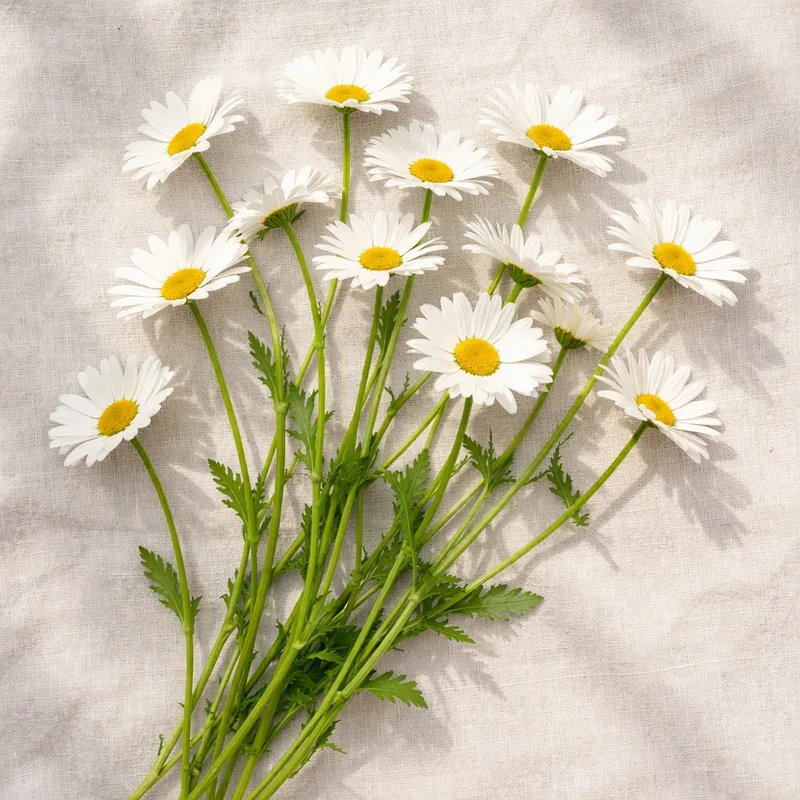
The leaves help too: the lower ones are spoon-shaped with scalloped edges, while those higher up the stem are narrower and toothed.
For pollinators
Ox-eye daisies feed hoverflies, bees and beetles. They suit a meadow patch or a sunny corner, and the All-Ireland Pollinator Plan encourages less frequent mowing so wildflowers can bloom. A late-summer cut after the seeds ripen works well.
The plant spreads by seed and by creeping rootstocks, which is why it forms drifts in old meadows. In mown lawns it rarely survives.
Growing
- Sow seed in autumn or spring on poor, well-drained soil in sun.
- Avoid rich soil, as tall grass will swamp plants.
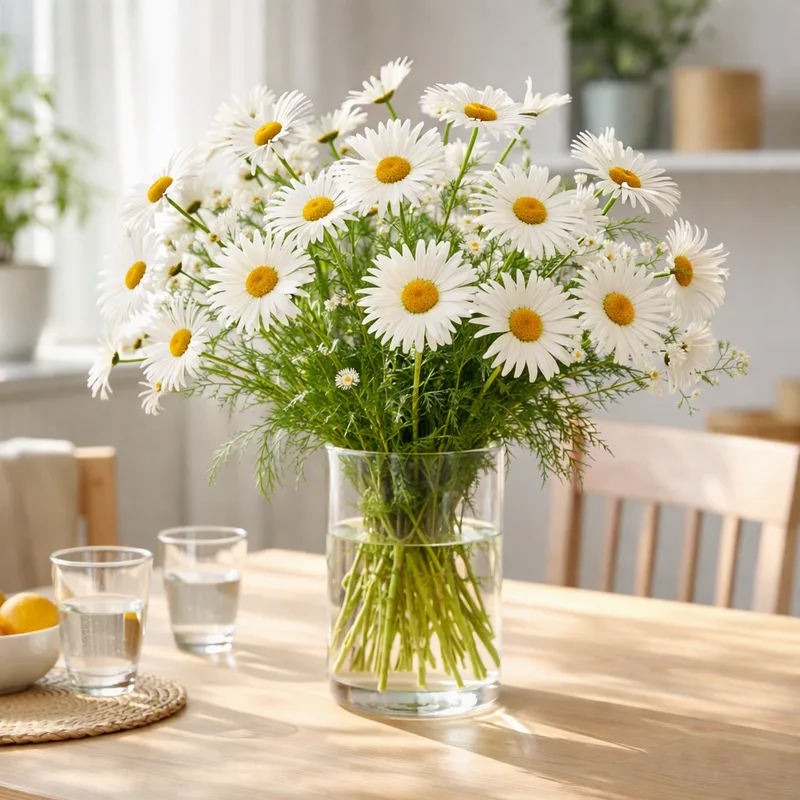
- Cut flowers in the morning; a vase of stems lasts about a week.
A patch needs sun. Shade lets coarse grasses take over, and rich soil does the same.
Pets
It was once classed as Chrysanthemum leucanthemum. The ASPCA lists daisy and chrysanthemum as toxic to dogs, cats and horses, so be cautious with pets.