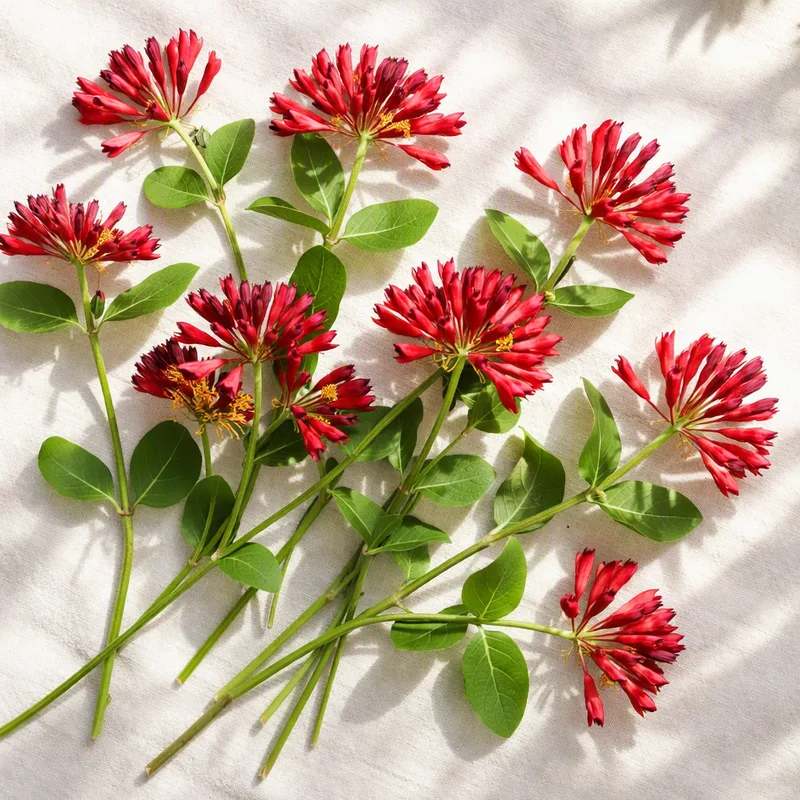
Red is unusual
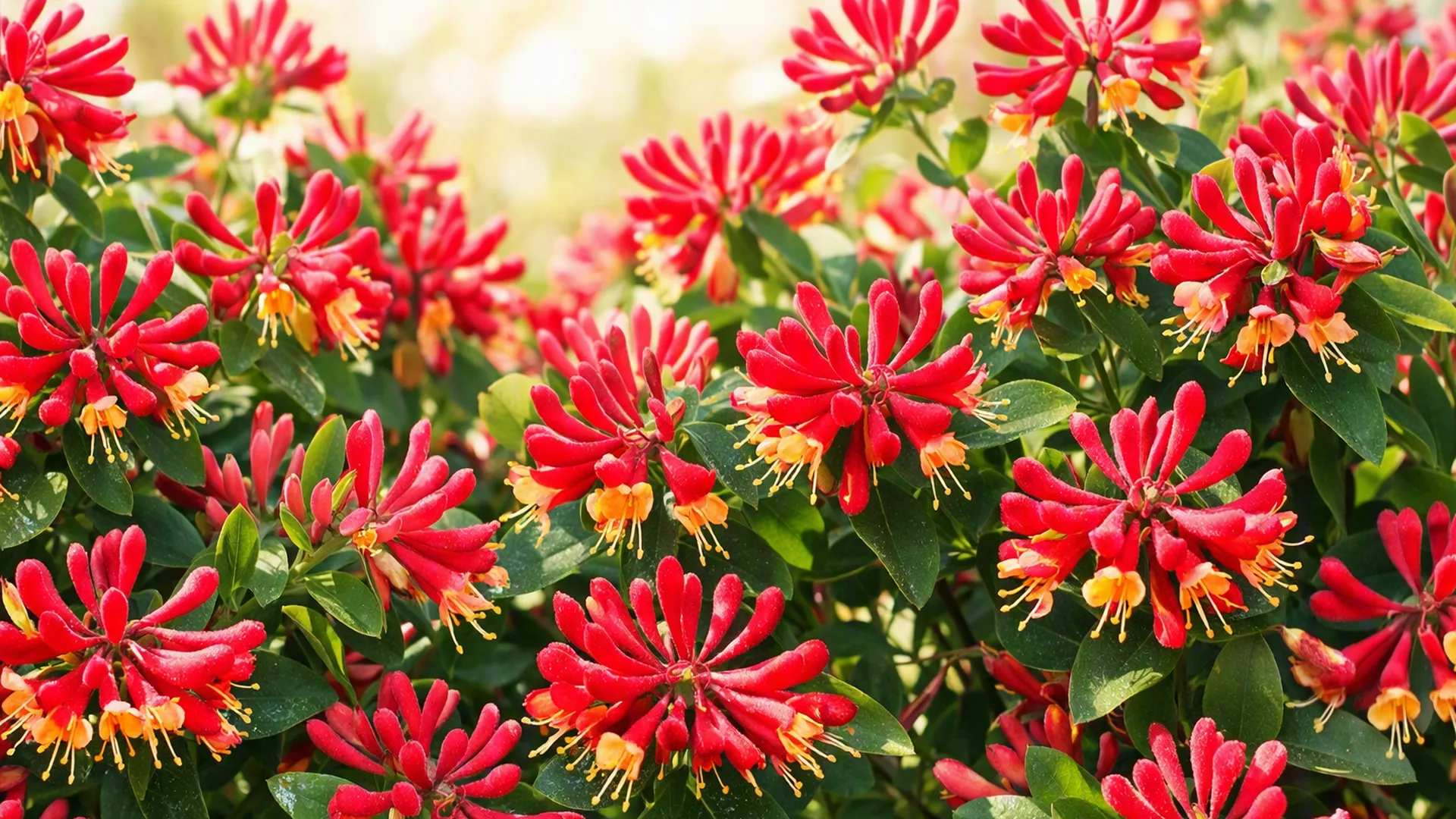
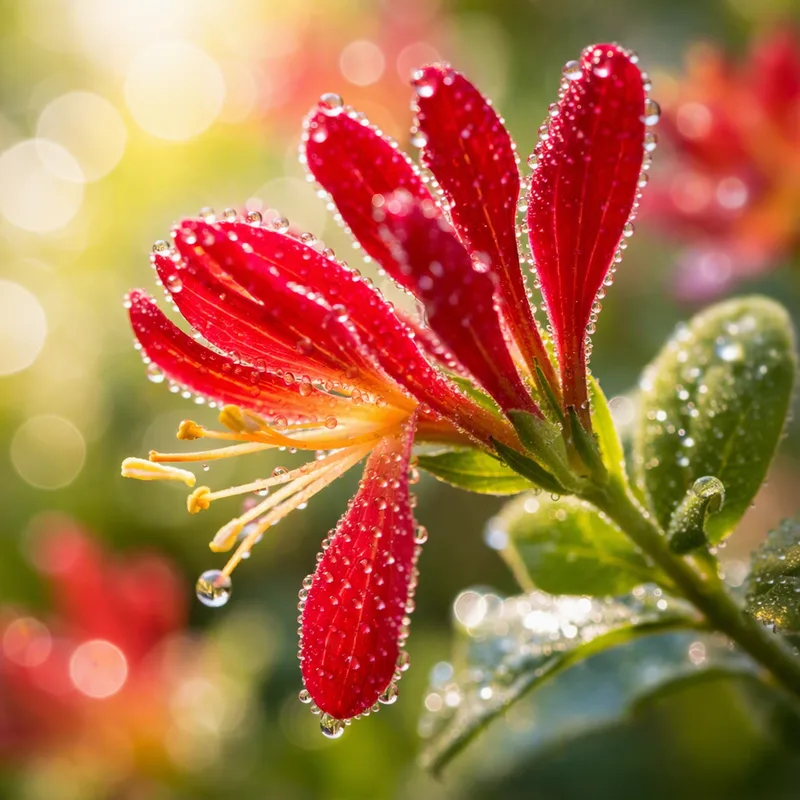
Native European honeysuckles flower in pale shades. Red comes from garden forms and plants from other continents. Trumpet honeysuckle (Lonicera sempervirens) from North America has scarlet tubular flowers, and the hybrid 'Dropmore Scarlet' is closely related. Neither smells much, but both are striking. Some varieties of woodbine are flushed reddish on the outside, which gives a warm look without a true red.
Trumpet honeysuckle climbs to around three or four metres and makes a bold feature on a wall or fence. In cold or exposed gardens a sheltered spot helps, and a warm wall is a good choice in the Irish climate. The flowers come in small clusters and are followed by red berries that birds eat.
Using red in the garden
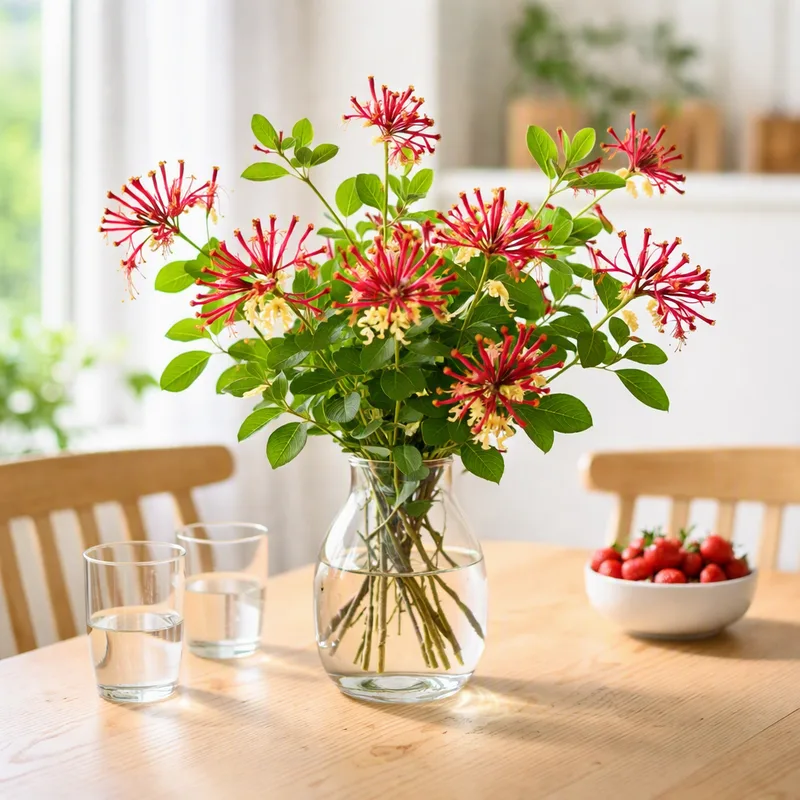
The bright tubes suit fences, trellis and pergolas. They look good with white roses or blue clematis. In North America hummingbirds visit the red flowers; here bumblebees and butterflies are the main callers. Since red types lack the evening scent, many gardeners plant them next to a fragrant relative.
Position and care
- Sun to partial shade, with the roots shaded, cool and moist.
- Provide a support for the shoots.
- Flowering is mainly in June and July, longer in some varieties.
- Thin lightly after flowering.
Berries
Honeysuckle berries, including red ones, are mildly poisonous to people. Swallowing a quantity can cause nausea and vomiting. Call the National Poisons Information Centre if you are worried, or emergency services for severe symptoms. Keep pets from the berries and consult your vet if one has eaten some.