
Red in many shades
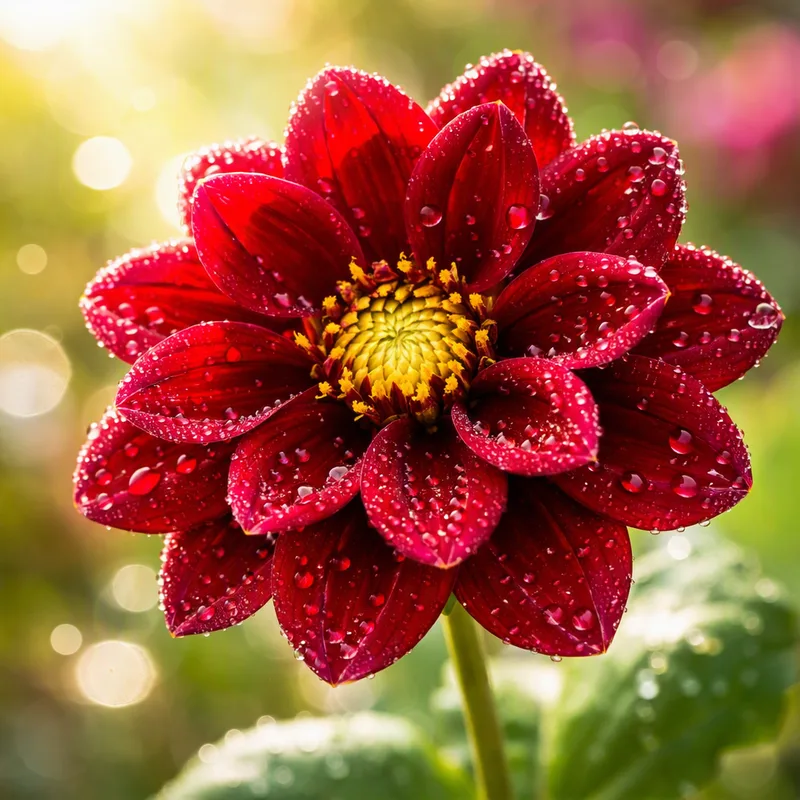
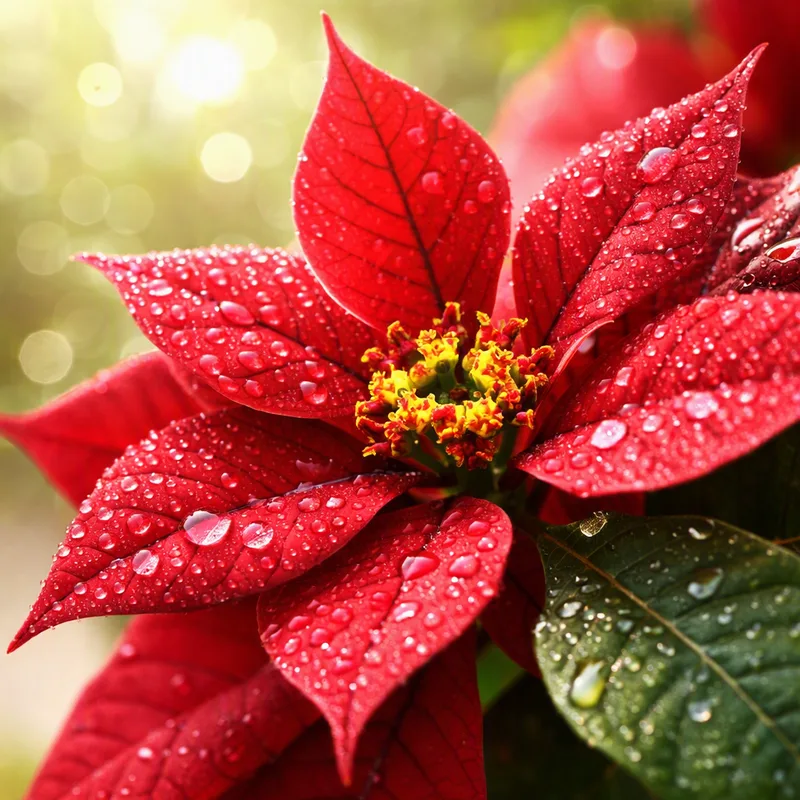
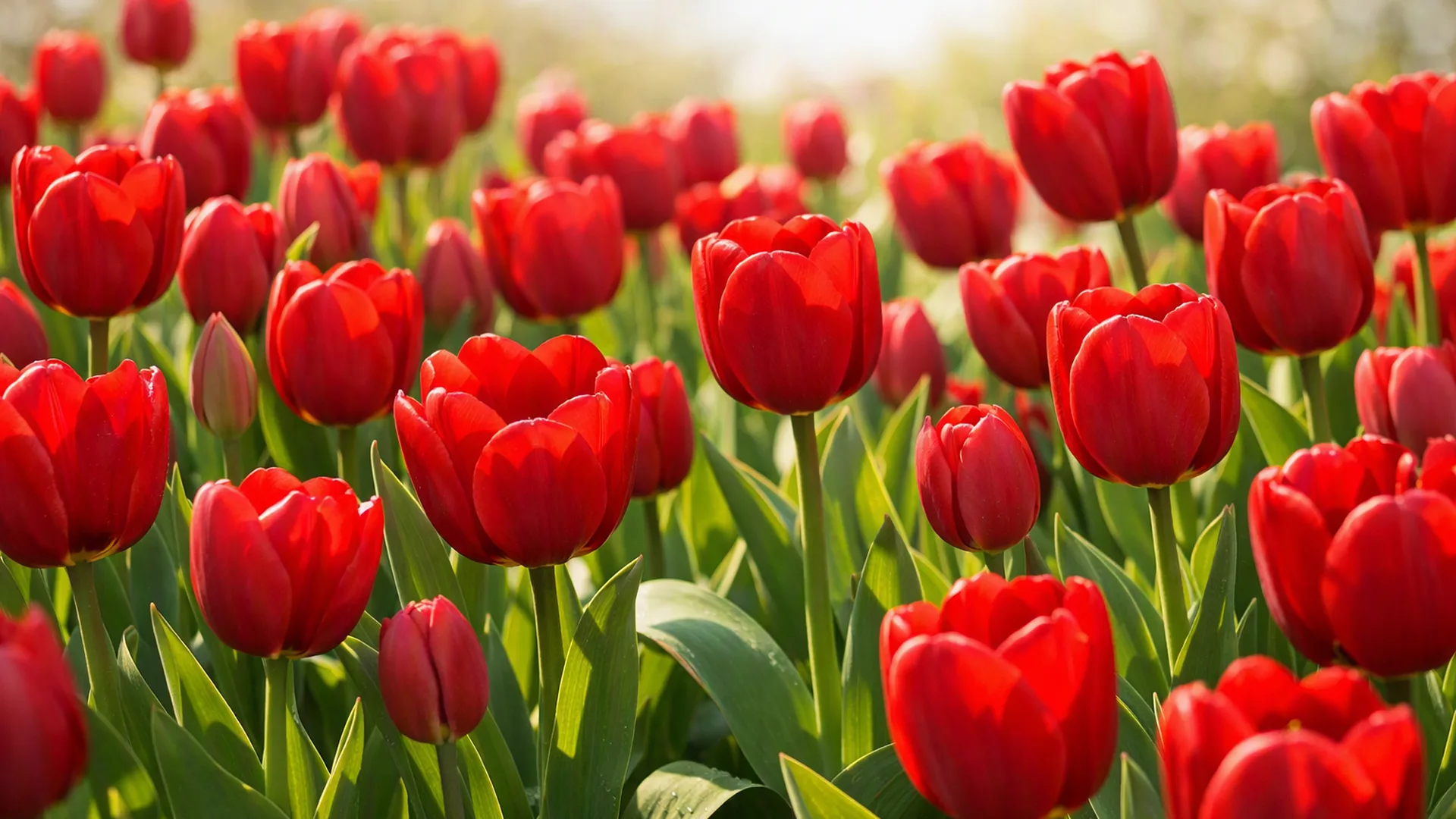
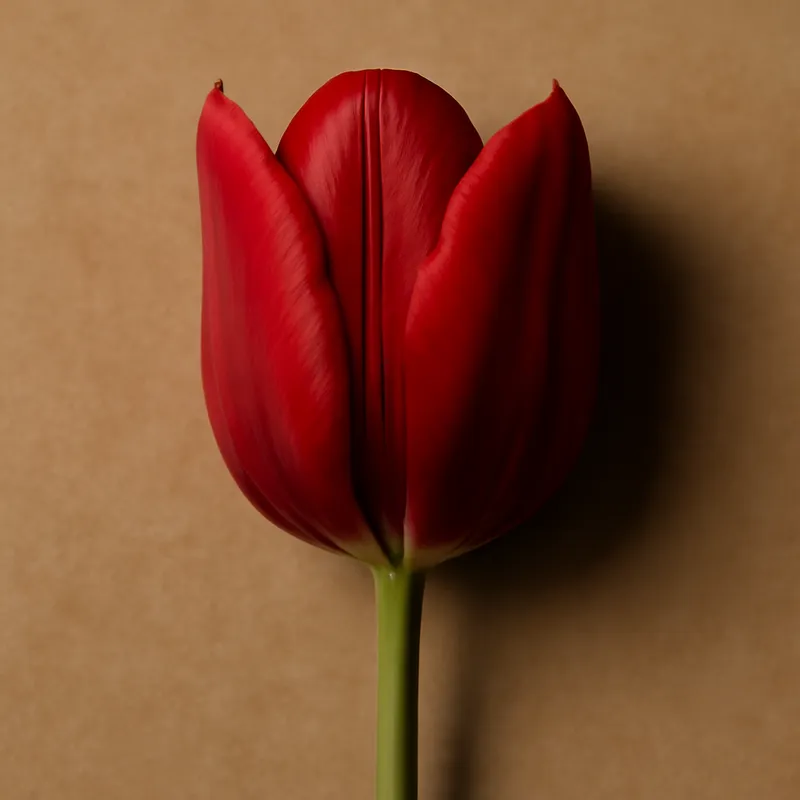
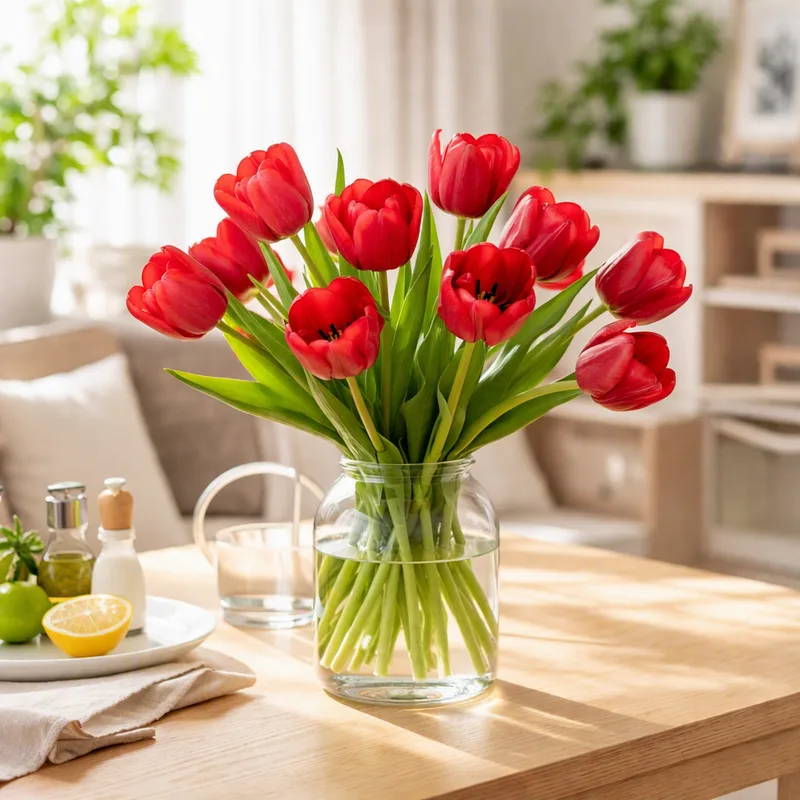
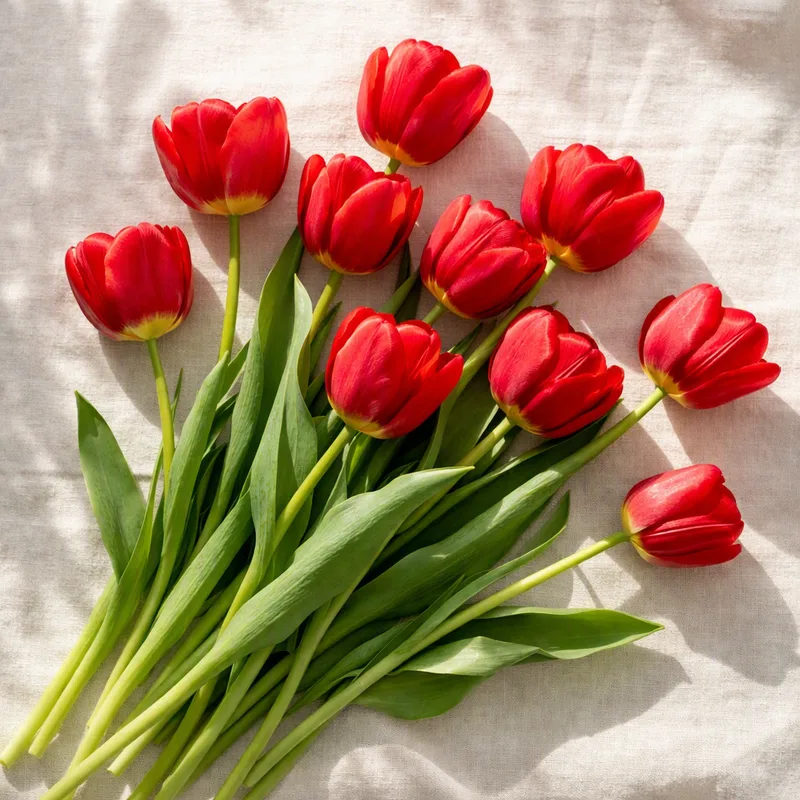
A red tulip can be scarlet, crimson, or close to maroon. 'Apeldoorn' is a long-standing Darwin hybrid with big red flowers and a dark base, and it copes well with exposed beds. 'Red Riding Hood' belongs to the Greigii group: shorter, with leaves marked in purple-brown, which makes it a good pot tulip. The shade depends on both variety and light, and colour often deepens as the flowers age.
When people choose red
Red tulips are traditionally linked with declarations of love, so they turn up around Valentine's Day, when forced bulbs are available early, and again at anniversaries. They are also an easy way to add warmth to an Easter table. In a garden, red against fresh green foliage is striking from a distance, which is why public planters often use it.
Vase tips
- Keep stems cool and out of radiator heat.
- Add cold water as the level drops, since stems continue to lengthen.
- Cut about two centimetres off at a slant before arranging.
You can expect between five and ten days. Blooms open wider with each day and may flop, which is part of their charm.
Planting for next spring
Plant bulbs from October to November, about three times as deep as the bulb is tall, in soil that drains freely. Atlantic rain is hard on tulips in heavy ground, so raised beds or tubs help. After flowering, let the leaves die back naturally.
Pet warning
Tulips are on the ASPCA list of plants toxic to dogs, cats and horses, with the bulb the riskiest part. Symptoms include vomiting and hypersalivation. Seek advice from a vet if your pet has eaten any.