White Gladiolus: The Ultimate Growing Guide
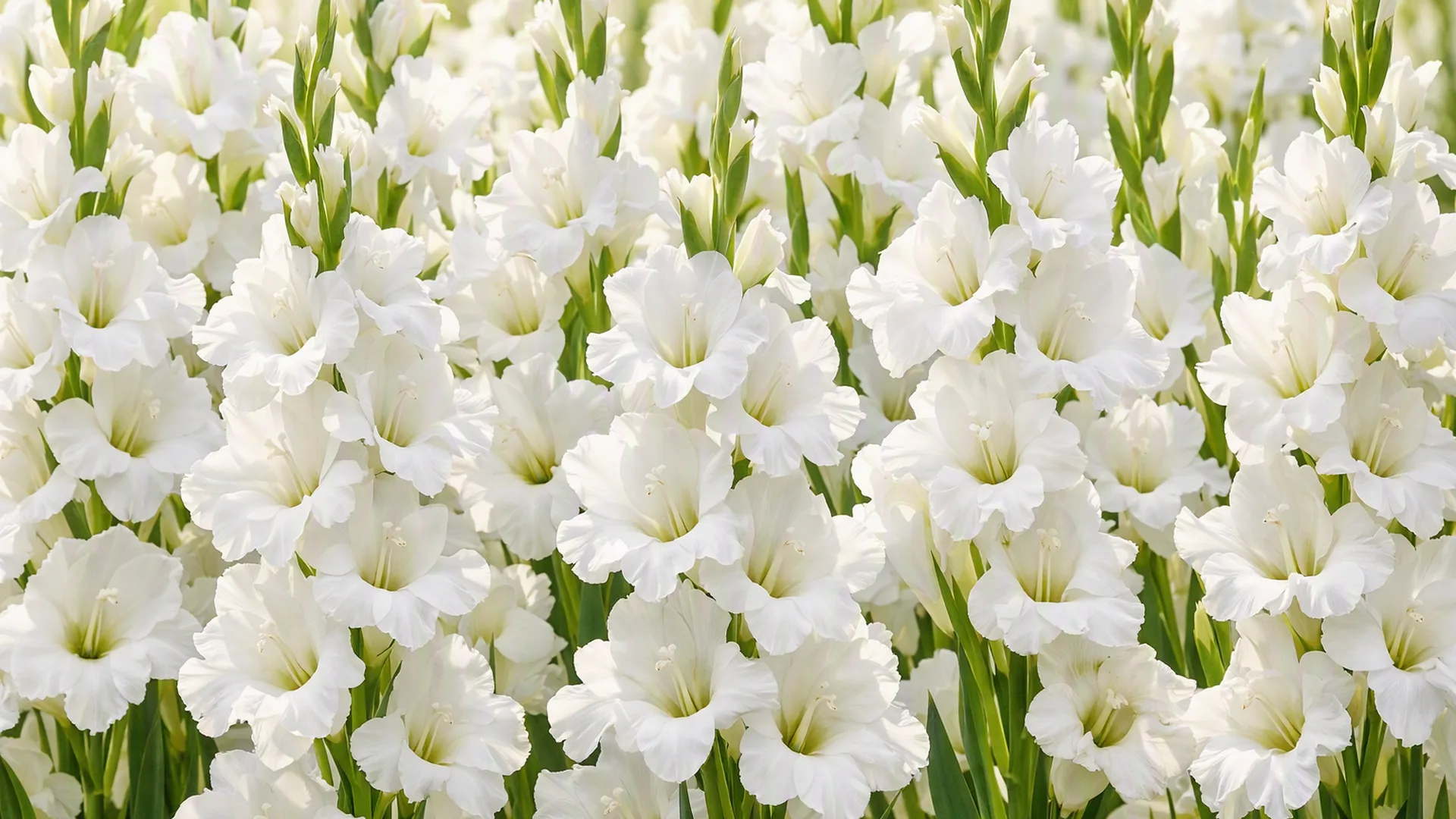
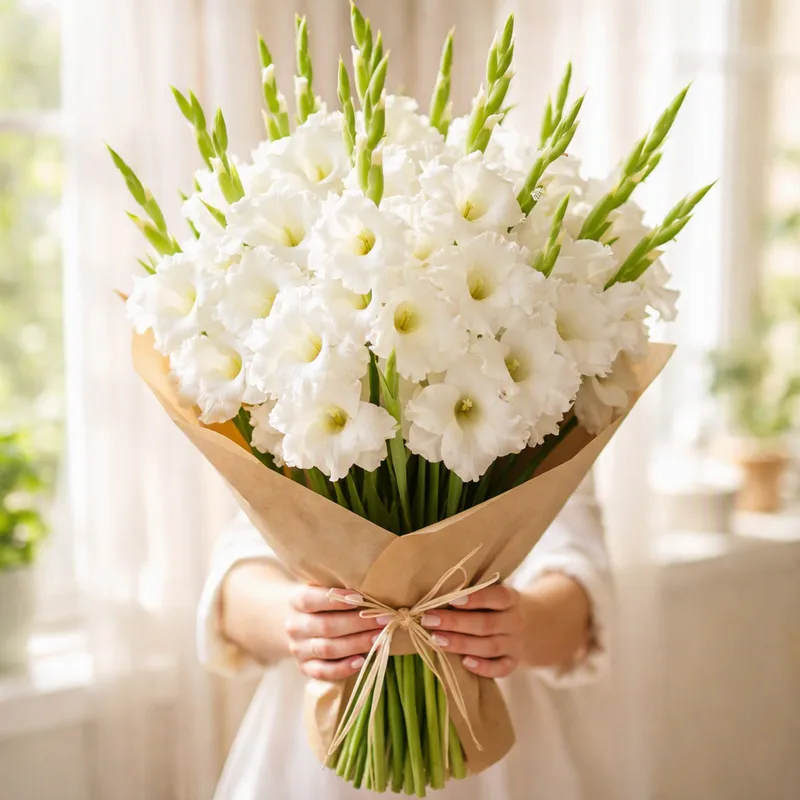
White Gladiolus is one of the most elegant and impressive flowers you can grow in your garden. With its majestic white flower spikes that can reach up to 120 centimetres in height, this spectacular corm plant creates a dramatic effect wherever it is planted.
A Classic Garden Favourite
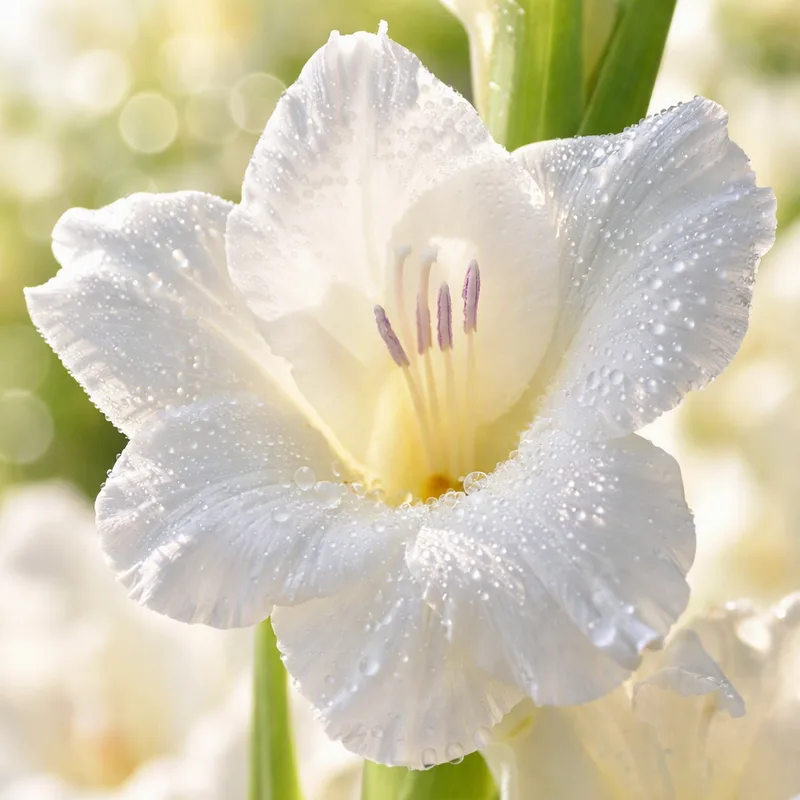
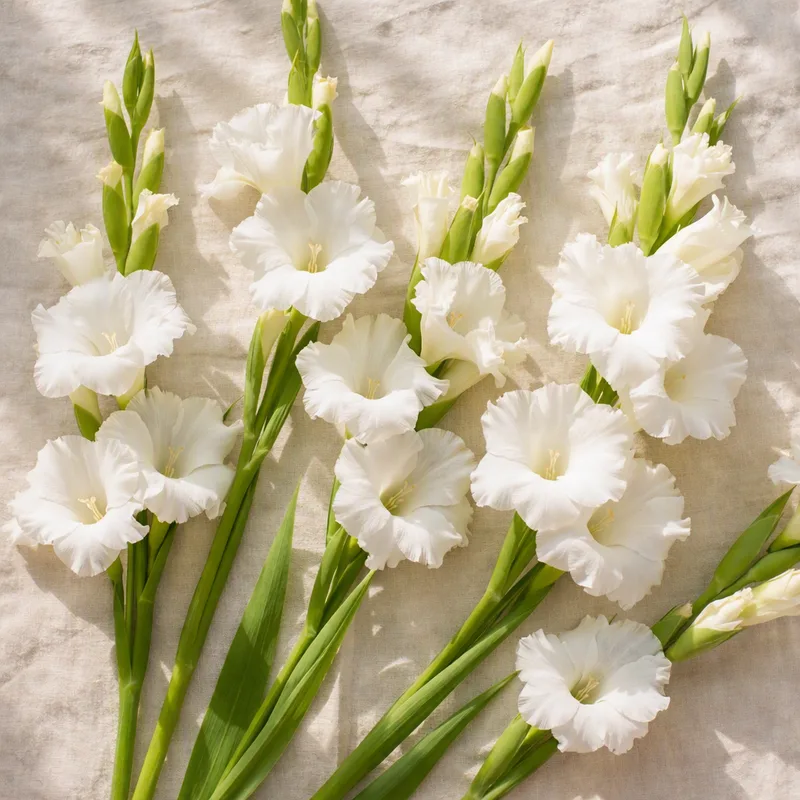
The Gladiolus belongs to the iris family and originally comes from South Africa. The white varieties are particularly valued for their pure, timeless beauty, which suits both formal and natural garden settings perfectly. The flower spike consists of several large, trumpet-shaped flowers that open successively from bottom to top, providing a long and spectacular flowering period.
Planting and Placement
Gladiolus corms are planted in spring once the risk of frost has passed, usually in May. Choose a sunny spot with well-draining soil for best results. Plant the corms at a depth equivalent to three times the corm's height, which means approximately 10-15 centimetres deep. Space each corm 10-15 centimetres apart to give them sufficient room to develop.
Care During the Growing Season
During the growing period, Gladiolus needs regular watering, especially during dry spells. Water carefully at soil level to avoid moisture collecting around the leaves, which can lead to fungal diseases. The tall flower stems may need support, particularly in windy locations, so consider installing stakes or other supports as the plants grow taller.
Flowering and Aftercare
Flowering typically occurs from July to September, depending on when the corms were planted. To extend the flowering period, you can plant corms at intervals of a few weeks. Once the flowers begin to fade, cut off the flower spike but leave the leaves in place until they naturally yellow, as they are needed for the corm to store nutrients for the next season.
Overwintering and Storage
In our climate, Gladiolus is not winter hardy and the corms must be dug up in autumn before the frost arrives. Carefully lift the corms once the leaves have begun to yellow, clean them of soil and allow them to dry in an airy place. Store them frost-free and dry over winter, preferably in a box with peat or sand.
Combinations and Uses
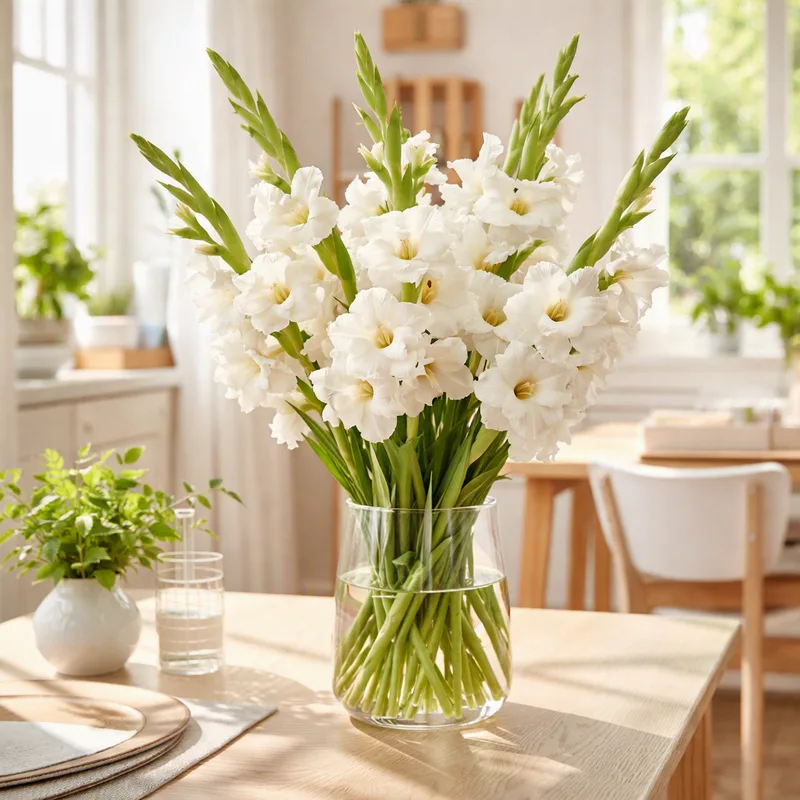
White Gladiolus corms are excellent as cut flowers and last well in a vase. In the garden, they work beautifully alongside other summer flowers such as dahlias, sunflowers and delphiniums. They can also be planted in groups for maximum impact or used as background planting in flower beds.