

A name that misleads
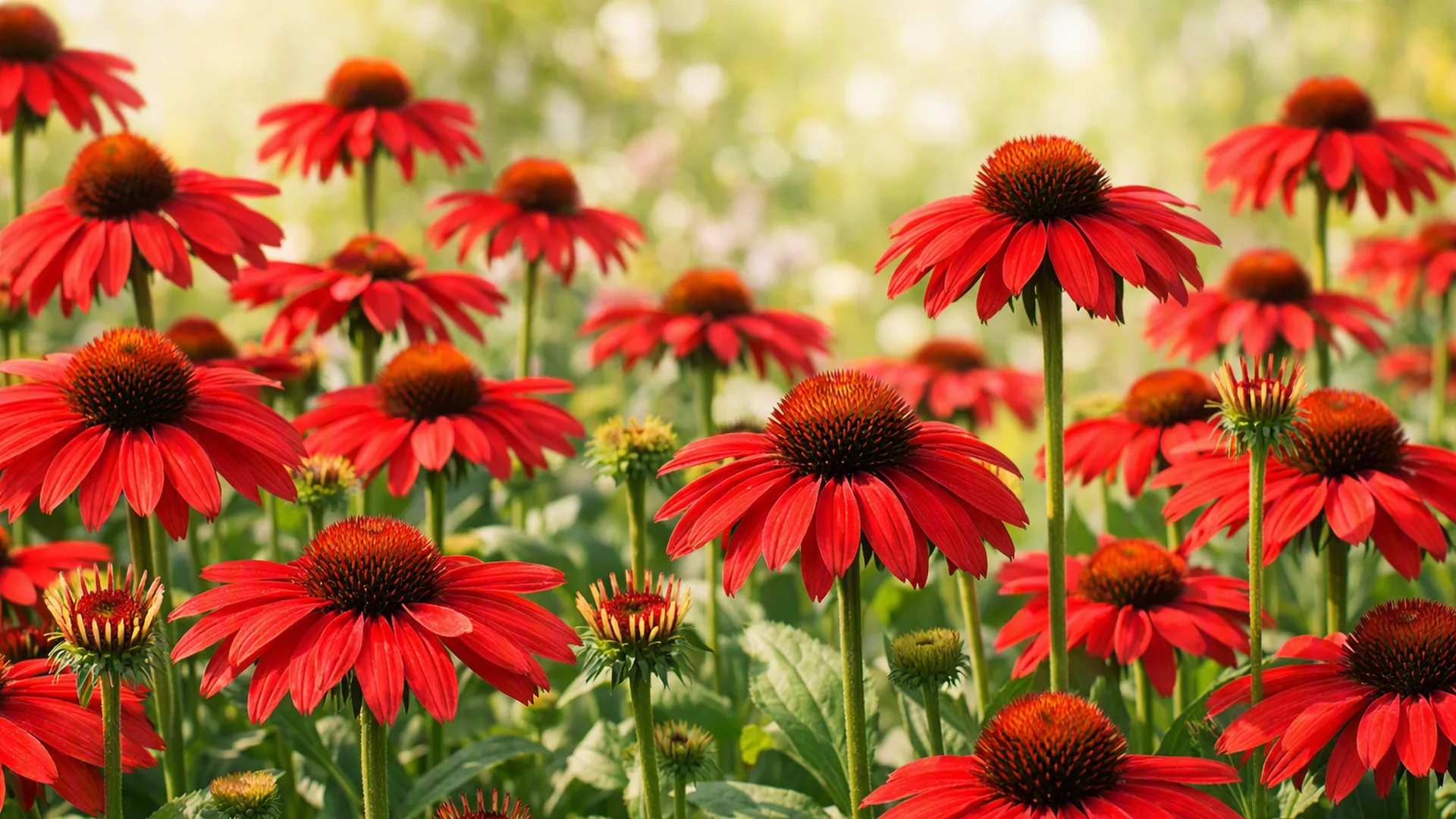
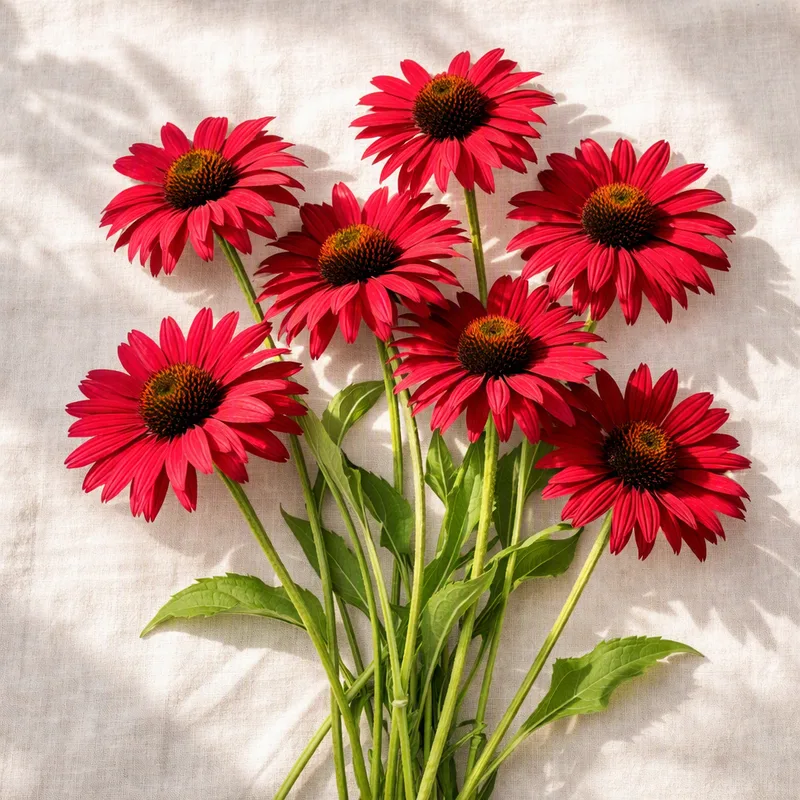
Echinacea purpurea, the "red" coneflower, produces pink to purple petals in nature, not red. Real red, orange and terracotta shades come from crosses with other species such as the yellow-flowered Echinacea paradoxa. The result is a range of fiery red, orange-red and rusty tones. Newer hybrids tend to be shorter-lived than the original species, and some do not survive a wet winter.
Choosing and protecting
Read the label: varieties sold as sturdy need less staking. A layer of leaf mould or bark over the crown helps in the first winter, and in Irish gardens with heavy clay it pays to plant on a slight mound with grit. Double flowers look lush, but they often offer insects less nectar than single ones. If you want to help bees and bumblebees, choose single flowers and leave some heads standing in autumn.
Keeping plants going
- Full sun and free-draining soil; winter wet is the usual cause of failure.
- Do not cut back hard in autumn; wait until spring.
- Protect potted plants from endless rain.
- Divide clumps in spring.
Red varieties are usually more compact, which suits tubs and border edges beside grasses.
In the bouquet
Cut stems last 7 to 10 days. The red-orange heads go well with sunflowers, dahlias and heleniums for a warm late-summer bunch.
Pet note
The ASPCA lists the plant as non-toxic to dogs, cats and horses. Check with your vet before giving an animal any echinacea supplement.