

A spring flower of old woodland
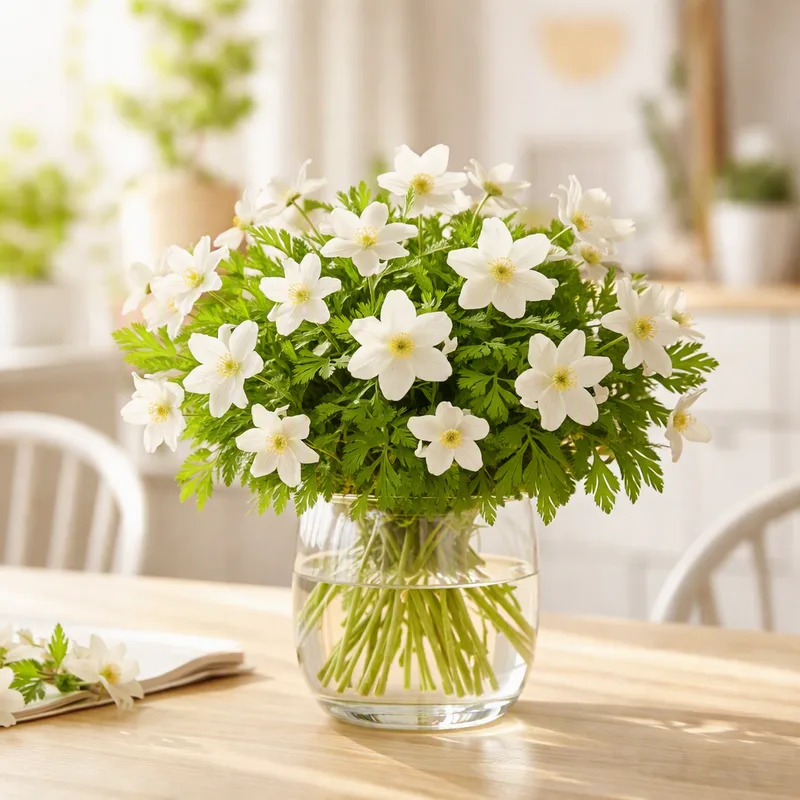
Anemone nemorosa, now often placed in Anemonoides, is a rhizomatous perennial of 10 to 25cm. Each stem carries three deeply cut leaves and a single flower of about two to four centimetres, with six or seven petal-like segments and many stamens. The flowers are visited by insects, particularly hoverflies. It flowers from around March to May, in the weeks when light still reaches the woodland floor.
A sign of age
The plant is common across the British Isles. Because it spreads so slowly, a big colony is sometimes used as an indicator of ancient woodland, although it can also establish in new woods and parks. Underground rhizomes carry it through summer, and by early summer the leaves have died away. The name windflower refers to the way the blooms tremble on thin stalks, and the Greek root of anemone means daughter of the wind.
In a garden
- Plant under deciduous trees and shrubs, where soil stays moist and humus-rich.
- Put rhizomes in early autumn; they are slow to settle.
- Leave the patch undisturbed to build up over years.
- Buy from a nursery rather than digging plants from woodland.
Mildly poisonous
All parts are mildly toxic. The fresh sap contains protoanemonin, which can redden the skin and cause blisters, and eating the plant can upset the stomach. Wear gloves when planting. For a child, contact the National Poisons Information Centre or a doctor; for a pet, a vet.