
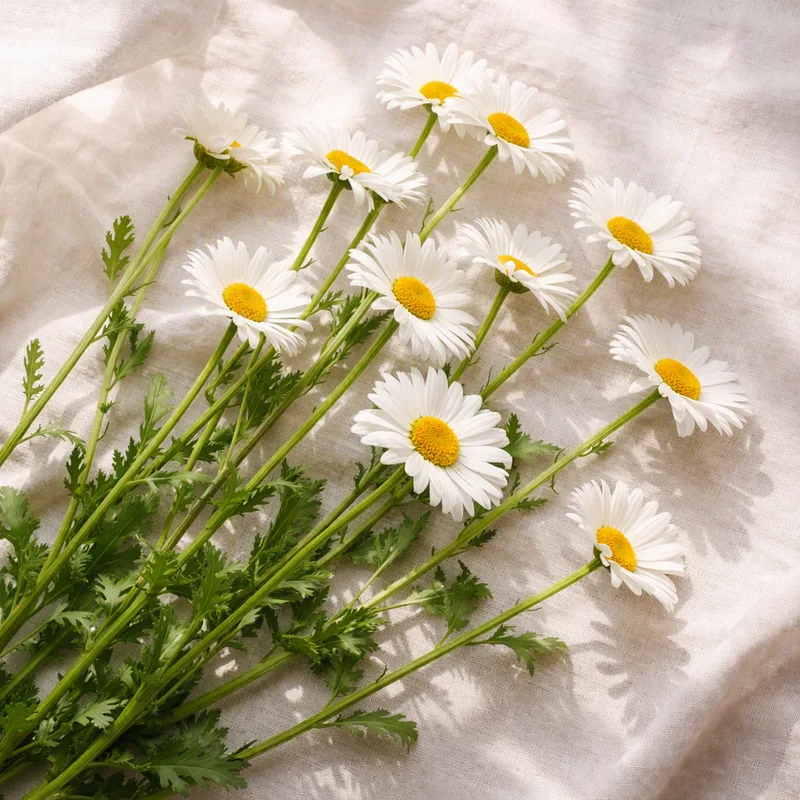
The white of the meadow
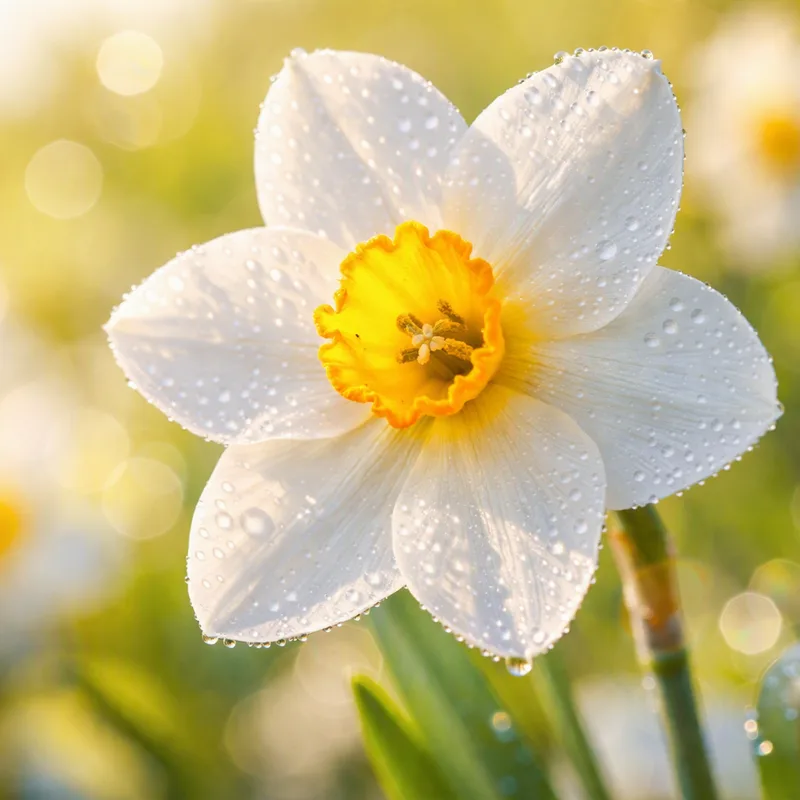
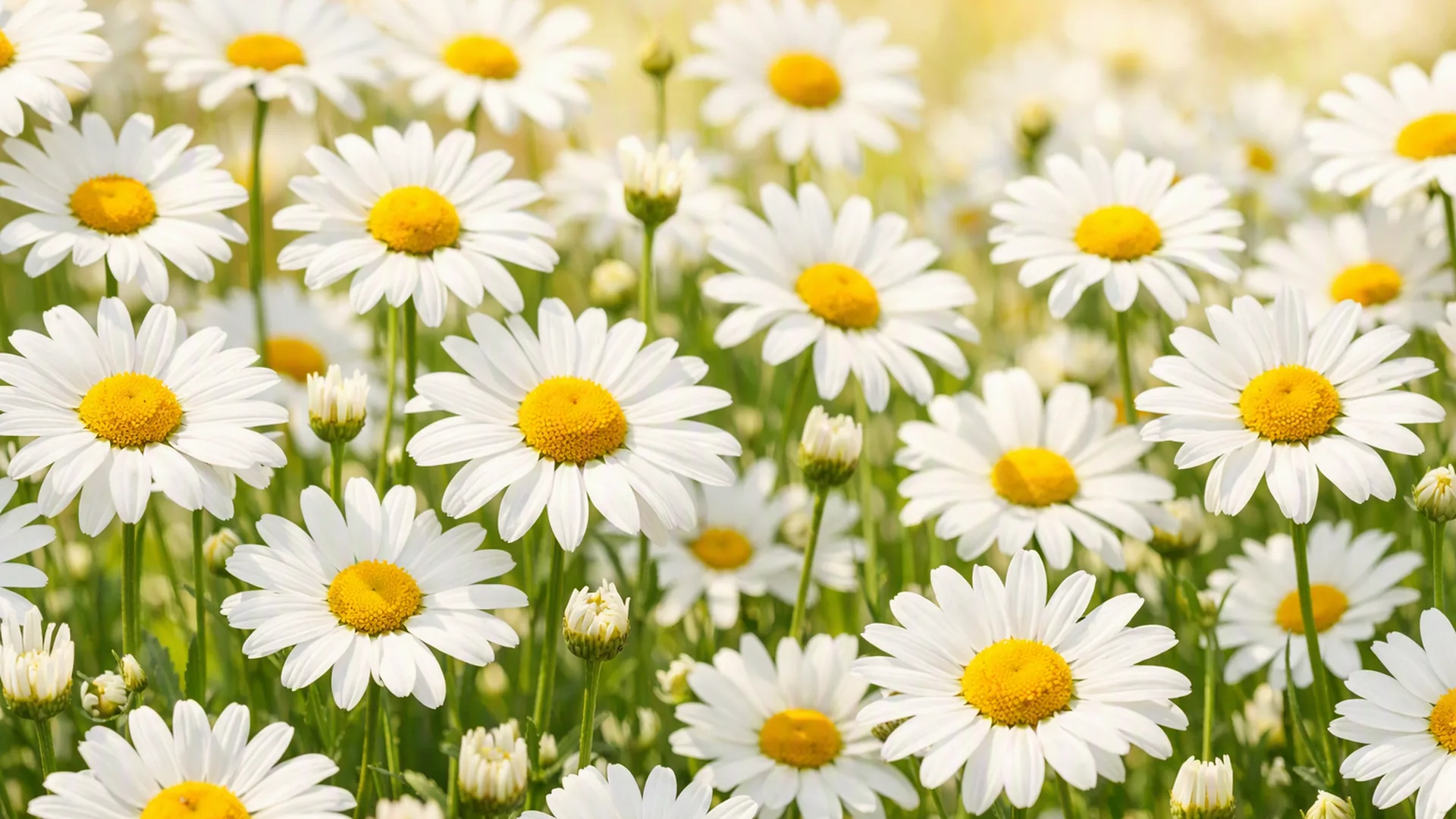
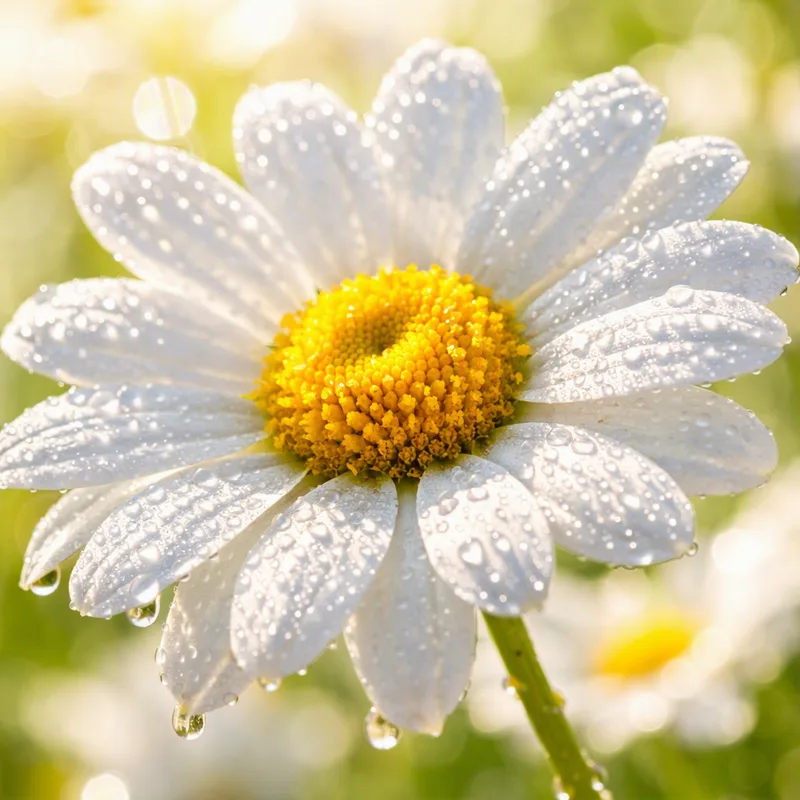
Ox-eye daisies are naturally white. A ring of clean white ray petals surrounds a bright yellow disc, which makes them stand out in the long grass of June. The genus name Leucanthemum comes from Greek words meaning "white flower".
The petals are not true petals but ray florets, and each one belongs to a separate tiny flower in the composite head.
A garden of daisies
Other white daisies are often confused with the wild plant. 'Becky' and other Shasta types are selected garden forms with larger flowers and a sturdier habit. Ox-eye daisy is finer and more graceful and looks natural in a meadow.
Moon daisy and marguerite are other names for the same plant, which is why searches often vary.
Making a meadow patch
- Scatter seed on poor, bare soil in autumn or spring.
- Skip fertiliser; rich ground favours coarse grass.
- Mow once in late summer after seeds ripen.
- Pair with red clover and birdsfoot trefoil for a mixed wildflower look.
Pollinator value
Hoverflies, small bees and beetles visit the open flowers. A patch left to grow also gives caterpillars and seed-eating birds a home.
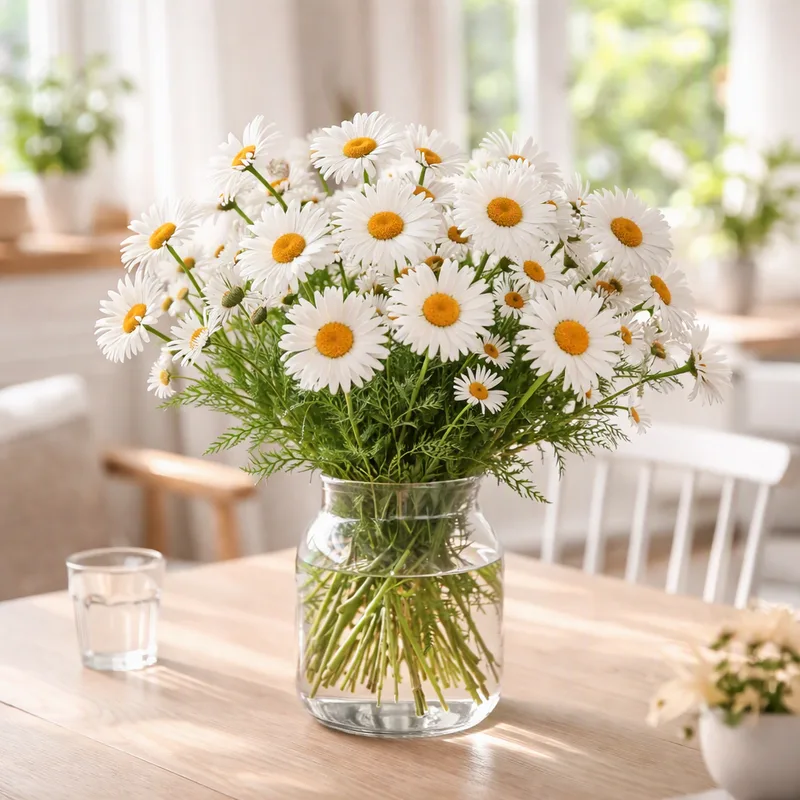
Cut stems early in the day and place them in clean water. They last about a week.
Flowers close up in dull weather and open fully in sunshine, which is when pollinators visit.
For pet owners
The ASPCA lists chrysanthemum and daisy as toxic to dogs, cats and horses. Ox-eye daisy used to be classed as Chrysanthemum, so keep pets from chewing it.