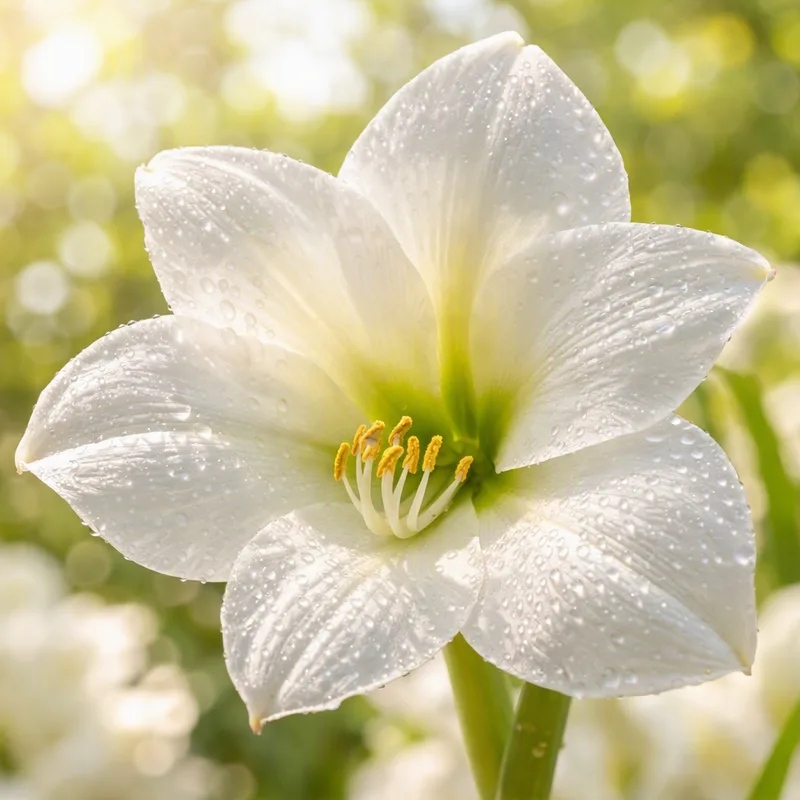
Not a true lily
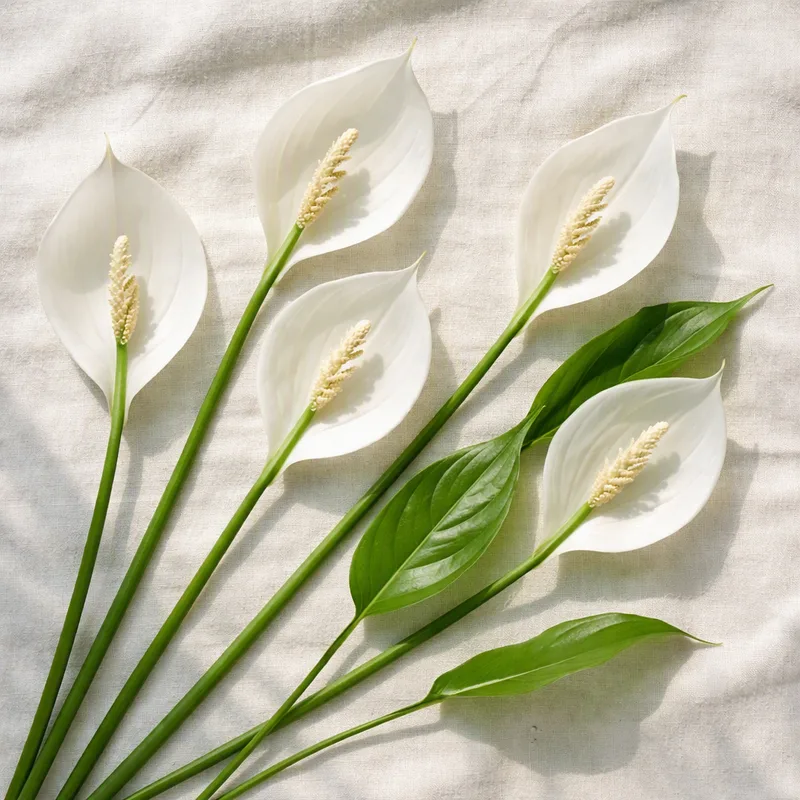
Peace lily belongs to the arum family, Araceae, not to the true lilies. The genus Spathiphyllum has 59 species and is native to tropical regions of the Americas and south-east Asia. What looks like a white petal is a spathe, a modified leaf, and the real flowers are the tiny ones packed on the spike in the centre, the spadix.
Why it works indoors
It copes with less light and less water than many houseplants, so it is popular for offices and north-facing rooms across Ireland. The leaves droop dramatically when thirsty, then recover after a drink.
- Light: bright but not direct sun; shade is tolerated.
- Water: when the top of the compost is dry; avoid soggy roots.
- Temperature: normal room warmth, with no cold draughts.
- Leaf tips browning: usually dry air or very hard water.
Wipe the leaves with a damp cloth, since dust builds up on the glossy surface.
Meaning
The name points to peace and sympathy, and it is a common choice for sympathy gifts and housewarmings.
Pets
The plant contains insoluble calcium oxalates. The ASPCA lists it as toxic to dogs and cats, causing oral irritation, drooling, vomiting and difficulty swallowing. This is different from true lilies (Lilium), which can cause kidney failure in cats; peace lily is not one of them. Still, call your vet if a pet has chewed it.