

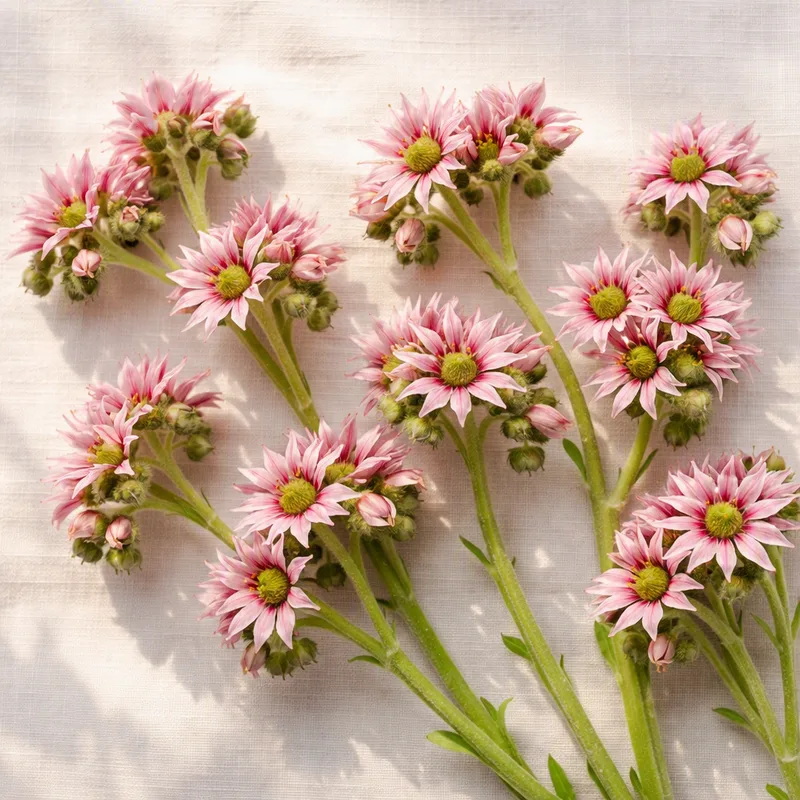
Pink flowers, pink tints
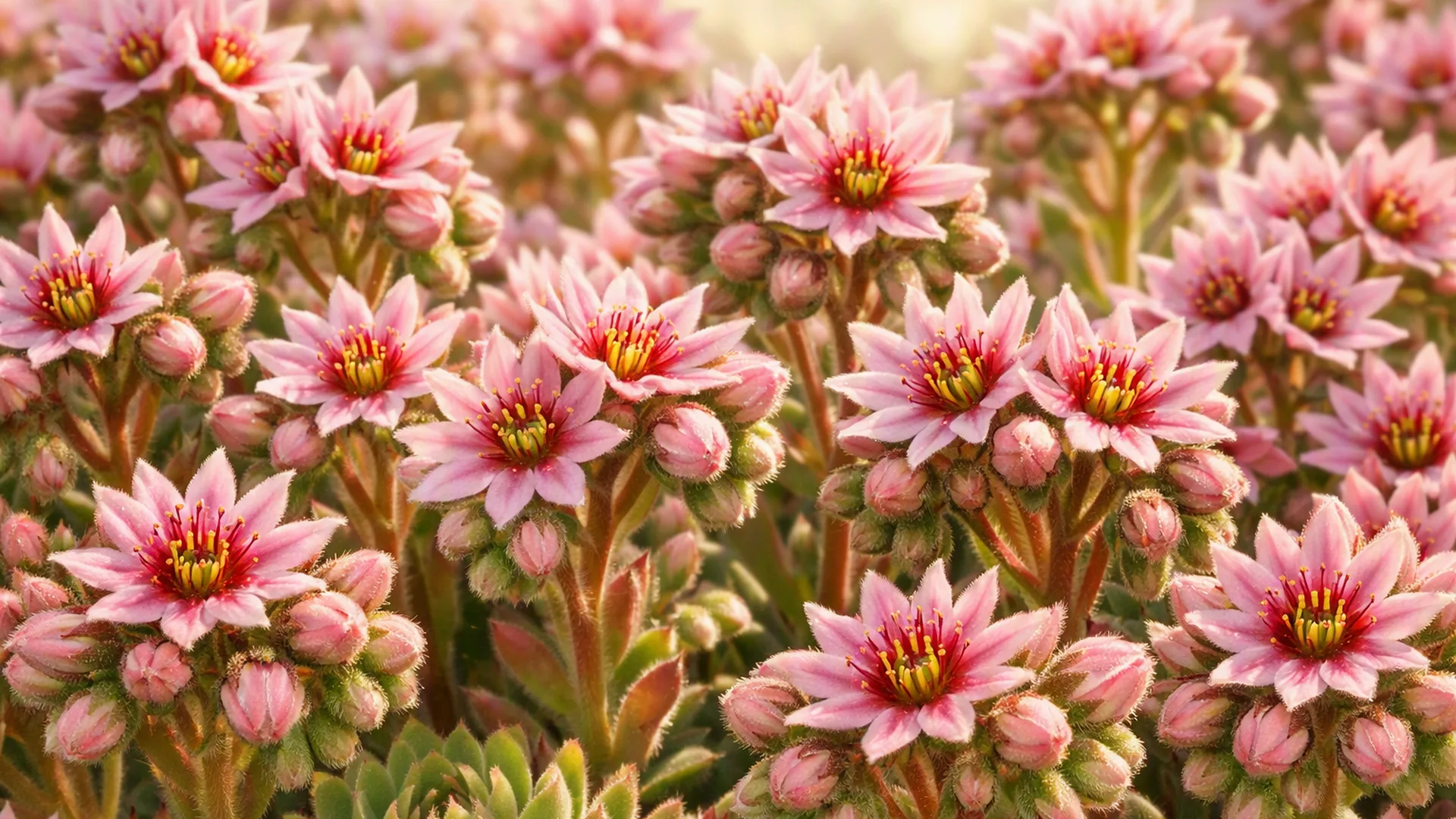
Sempervivum flowers are described as reddish, yellowish or pinkish, so a pink houseleek is a fair description of the bloom. The rosettes may also show pink edges or centres in good light. Many gardeners cannot tell the species apart by the flowers, since the main interest in cultivars lies in their foliage.
A plant with a story
Searching for pink house leek often leads to the roof tradition. The common houseleek was grown on house roofs and walls because people thought it protected against thunderstorms. Names such as Jupiter's beard preserve the idea. Whatever you think of the folklore, the plant is a tough and handsome ground cover for hot, dry places.
Planting
- Choose a sunny place with poor, sharp soil.
- Set rosettes so that the base sits just above the gravel.
- Top-dress with grit to keep leaves dry.
- Leave dead flowering rosettes for a few weeks, then remove them.
Growing in pots
A shallow terracotta bowl with drainage holes suits several rosettes. Lift it onto feet in winter to prevent waterlogging. Feed rarely, if at all.
Safety
Handle with common sense: succulents are not meant to be eaten, and a pot on a low step is an easy target for a curious pup. If a dog or cat has chewed a houseleek, a vet can advise, since the plant is not known as dangerous but can upset a stomach.