
Two kinds of pink
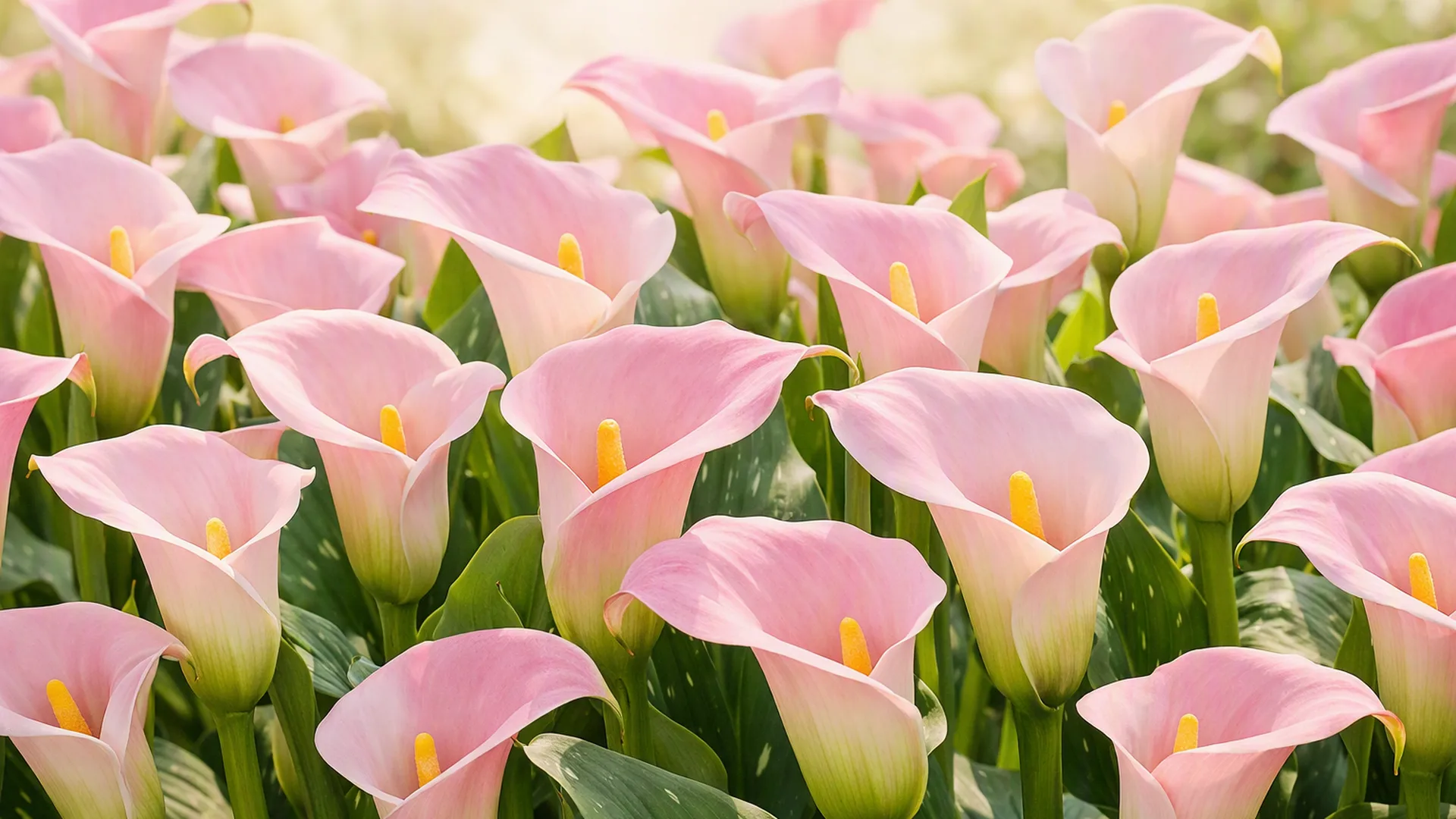
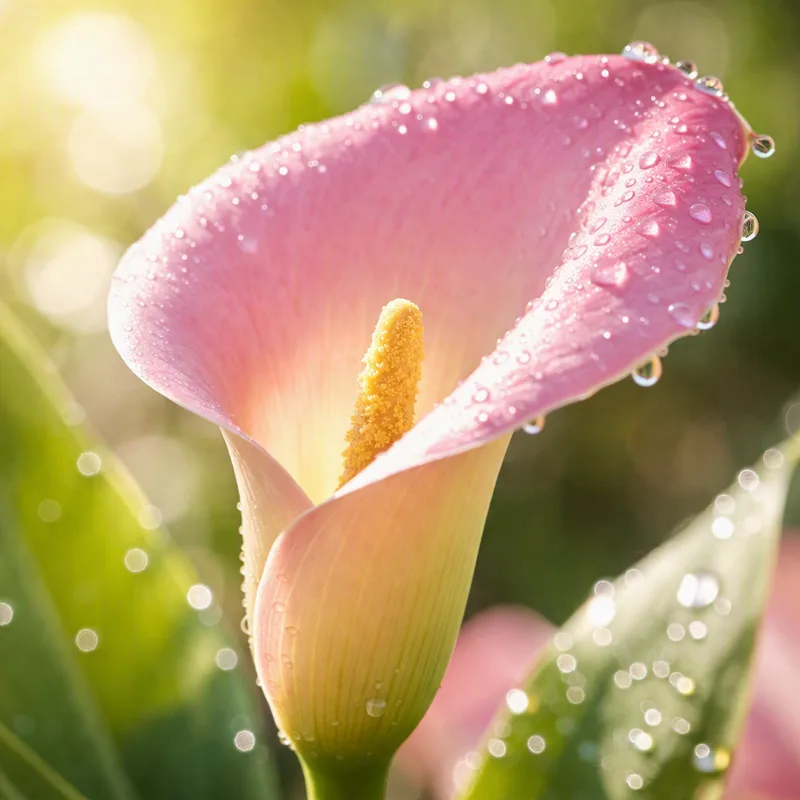
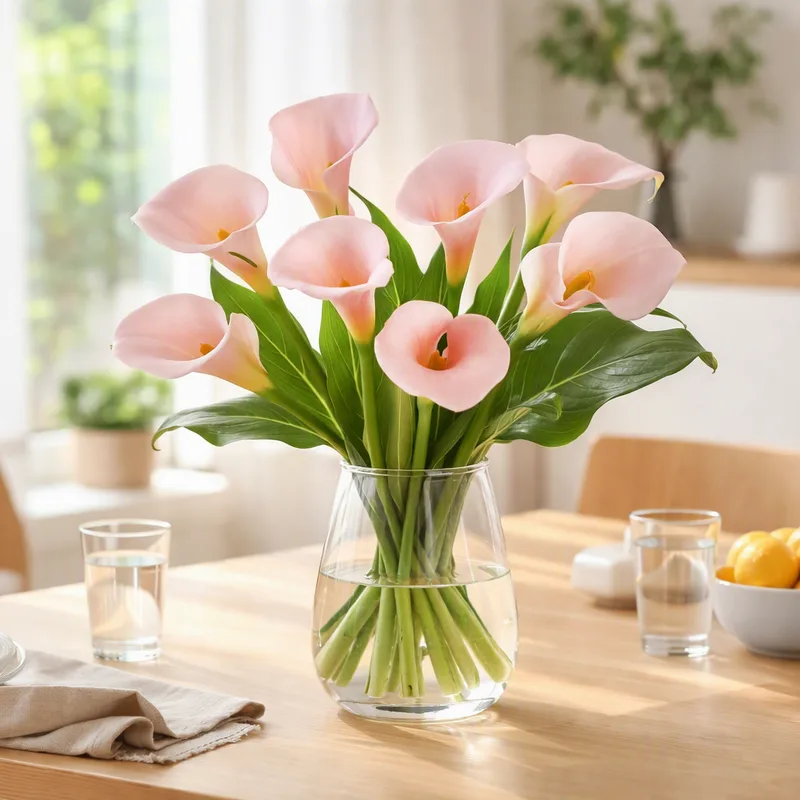
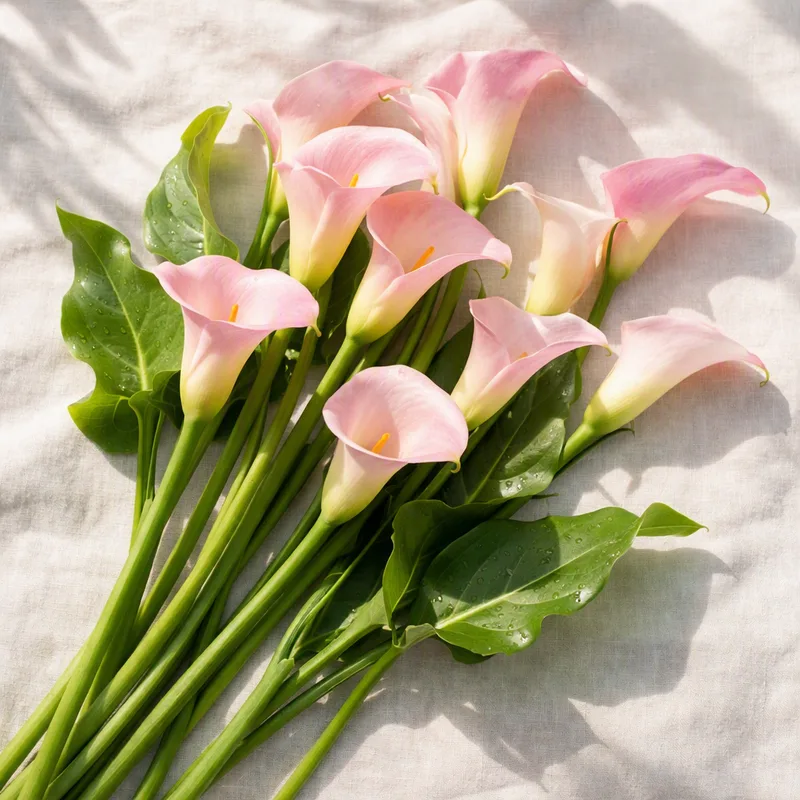
Pink callas come from more than one source. Zantedeschia rehmannii, the pink arum lily from South Africa, Eswatini and Mozambique, is a pink-flowered species with sword-shaped leaves that does not exceed 60 cm. Another species, Z. albomaculata, varies from white and cream to pink and orange. Separately, 'Pink Mist' is a colour sport of the white arum lily: the spathe has a pinkish base and the spadix is pink, with the colour strongest in partial shade after rain.
Delicate by comparison
'Pink Mist' is described as quite delicate compared with the original white form. It also has a dormant period in winter, when the leaves almost die down. Pink-flowered species such as Z. rehmannii are smaller than the 1 m white arum lily, so they work better in pots and small beds.
Growing tips
- Pot the tubers in free-draining compost in spring and keep them somewhere frost-free.
- Choose partial shade for the pink form of the white arum lily, as the colour develops best out of strong sun.
- Water through the growing season, then let the plant rest.
- In Ireland's cool, wet climate, keep potted plants somewhere sheltered and bring them in for winter.
Display ideas
A pot of pink callas looks soft beside silver foliage or white pelargoniums. Cut stems are less common than white ones, and they are best used in small, tight arrangements with a single type of flower.
Handling pink callas
Calla lily is listed by the ASPCA as toxic to dogs and cats. Calcium oxalate causes oral irritation, intense burning of the mouth, tongue and lips, drooling, vomiting and difficulty swallowing. Keep pink callas away from children and animals, and wash hands after handling them.