


Blue before the leaves
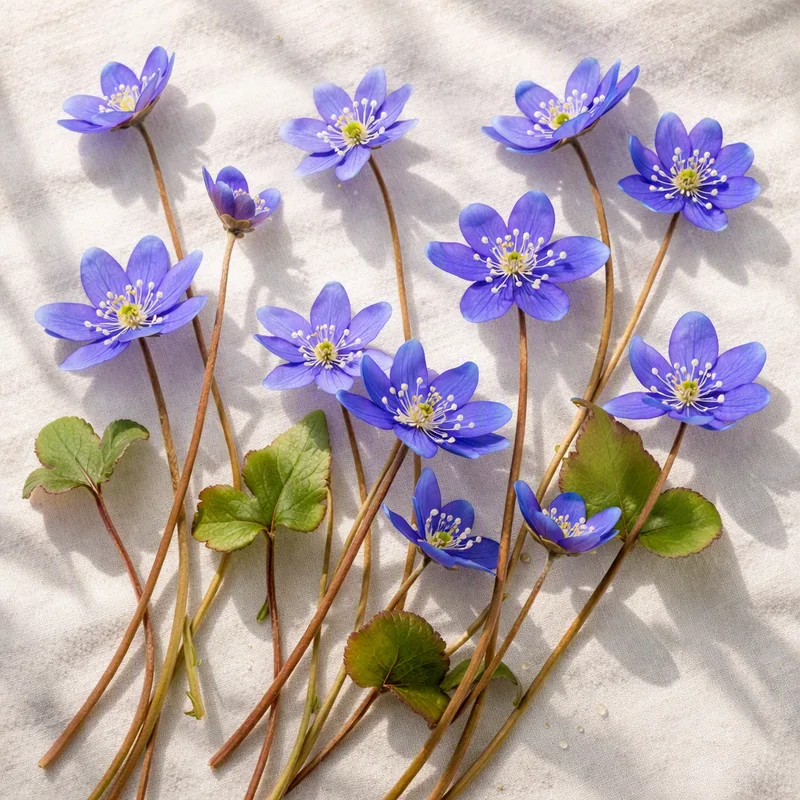
Hepatica nobilis, now also placed in Anemone as Anemone hepatica, is a buttercup-family perennial from the woods and mountains of continental Europe, North America and Japan. It is only 5 to 15 cm high. The flowers rise directly from the rhizome in winter or spring and are usually blue, with five to ten oval sepals and three green bracts beneath. The three-lobed, leathery leaves appear during or after flowering and stay green through winter.
Why liverleaf?
The leaf shape reminded old herbalists of a liver, and the old doctrine of signatures suggested it might treat liver complaints. That is how the plant got its name, with hepatica from the Greek for liver, but no proven medicinal effect exists.
Spotting and enjoying it
- Look for low rosettes of three-lobed leaves with violet-red undersides.
- The flowers produce pollen but no nectar, so early bees come looking for pollen.
- In an Irish garden it suits partial shade under deciduous shrubs and humus-rich soil that is moist but not waterlogged.
- It grows slowly and likes to be left alone.
The plant holds the RHS Award of Garden Merit. It is not a cut flower, so it is best bought as a nursery-grown pot rather than collected from woodland.
How toxic is it?
Fresh liverwort contains protoanemonin, as other members of the buttercup family do, and is therefore slightly toxic. The substance can irritate skin and mucous membranes, so avoid chewing the plant and wash your hands after handling it. If a child may have eaten some, contact your GP or the National Poisons Information Centre. For an animal, ring your vet.