
A little sword from southern Africa
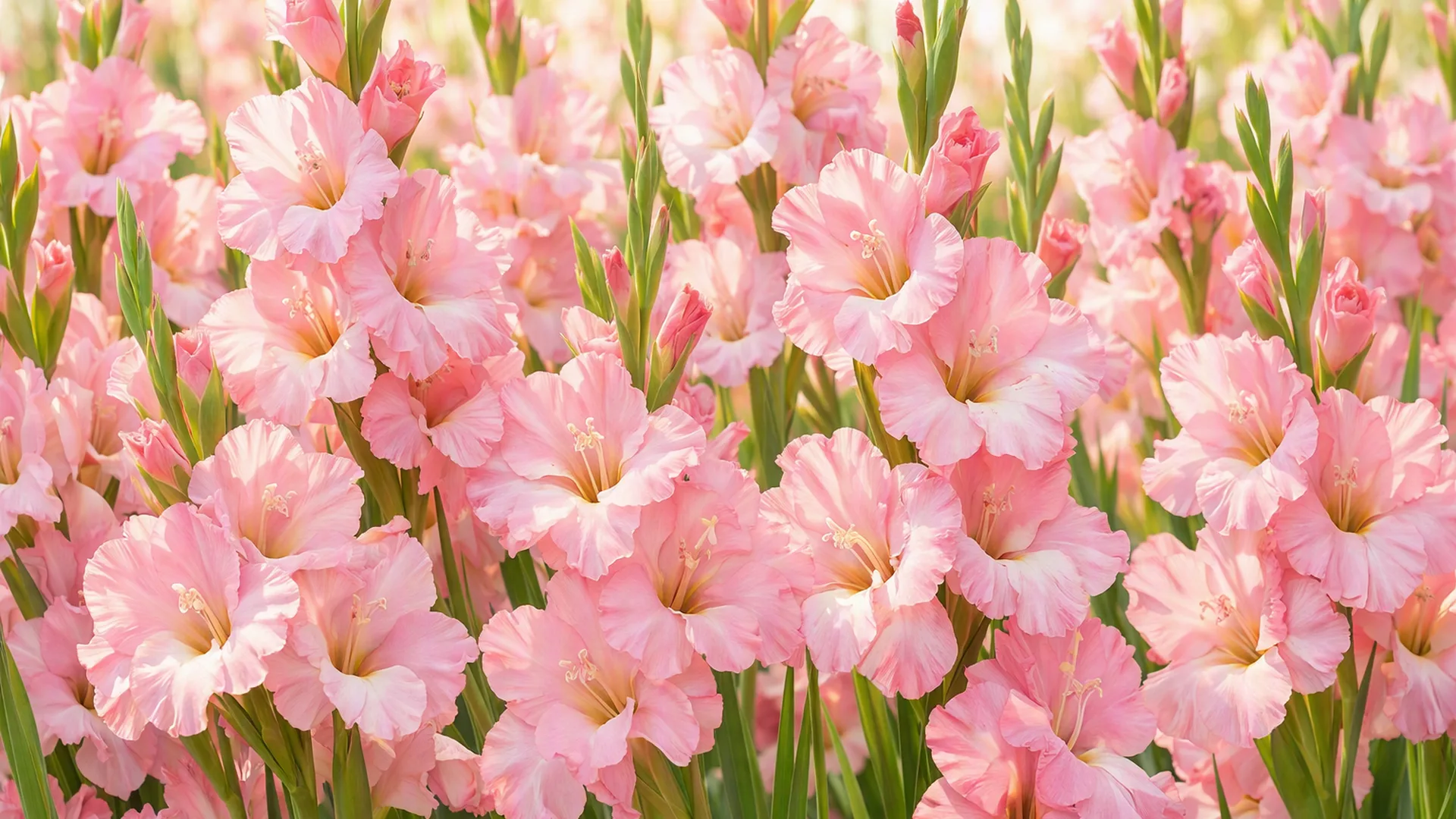
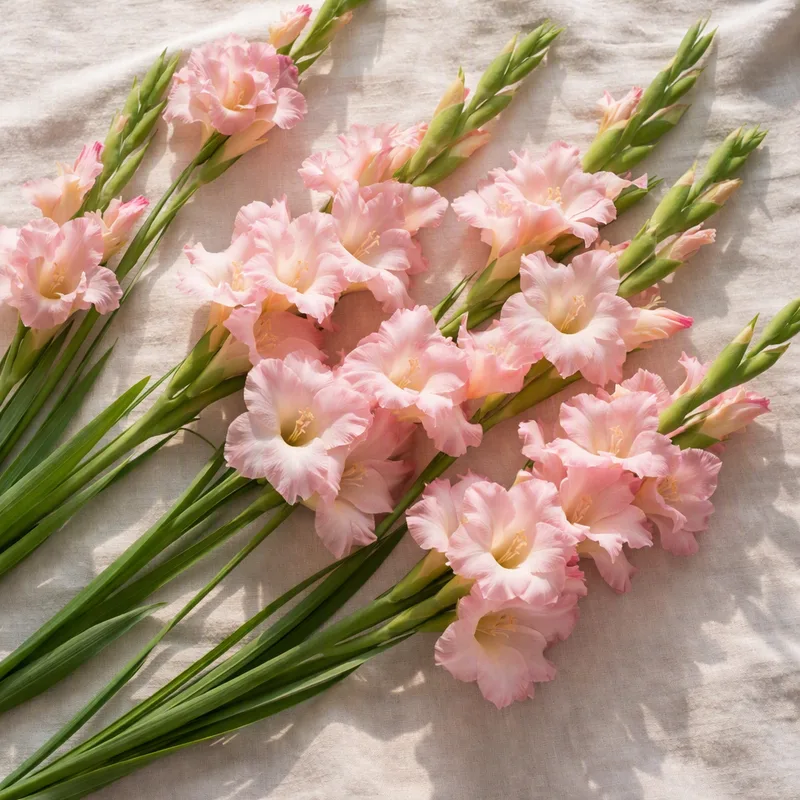
Gladiolus is Latin for "little sword", a reference to the narrow, blade-like leaves. The nickname sword lily is misleading, because this is a relative of the iris and sits in the family Iridaceae. Wikipedia counts about 260 species endemic to southern Africa and around 76 in tropical Africa, with roughly ten native to Eurasia, so the tall spikes in a florist's bucket are the product of centuries of hybridisation rather than anything found in the wild. Wild flowers can be as small as 40 mm across.
Corms rather than bulbs
People searching for gladioli bulbs are actually looking for corms, the rounded storage organs that sit under the stem, wrapped in brown fibrous layers like those of a crocus. Small cormlets form around the parent and take several years to reach flowering size.
Growing them in Ireland
- Plant corms in spring in a sunny spot with free-draining soil.
- Stake each spike as soon as the flower head appears, which matters in windy western gardens.
- Large-flowered types need moisture while growing, but cold, waterlogged ground rots the corms in winter.
- In temperate zones such as ours the corms of most hybrids should be lifted in autumn once the leaves die back, dried, and stored frost-free until spring. Smaller Nanus types are hardier.
In the vase
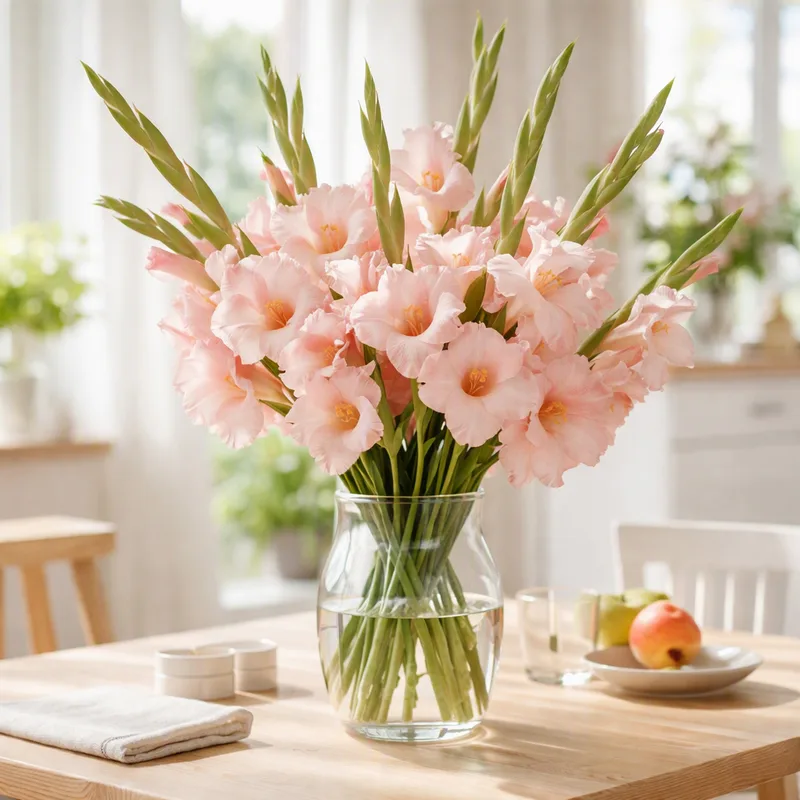
Choose spikes with the lowest buds just opening and the upper ones still tight. A stem lasts for a week to ten days, and the buds open from the bottom upwards. Nip off the top bud once most flowers are out to help the rest develop.
Take care with pets
Gladiolus species are toxic to dogs, cats and horses according to the ASPCA, with symptoms of drooling, vomiting, lethargy and diarrhoea. The highest concentration is in the corms, so keep them somewhere animals cannot reach.