
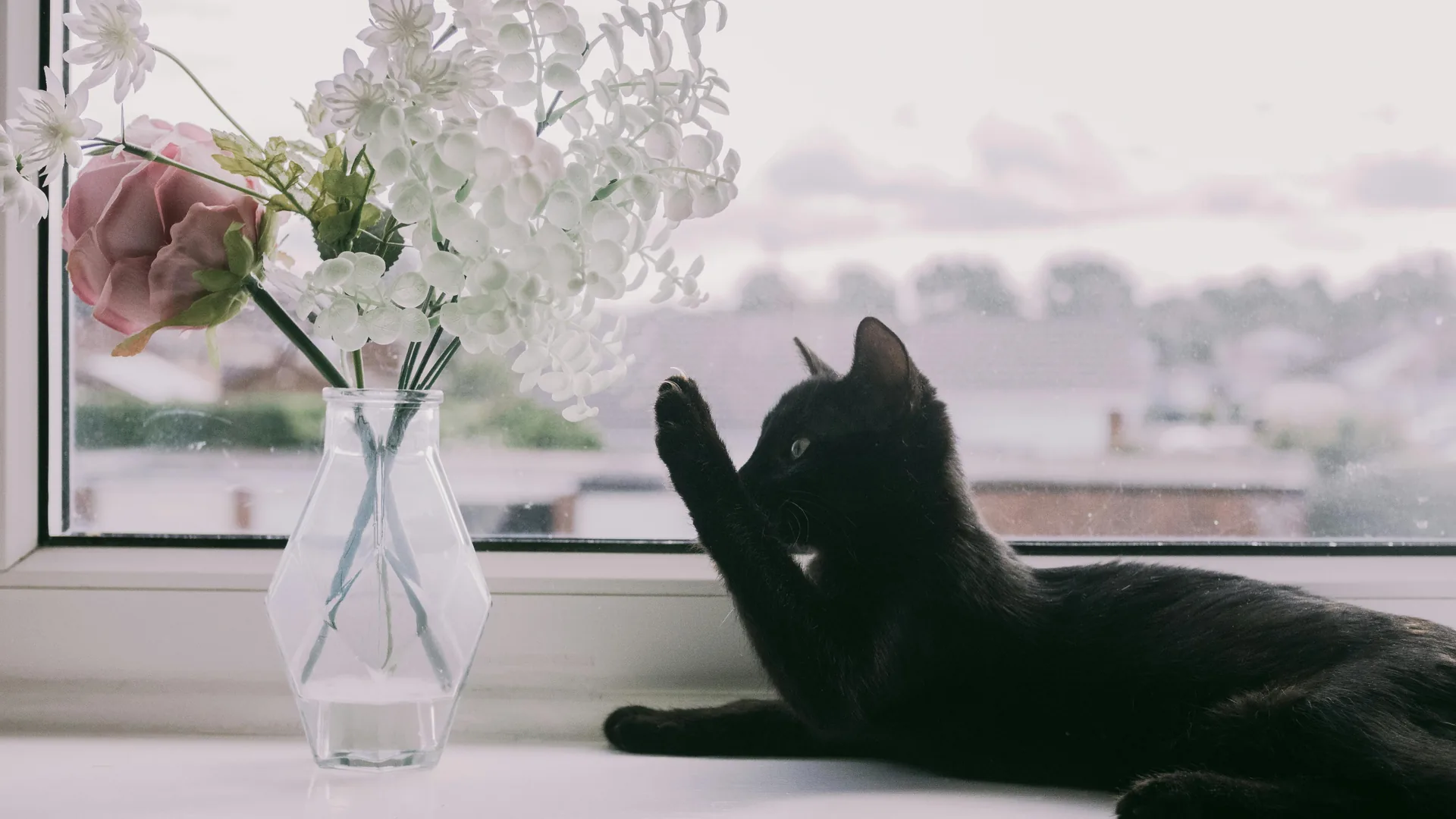
Flowers and pets: keeping cats and dogs safe
A bouquet on the table is irresistible to a curious kitten or a bored dog. Most flowers will do no more than upset a stomach, but a few are genuinely dangerous. Here is what to leave out, what to choose instead and what to do if something gets eaten.
Plenty of Irish households have a cat on the windowsill or a dog under the table, and plenty of mixed bouquets contain at least one flower that is not good for them. You do not need to give up flowers. You only need to know the handful that matter, keep vases out of reach, and mention pets when you send flowers to someone else.
The short version
- Lilies and dayliliesCan cause kidney failure in cats. Keep them out of any home with a cat.
- DaffodilsPoisonous to cats and dogs; bulbs are the worst part.
- Tulips and hyacinthsStomach upset and drooling; again, mostly the bulbs.
- AmaryllisA Christmas favourite that is toxic to both.
- ChrysanthemumsVomiting, drooling and skin irritation.
- Roses, gerberas, sunflowers, snapdragons, freesias, orchidsListed as non-toxic.
⚠ Lilies and cats: the one rule to remember
Every part of a true lily (Lilium) or daylily (Hemerocallis) is toxic to cats, including the pollen and the water in the vase. Cats often get poisoned by grooming pollen off their coat after brushing past a bouquet. Early signs are vomiting, drooling and hiding; kidney damage can follow within a day or two. Quick treatment makes a real difference, so do not wait.
Calla lilies, peace lilies and lily of the valley are not true lilies. They carry different risks, so it is simplest to keep anything called a lily away from pets.
Common bouquet flowers and the risk to pets
How the most common cut flowers compare. The amount eaten matters: a nibbled petal is rarely the same as a chewed bulb.
| Flower | Cat | Dog | Typical signs | Worth knowing |
|---|---|---|---|---|
| LilyLilium / Hemerocallis | ⛔ Extreme | ✓ Low | Cats: vomiting, drooling, kidney failure. Dogs: stomach upset | Pollen and vase water count. Treat cat exposure as an emergency. |
| DaffodilNarcissus | ⛔ High | ⛔ High | Vomiting, diarrhoea; with large amounts, heart and breathing problems | Contains lycorine. Watch dogs that dig in the spring garden. |
| AmaryllisHippeastrum | ⛔ High | ⛔ High | Vomiting, drooling, low mood, tremors | Popular at Christmas, often sold as a bulb in a pot. |
| Tulip | ⚠ Medium | ⚠ Medium | Drooling, vomiting, diarrhoea | Bulbs are far more toxic than the cut flowers. |
| Hyacinth | ⚠ Medium | ⚠ Medium | Drooling, vomiting, irritated mouth | Bowls of bulbs at Christmas and Easter are within easy reach. |
| Chrysanthemum | ⚠ Medium | ⚠ Medium | Vomiting, drooling, diarrhoea, skin irritation | Common in long-lasting and autumn bouquets. |
| Hydrangea | ⚠ Medium | ⚠ Medium | Vomiting, diarrhoea, lethargy | Also a very common garden shrub in Ireland. |
| Iris | ⚠ Medium | ⚠ Medium | Drooling, vomiting, sore mouth | Rhizomes and bulbs are the most irritating parts. |
| Gladiolus | ⚠ Medium | ⚠ Medium | Drooling, vomiting, diarrhoea | The corm holds most of the toxin. |
| Carnation | ✓ Low | ✓ Low | Mild stomach upset, mild skin irritation | Rarely more than a passing tummy upset. |
Sending flowers to a home with pets?
Choose a bouquet built on roses, gerberas or sunflowers, and add a note asking for no lilies.
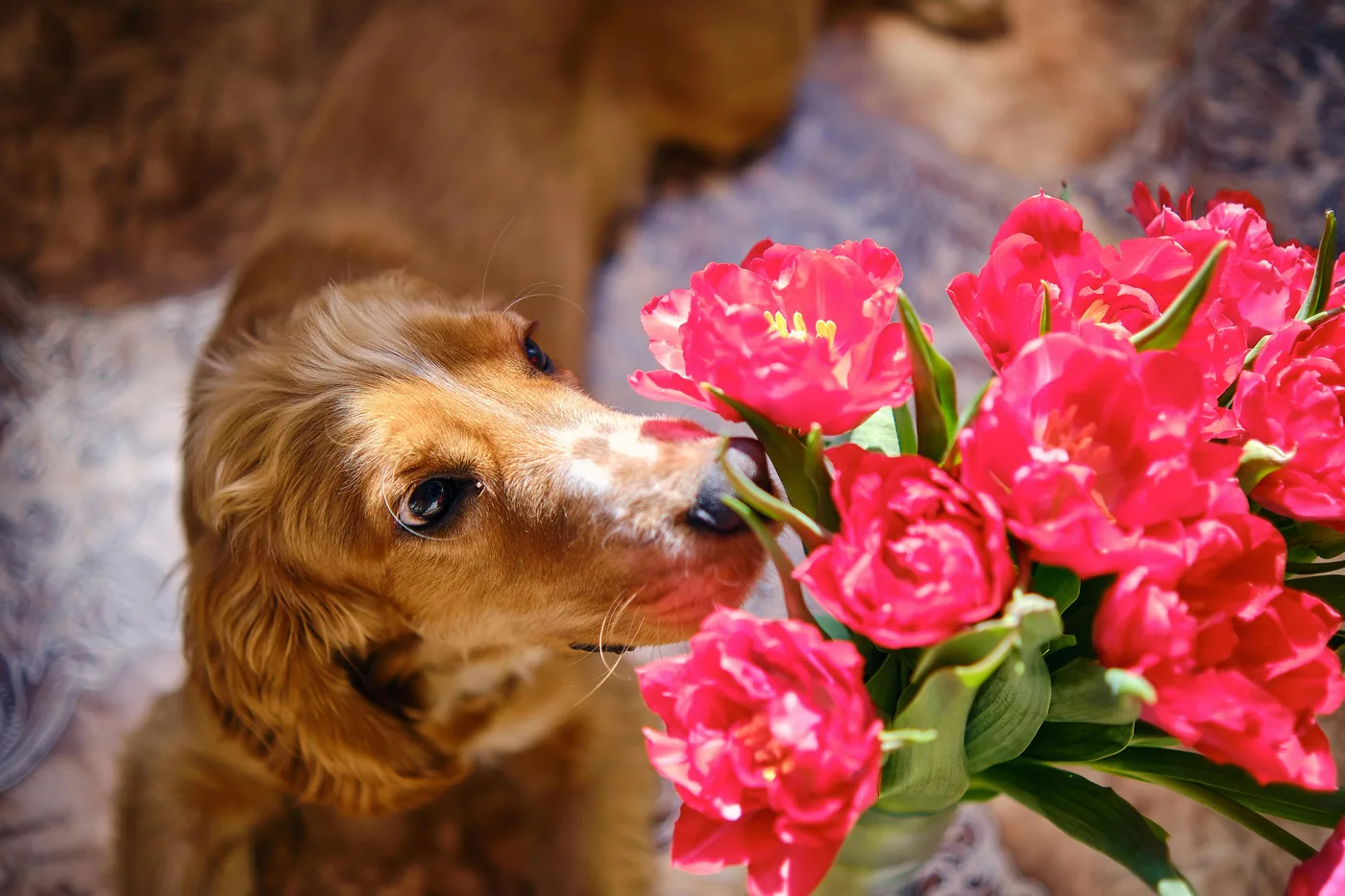
Bouquet flowers listed as non-toxic
These flowers are listed as non-toxic to cats and dogs. Any plant can still cause a bit of vomiting if a pet eats a lot of it, so place the vase out of reach.
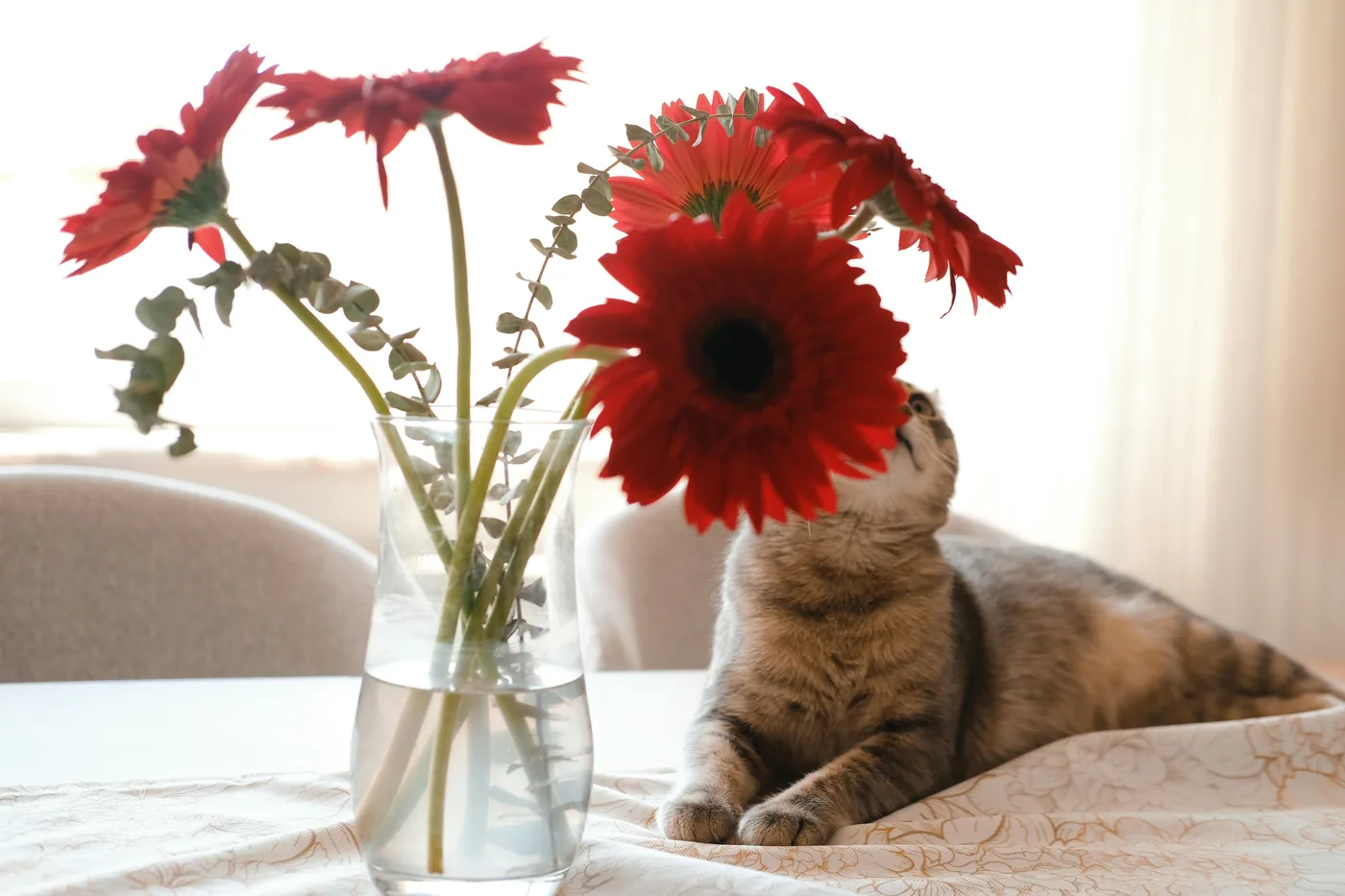
Beyond the vase: garden and seasonal plants in Ireland
Pets meet more plants outdoors than in a bouquet. A few common ones to know about:
- Spring bulbs: daffodils, tulips and hyacinths are in almost every Irish garden. Store spare bulbs out of reach and watch dogs that dig.
- Foxglove: a common wild flower in Irish hedgerows and woods, and highly toxic to pets and people because it affects the heart.
- Yew: often planted in churchyards and gardens; leaves and seeds are very poisonous.
- Rhododendron and azalea: widespread in Irish gardens and the wild; toxic to cats and dogs.
- Christmas plants: amaryllis, holly berries and mistletoe can all cause problems; poinsettia is milder but still irritates.
If your pet has eaten a flower
- Take away what is left. Gently remove plant pieces from the mouth if your pet allows it, and clear up anything on the floor.
- Work out what it was. Keep a piece of the plant or take a photo, and note roughly how much and when.
- Ring your vet. Out of hours, call the emergency clinic your vet uses. For a cat and a lily, go straight away.
- Do not make your pet sick unless the vet tells you to; it can make things worse.
- Keep watching. Drooling, repeated vomiting, wobbliness, a racing heart or a cat that stops passing urine all need urgent care, even if your pet seemed fine at first.
How quickly signs can appear
Timing varies with the plant, the amount and the animal. Do not wait for symptoms before calling a vet.
Questions pet owners ask
Which flower is the most dangerous for cats?
True lilies (Lilium) and daylilies (Hemerocallis). A cat that chews a leaf, licks pollen off its fur or drinks the vase water can develop kidney failure. Treat any contact as an emergency and ring a vet straight away, even if the cat seems fine.
Are lilies dangerous for dogs too?
Not in the same way. In dogs, true lilies usually cause only stomach upset. Other flowers are a bigger worry for dogs, especially daffodil and tulip bulbs, which dogs sometimes dig up in the garden.
My dog ate part of a bouquet. What should I do?
Take any remaining plant away, note what it was and roughly how much was eaten, and phone your vet or the nearest out-of-hours clinic. Do not try to make the dog sick unless the vet tells you to.
Which cut flowers are safer in a home with pets?
Roses, gerberas, sunflowers, snapdragons, freesias and moth orchids are listed as non-toxic to cats and dogs. Eating a lot of any plant can still upset a stomach, so keep vases out of reach anyway.
Can I ask for a bouquet without lilies?
Yes. Add a note to your order asking for no lilies, or choose a bouquet whose description shows no lilies. If you are sending flowers to someone with a cat, it is a thoughtful thing to check.
Are Christmas plants a risk?
Some are. Amaryllis bulbs and stems are toxic to cats and dogs, holly berries and mistletoe can cause stomach upset, and poinsettia sap irritates the mouth, though it is milder than its reputation.
Read more
More about the flowers mentioned here.
Lilies and cats
Why true lilies are so dangerous, and how to enjoy them safely in a home without cats.
Roses
A non-toxic classic: colours, meanings and how to keep them fresh.
Daffodils
Ireland’s spring favourite, and why dogs and bulbs do not mix.
Pet-friendly bouquets
Bouquets based on roses, gerberas and sunflowers.
Flowers that suit a home with pets
Pick a bouquet without lilies for a friend with a cat or dog.
See bouquetsOther guides
Please note. This page is general information and is not a substitute for veterinary advice. If you think your pet has been poisoned, contact a vet straight away.